Five Tile Upgrades That Refresh a Dated Florida Kitchen
Most kitchens in Buckingham were built during the same construction waves that defined Southwest Florida's growth, and they carry the same hallmarks: beige grout lines that have darkened over the years, floor tiles that date the space the moment you walk in, and a missing backsplash where the builder simply painted the drywall. A full kitchen renovation is a major undertaking, but it is rarely the only option. In our work across kitchen remodeling in Buckingham and the surrounding area, we see the same five targeted upgrades deliver most of the visual impact at a fraction of the disruption.
The key is knowing which surfaces carry the most visual weight and how to sequence the work so nothing has to come back out later. Here is what we recommend to homeowners who want a fresh kitchen without tearing the whole room apart.
Replace or Add a Tile Backsplash Behind the Range
The stretch of wall between the countertop and the upper cabinets is the first thing a visitor notices when they step into a kitchen. If yours is bare painted drywall, you are losing the biggest decorative opportunity in the room. If you have original 4-by-4 ceramic squares from the 1990s, they are telling the whole story of when your home was built.
A new backsplash installation transforms that zone completely. The format options have expanded dramatically: large-format subway tile in matte or satin finishes, stacked stone looks, handmade-style ceramic with slight dimensional variation, and classically veined marble-look porcelain that reads as a luxury surface without the maintenance demands of real stone. In Buckingham kitchens, we tend to steer clients toward lighter grout on a bright tile or a slab-look large format behind the range because both stay visually clean longer in Florida's humidity.
One practical note: if the existing drywall behind a range or near the sink has seen moisture over the years, this is the moment to address it. A licensed tile contractor will check the substrate before setting tile, because backsplash tile applied over deteriorated drywall will not stay put.
Update the Kitchen Floor Tile
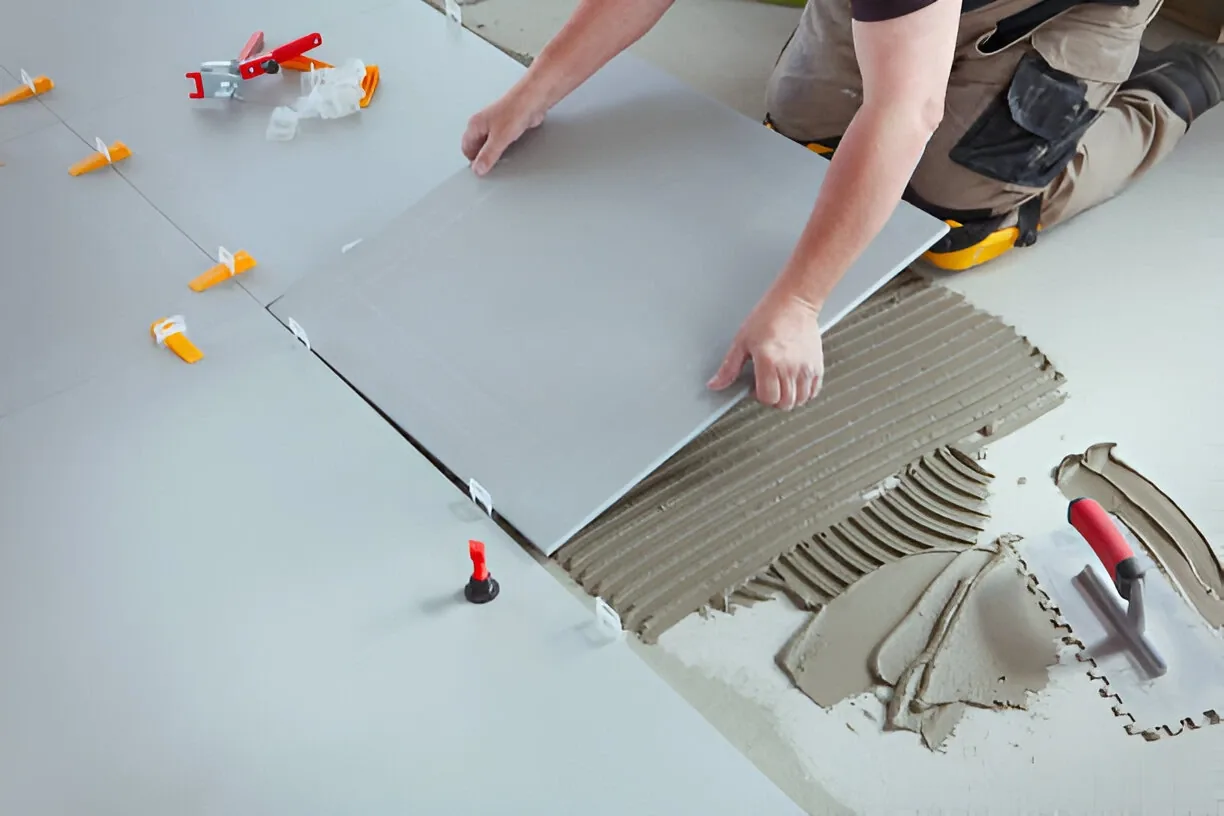
Floor tile does more to age a kitchen than almost any other surface. The 13-by-13 earth-tone ceramic floor that was standard across Southwest Florida in the late 1990s and 2000s now reads as an unmistakable era marker. Replacing it with a large-format 24-by-24 or 12-by-24 porcelain plank in a wood look or a clean stone look shifts the entire perception of the room.
Buckingham homes on slab foundations are straightforward candidates for a tile floor replacement. The concrete slab gives you a stable base, and modern large-format porcelain is lighter per square foot than the thick ceramic it replaces. The one variable worth planning around is height transitions: if the new tile runs to the edge of a hardwood or LVP floor in an adjacent room, a proper transition strip needs to be planned from the start rather than added as an afterthought.
In kitchens where the existing floor tile is sound and well-bonded, some homeowners ask about tiling over it. That is sometimes a valid approach, but it raises the floor height, which affects appliance kickplates, cabinet toe kicks, and dishwasher fit. It is worth discussing the full picture with your installer before committing.
Regrout or Refresh the Existing Tile
Not every kitchen needs new tile. If the existing floor or backsplash tile is a format and color you can live with, the grout lines may be the real culprit. Grout absorbs cooking grease, humidity, and foot traffic over time, and what started as a mid-tone gray or almond color can shift to a patchy brown that no amount of cleaning fully reverses.
Professional regrout service involves removing the old grout to a safe depth with a grout saw or oscillating tool, cleaning the joints thoroughly, and packing in fresh grout. Done well, a regrouted kitchen can look nearly as fresh as a retiled one, particularly when paired with a deep tile cleaning. We see this option get good results in Buckingham homes where the original tile is a classic size and format that has come back around stylistically.
Epoxy grout is worth considering in the kitchen if your original installer used standard sanded or unsanded grout. It is harder to install, which is why it tends to be a professional-only job, but it resists staining, moisture, and mold significantly better, which matters in Florida kitchens that deal with humidity year-round.
Upgrade the Transition Strips and Borders
Transitions between rooms and between different flooring materials are one of those details that most homeowners do not notice consciously, but they register as the difference between a finished renovation and a patched-together one. Old aluminum T-moldings that have oxidized, grout joints that simply stop at the doorway, or mismatched tile borders at the edge of the kitchen are easy to fix and make a meaningful difference in how the room reads as a whole.
In open-plan homes, which are common across Buckingham and the broader SWFL market, the kitchen tile often flows into a living or dining area. A well-designed transition, whether that is a complementary mosaic border row, a schluter strip in a brushed finish, or a contrasting accent tile inset, gives the eye a clean stopping point and makes both spaces look intentional. This kind of detail work is typically added during a floor replacement but can also be done as a standalone project when the substrates are compatible.
Retile the Kitchen Countertop Backsplash Extension to the Ceiling
In kitchens with open soffit space between the upper cabinets and the ceiling, one high-impact option that has become popular in Southwest Florida kitchen remodeling work is extending the backsplash tile from the countertop all the way to the ceiling. This treatment eliminates the awkward painted or drywalled zone above the cabinets that tends to collect dust and makes the ceiling feel lower.
Full-height tile behind open shelving or between floating upper cabinets creates a dramatic focal point, particularly with a larger format or a bookmatched slab-look porcelain. The installation is more involved than a standard backsplash because the tile runs through multiple cabinet openings at varying heights, but the result updates the kitchen more thoroughly than almost any other single surface change.
Sequencing Matters: Start With the Floor
If you are planning more than one of these upgrades, sequencing the work correctly saves you from redoing steps. Floor tile should go in before a new backsplash, and both should go in before any new toe kick or trim work. Grout and caulk selections should be coordinated across surfaces before the first tile is set, not chosen independently mid-project. For Buckingham homeowners doing a phased renovation, starting with the floor makes the most sense because it sets the visual baseline everything else coordinates to.
If you want an honest look at what your kitchen actually needs, our team at Dynasty Tile offers free estimates. We have been serving Southwest Florida since 2016, and you can reach us at (239) 265-2814 or through the contact page. You can also read what past clients have said on the reviews page.
The Bottom Line
A dated kitchen in Buckingham does not need a full rebuild to feel current and well-finished. A new backsplash, updated floor tile, fresh grout, clean transitions, and a full-height tile treatment where space allows each carry real visual weight on their own. Combined, they add up to a kitchen that reads as genuinely renovated rather than refreshed. The investment is in knowing which surfaces to tackle first and making sure each piece of work is done correctly so nothing has to come out later. If you are ready to talk through what makes sense for your kitchen, our licensed tile contractor team in Buckingham is a good place to start.