Waterfront Home Flooring: What Canal-Front Owners in Cape Coral Should Know
Canal-front living in Cape Coral is one of Southwest Florida's biggest draws. Miles of navigable waterways, easy boat access, and that constant breeze off the water make these properties uniquely appealing. What that same environment does to your floors, grout, and tile is a different story. We work in canal-front homes regularly, and the conditions here demand more careful material choices than a typical inland house.
If you own or are buying a waterfront home in Cape Coral, this guide covers what we see fail most often and what holds up over the long haul.
The Real Conditions You Are Dealing With
Canal-front homes in Cape Coral sit in a specific microclimate. The humidity is persistently high, not just during summer afternoons but overnight, through dry season, and under air conditioning cycles that pull moisture in every time a door opens. Salt-laden air from the seawall carries chlorides that attack grout, metal hardware, and porous stone. During hurricane season, storm surge and heavy rain can push water under doors and across lanais faster than any sealant can handle.
The result: floors that look fine in a showroom can degrade within a few years when exposed to this combination of moisture, salinity, and occasional flooding. Choosing the right material from the start is far less costly than replacing failed floors after the fact.
Porcelain Is the Workhorse Material Here
Full-body porcelain tile is the most practical flooring choice for most surfaces in a canal-front Cape Coral home. Its water absorption rate is below 0.5 percent, which means moisture that seeps under a door, pools on a lanai, or condenses on a slab overnight has almost nowhere to go. Unlike natural stone, porcelain does not react to the chlorides in salt air, and it will not pit or spall the way some softer materials do after years of coastal exposure.
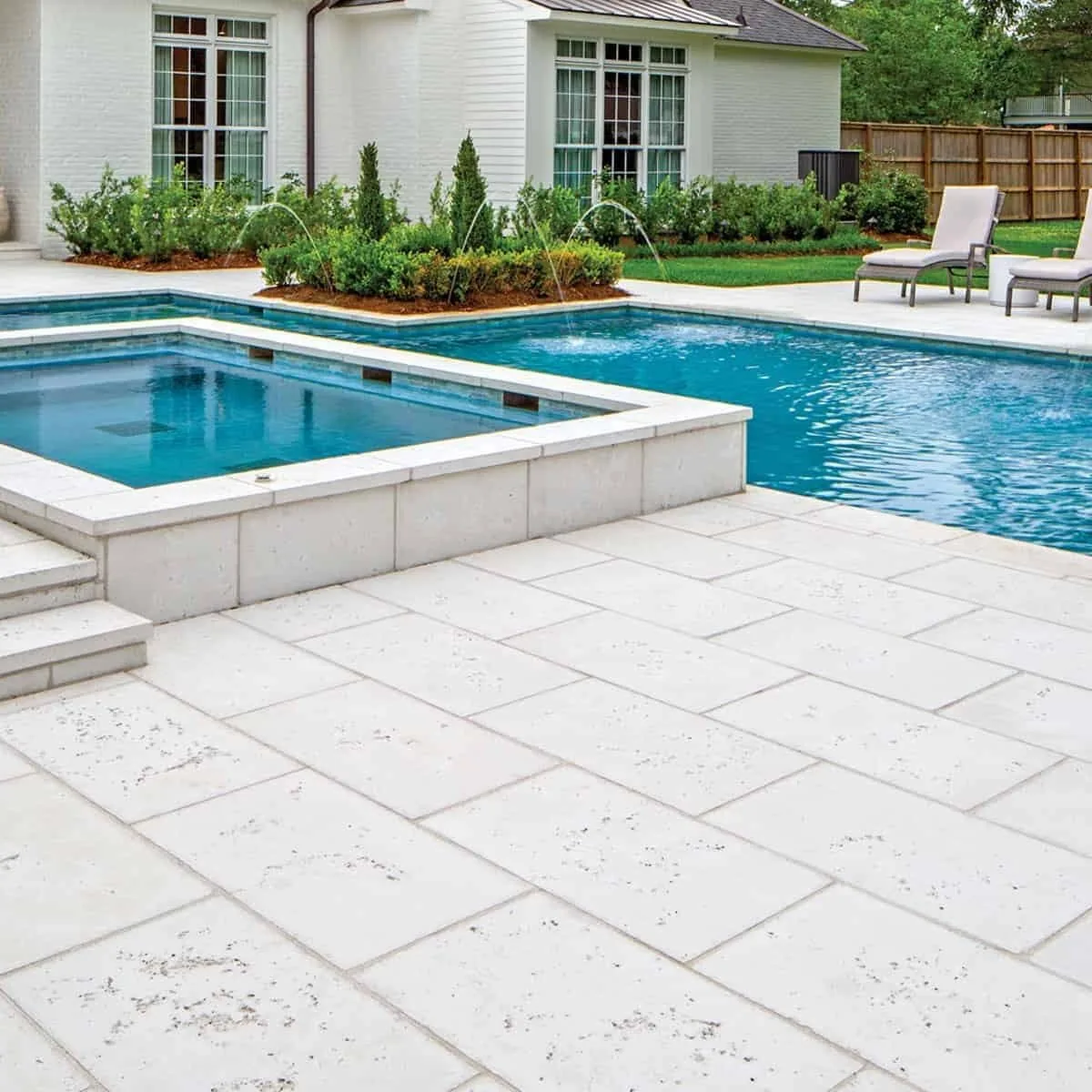
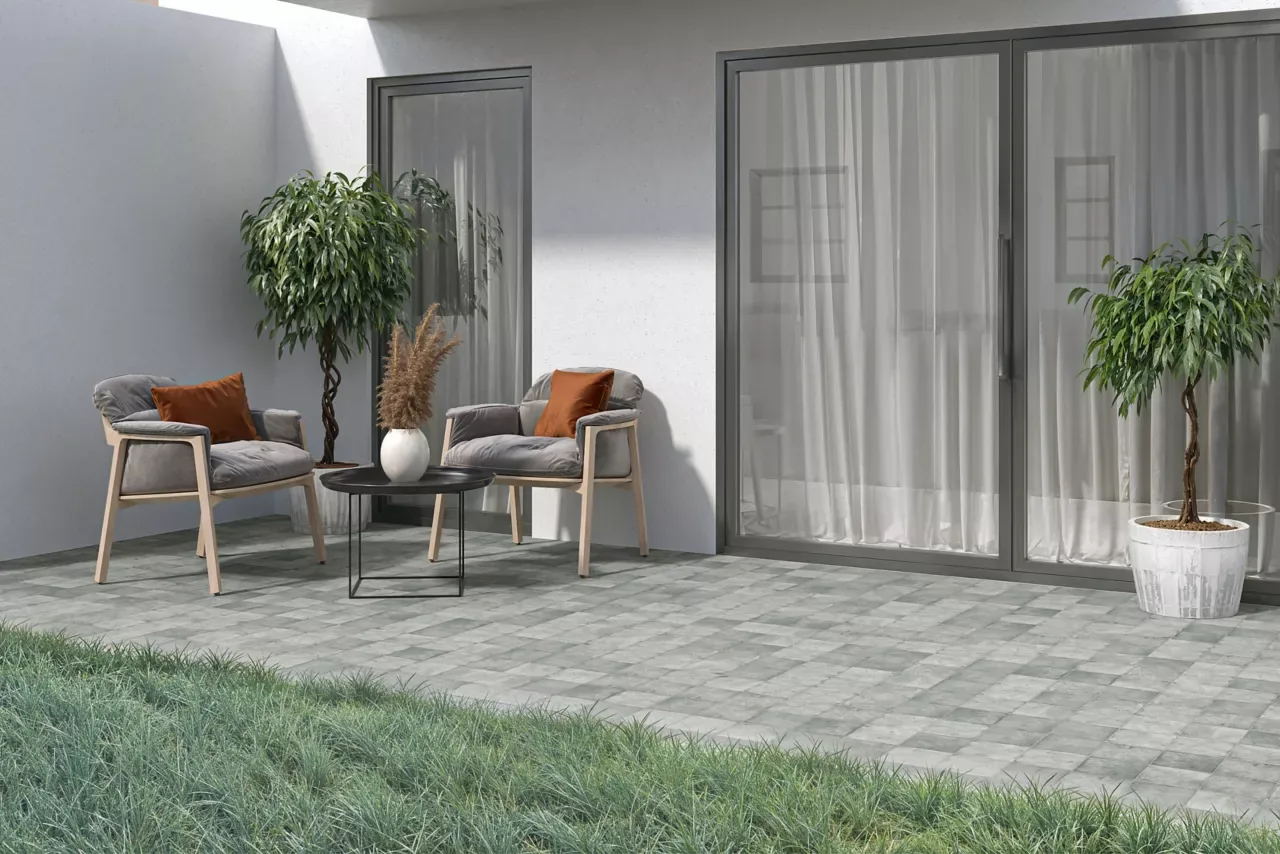
For outdoor areas like the lanai, pool deck, or dock-side patio, look for porcelain pavers rated for exterior use with a coefficient of friction above 0.60. That slip-resistance rating matters on surfaces that get wet from rain, irrigation overspray, or anyone walking in from the water. Our outdoor tile work in Cape Coral almost always starts with that spec as a baseline.
Natural Stone: Where It Works and Where It Struggles
Homeowners in Cape Coral are drawn to travertine and marble, and understandably so. The look suits the open, airy floor plans that define waterfront homes in Southwest Florida. But both materials come with real trade-offs in this environment.
Travertine is porous by nature. Left unsealed, it absorbs moisture, develops stains, and in outdoor settings can begin to pit or crumble as water cycles in and out with the temperature changes. Properly sealed and maintained, it can work in covered lanais and interior spaces. It is not a strong choice for areas that flood or see regular standing water.
Marble faces similar challenges outdoors and is also sensitive to the mild acidity in salt air over time. We see etching, dulling, and grout failure in marble installations in SWFL that were not built with waterproofing as the first priority. If you love the look, consider a high-quality porcelain in a marble finish instead, especially for bathrooms and wet areas where the stakes are higher.
Grout Selection and Waterproofing Matter as Much as Tile
In a waterfront home, the grout joints and the waterproofing membrane beneath the tile are just as important as the tile itself. Standard sanded grout in a high-moisture environment will absorb water, grow mold, and eventually crack. Epoxy grout is harder to work with but is non-porous and resistant to both moisture and the mild chemical exposure from salt air and pool chemicals. For canal-front homes, it is worth the extra effort, particularly in bathrooms, outdoor showers, and anywhere near the seawall.
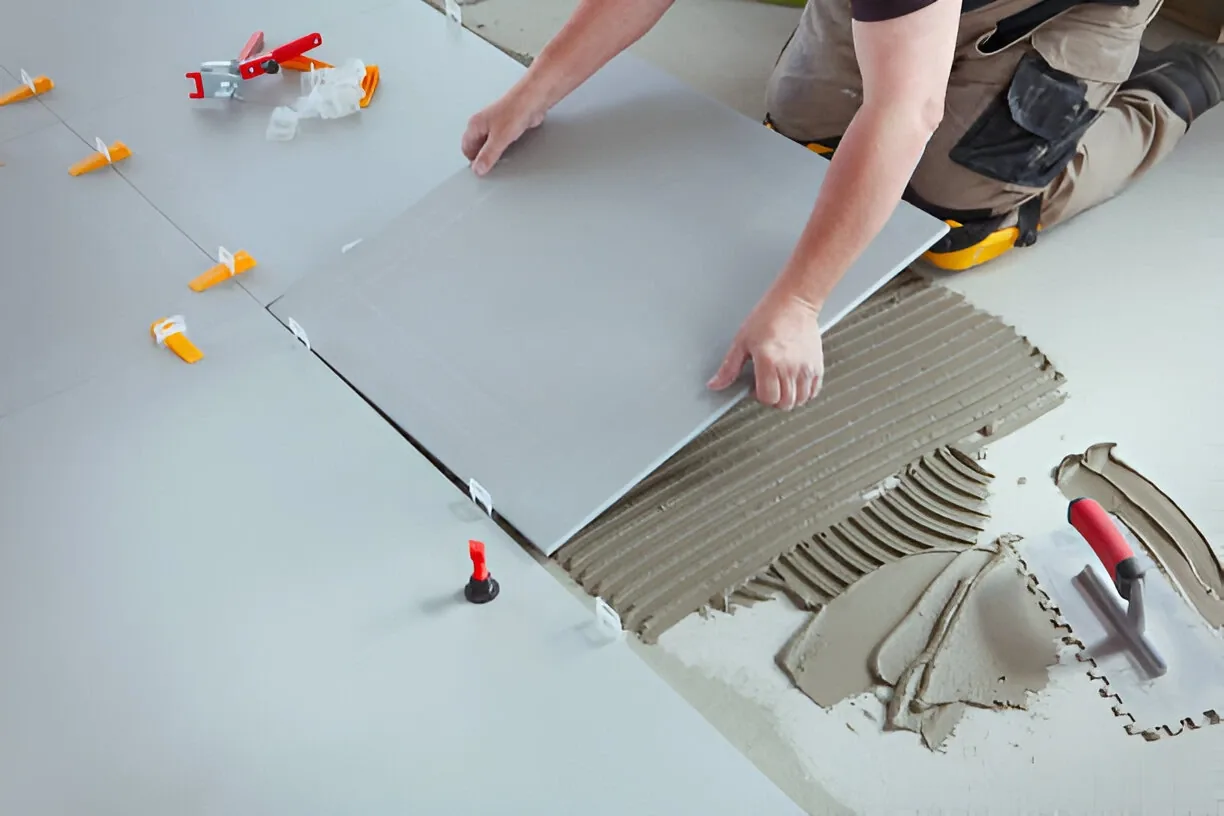
Beneath the tile, a proper waterproofing membrane on concrete slabs and in wet areas is non-negotiable. We see a lot of failures in older SWFL homes where the original installation skipped this step. If you are renovating a bathroom in a waterfront home, that membrane needs to be installed correctly before a single tile goes down. This is not a DIY step. Waterproofing in wet areas should be handled by a licensed professional who knows how to integrate it with drains, thresholds, and adjoining surfaces.
Flood Resilience: Planning for the Inevitable
Canal-front homes in Cape Coral are in flood zones, and hurricane season is not hypothetical. Flooring choices should account for the possibility that water will enter the home at some point. That means favoring materials that dry out and can be sanitized without being replaced. Porcelain and ceramic tile both meet this standard. Hardwood and laminate do not. Natural stone can, if it was properly sealed before the event and is dried quickly enough.
Transitions between indoor and outdoor spaces also deserve attention. The threshold at a sliding glass door or a French door onto the lanai is a common entry point for flood water. How the tile and substrate are handled at that joint affects how easily water is managed and how quickly the space recovers. Raising the threshold slightly, using a continuous waterproofed substrate, and sealing expansion joints properly are all details that matter in a flood-resilient installation.
If you are planning a full renovation of an outdoor or transition area, the pool deck remodeling work we do in Cape Coral addresses these flood and drainage considerations directly, not just the surface material.
Practical Interior Choices for the Coastal Lifestyle
Inside a canal-front home, the priorities shift slightly. You still want low-maintenance, moisture-tolerant flooring, but comfort and aesthetics matter more. Large-format porcelain tile in a wood plank look or a light stone finish is one of the most popular choices in SWFL waterfront homes right now. It reads warm and coastal without the maintenance burden of real wood or the fragility of real marble.
In bathrooms, a curbless shower or a walk-in with a linear drain fits the open, airy aesthetic of these homes and is easier to keep clean when humidity is always a factor. A bathroom remodel in Cape Coral done with waterproofing and ventilation in mind will hold up for decades in ways that a budget installation simply will not.
For kitchens, the backsplash and the floor around the sink are the two spots where moisture exposure is highest. Glazed ceramic or porcelain for both is the practical choice. Grout should be sealed consistently, and epoxy grout in high-splash zones is worth considering.
The Bottom Line
Owning a canal-front home in Cape Coral means accepting that your floors are going to be tested by conditions that most inland homes never see. Salt air, persistent humidity, seasonal flooding, and the general wear of coastal living add up. The answer is not to limit yourself to one bland material, but to choose materials and installation methods that are honest about what they will face.
Porcelain is the most forgiving all-around choice. Natural stone can work with the right preparation and maintenance commitment. In every case, waterproofing and grout quality matter as much as the tile itself. If you would like a free, no-obligation estimate on a flooring or remodeling project in your waterfront home, you can reach Dynasty Tile at (239) 265-2814. As a licensed tile contractor serving Cape Coral and Southwest Florida since 2016, we have seen what this environment demands and we build installations to match it.