Cleaning Large Format Tile Floors the Right Way
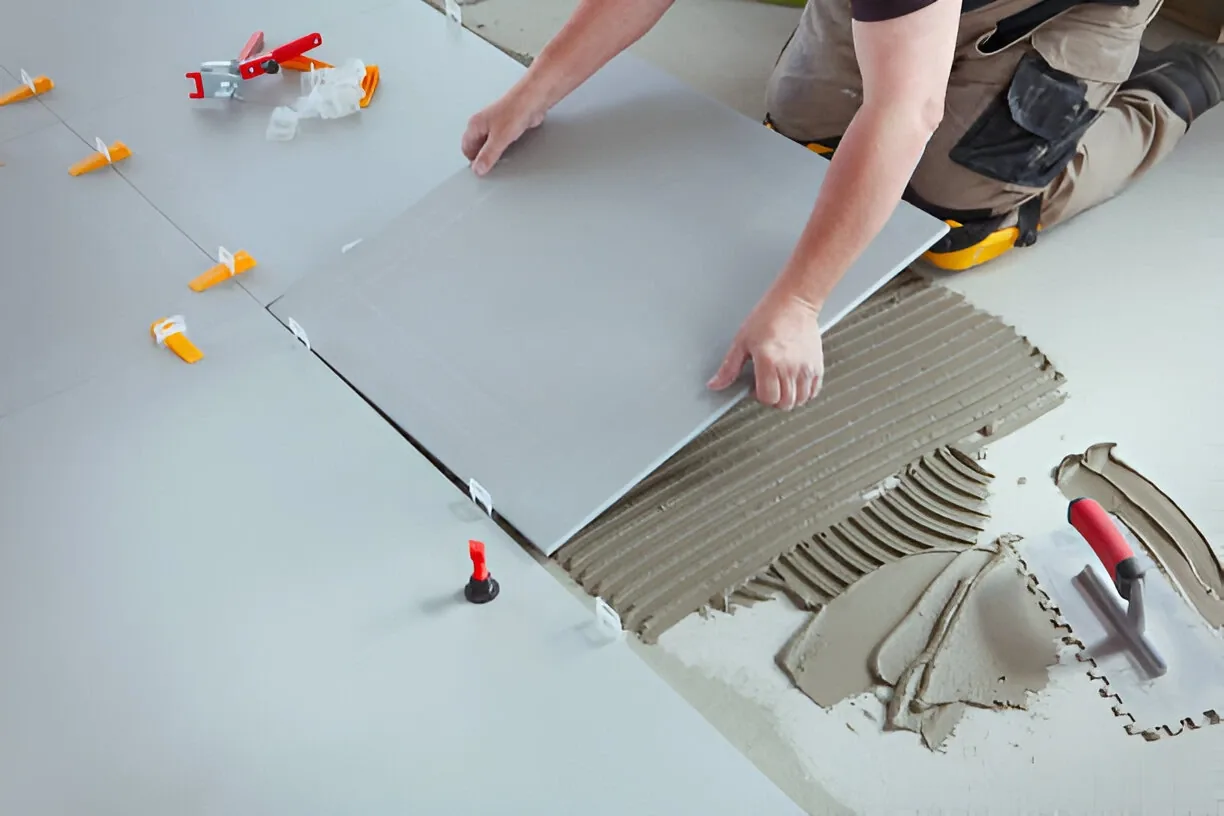
Large format tile has become one of the most popular flooring choices in North Naples homes over the last several years. Forty-eight-by-forty-eight-inch porcelain slabs, thirty-by-sixty-inch rectangles, even oversized twelve-by-twenty-four planks laid in a running bond pattern across an open great room floor. They look incredible: clean lines, a sense of unbroken space, and far fewer grout joints to worry about. But here is what a lot of homeowners find out after the install is done and the dust clears. Large format tile has its own cleaning quirks, and if you use the same bucket-and-mop routine you were using on smaller tile, you will likely end up with a hazy, streaky floor that looks worse than what you replaced.
We work on a lot of floors like these across Southwest Florida, and the questions about maintenance come up constantly. This guide covers what actually causes the haze, which tools work, which ones do not, and how to build a routine that keeps those floors looking the way they did on day one.
Why Large Format Tile Shows Streaks More Than Small Tile
It is not that large format tile is harder to clean. It is that the math works against you when your technique is off. A standard twelve-by-twelve floor has roughly twice as many grout lines as a twenty-four-by-twenty-four floor in the same square footage. Those grout lines act as natural stopping points for dirty mop water. On a large format floor, there is nowhere for that water to go except across the face of the tile, where it dries and leaves a thin mineral film.
Southwest Florida water is the second part of the equation. Southwest Florida municipal water is mineral-heavy, and those deposits are exactly what creates the dull, cloudy haze you see after mopping. Coastal humidity plays a role too. On slower drying days, especially during the summer wet season, mop water lingers on the surface longer and deposits more residue before it evaporates.
Tools That Actually Help
A standard string mop holds too much water for large format tile. When you wring it out, it is still carrying enough moisture to leave puddles, and puddles mean haze. The tools that work better are flat microfiber mops, specifically the style where the pad snaps or velcros onto a frame. These deposit a thin, controlled film of cleaning solution and pick up grime without flooding the surface.
A few things worth having on hand for a North Naples home with large format floors:
- A flat microfiber mop with washable pads (have at least two pads so you can swap mid-floor on larger areas)
- A spray bottle or the reservoir-style mop that lets you mist solution directly onto the floor ahead of the pad
- A clean, dry microfiber pad or towel for a final buff pass on polished or semi-polished finishes
- A soft-bristle grout brush for the joints, even if there are fewer of them
For heavy grime near entryways or lanai doors, a steam mop set to a low moisture output can work well on unpolished porcelain. Avoid steam on polished or highly reflective finishes because the heat can dull the surface over time. When in doubt, check the tile manufacturer's care guidelines, which should have come with your installation paperwork.
The Right Cleaning Solution
This is where a lot of people go wrong. They reach for whatever floor cleaner is under the kitchen sink and use it at full strength. Most consumer floor cleaners leave a surfactant residue that builds up with every application, and that residue is what you are seeing when the floor looks progressively hazier over weeks and months.
For day-to-day maintenance on porcelain or ceramic large format tile, warm water alone handles most of the work if you are mopping frequently. For a weekly clean, a pH-neutral tile cleaner diluted significantly beyond the label recommendation is the safest approach. Less is almost always more here. A capful in a full bucket of warm water is a reasonable starting point.
For the mineral haze that has already built up, a diluted white vinegar solution (about one part vinegar to ten parts water) applied and wiped up quickly will break down calcium deposits without damaging the tile. Do not use vinegar on natural stone tile such as marble, travertine or limestone, and avoid it on colored or unsanded grout. On polished porcelain that mimics stone, do a small test in an inconspicuous area first.
Avoid cleaners that contain wax, oil, or anything marketed as a floor polish or shine enhancer. These coat the surface and trap dirt in the film. They also make the floor progressively harder to clean over time.
Technique: Mop in Sections, Not in Circles
The technique matters almost as much as the tool. Work in small sections, roughly four-by-four feet at a time, overlapping strokes in one consistent direction. You are picking up the solution before it dries rather than spreading it across a wider area. Start from the far corner of the room and move toward the exit so you are not walking back over clean wet tile.
On days when the air conditioning is running hard, which in North Naples is most of the year, the floor dries quickly and that is actually helpful. On very humid days when the windows are open or the AC is off, a box fan speeds drying and cuts down on mineral deposits. If your floor has a polished or satin finish, a dry buff pass with a clean microfiber cloth restores the sheen immediately after mopping.
Grout Lines Still Need Attention
Fewer grout lines does not mean no grout lines. High-traffic entry areas and kitchen floors still accumulate grease and grit in the joints, and a soft-bristle brush with the same pH-neutral cleaner you use on the tile is enough for routine grout care. Avoid anything with bleach on colored or dark grout because repeated use fades it unevenly.
If you have sealed grout, which a properly done installation should include, the surface resists staining much better. Sealers wear down over time and typically need reapplying every one to two years in high-traffic areas. Test yours by dropping a small amount of water on the grout. If it beads, the sealer is holding. If it absorbs, it is time to reseal.
The Bottom Line
Large format tile floors are genuinely low-maintenance compared to smaller formats, but they do not take care of themselves. The right tools (flat microfiber mops, minimal solution, a dry buff pass) and a consistent schedule make the difference between floors that look sharp year after year and floors that always seem a little off. In North Naples, where mineral-heavy water and high humidity work against you, technique matters more than product. Keep solution amounts small, dry the floor quickly, and stay ahead of mineral buildup before it becomes a project in itself.
If your floors were installed by someone else and you are unsure about the finish type, grout sealer status or whether the installation included proper movement joints that need to stay clean and flexible, it is worth having a licensed tile contractor in North Naples take a look. A quick walkthrough can save a lot of guesswork. For anything beyond routine cleaning, including resealing, re-grouting, or addressing cracked tile, reach out to our team at Dynasty Tile for a free estimate before the problem grows.
We also cover outdoor tile in North Naples, including lanai and pool deck surfaces that need a different cleaning approach due to sun exposure and foot traffic. And if a refresh is on the horizon, our bathroom remodeling work in North Naples and kitchen remodeling in North Naples can help you choose the right large format options for the next phase of your home.