How Florida Hard Water Leaves Deposits on Tile and What to Do About It
If you live in McGregor or anywhere across Southwest Florida, you have probably noticed it: a chalky white film creeping up your shower walls, cloudy spots on glass doors, or a rough texture on tile that used to feel smooth. This is hard water at work, and it is one of the most common maintenance issues we see as a licensed tile contractor serving this region.
Southwest Florida sits on some of the hardest water zones in the state. The aquifer here is rich in calcium and magnesium minerals picked up as groundwater moves through limestone formations. When that water evaporates on your shower tile, it leaves behind calcium carbonate deposits that build up over time. Left unchecked, this mineral haze dulls the appearance of your tile and can etch certain surfaces permanently.
What Hard Water Deposits Look Like on Tile
Hard water stains are not the same as soap scum or mildew, though they often appear together. Calcium carbonate deposits have distinct characteristics:
- Color: White, off-white, or light gray film that looks powdery when dry
- Texture: Rough or crusty to the touch, especially near shower heads and faucet areas
- Pattern: Concentrated where water sits or drips, such as tile ledges, shower door tracks, and around drains
- Response to cleaners: Does not dissolve with standard bathroom cleaners or bleach
The key identifier is that hard water deposits respond to acid-based cleaners while soap scum and mildew do not. If a vinegar solution makes the white film fizz or dissolve, you are dealing with mineral buildup.
Why McGregor and Southwest Florida Have Severe Hard Water
Our region draws groundwater from the Floridan Aquifer, which passes through thick layers of limestone and dolomite. These sedimentary rocks are rich in calcium carbonate, and as water moves through them, it dissolves and carries those minerals. The result is water hardness levels often exceeding 20 grains per gallon in Lee County, which is considered very hard.
Several local factors make the problem more noticeable here:
- High humidity: Southwest Florida humidity means water evaporates more slowly, giving minerals more time to settle and crystallize on surfaces
- Year-round shower use: Unlike seasonal climates, our showers run twelve months a year, constantly depositing minerals
- Open shower designs: Walk-in showers without doors, popular in McGregor bathroom remodels, allow more evaporation and mineral deposition on surrounding tile
- Seasonal residents: Homes that sit vacant for weeks accumulate visible buildup when water sits in pipes and then flows during the first few showers after return
Understanding the source helps explain why surface cleaning alone is not enough. You need a maintenance routine that addresses mineral accumulation before it bonds to the tile surface.
Safe Cleaning Methods by Tile Type
Not all tile can handle the same cleaners. The acid that dissolves calcium carbonate can also damage certain tile materials if used incorrectly. Here is what works safely for each common tile type found in Southwest Florida homes.
Porcelain and Ceramic Tile
Porcelain and glazed ceramic tile are the most forgiving. The dense, fired surface resists acid etching, so you can use stronger solutions without worry.
Recommended approach:
- Mix equal parts white vinegar and warm water in a spray bottle
- Apply generously to affected areas and let sit for 5 to 10 minutes
- Scrub with a non-abrasive nylon brush or scrubbing pad
- Rinse thoroughly with clean water
- Dry with a microfiber cloth to prevent new deposits from forming
For heavier buildup, use a commercial calcium and lime remover labeled safe for porcelain. Always test in an inconspicuous area first and follow manufacturer instructions carefully.
Natural Stone Tile (Marble, Travertine, Limestone)
Natural stone requires much more caution. Marble, travertine, and limestone are calcium-based stones, meaning acid cleaners will etch the surface and create dull spots that cannot be wiped away.
Recommended approach:
- Use a pH-neutral stone cleaner specifically formulated for natural stone
- For light mineral haze, try a stone-safe commercial descaler that does not contain vinegar or citric acid
- Apply with a soft cloth, agitate gently, and rinse immediately
- Dry thoroughly after each cleaning
If deposits have already etched your stone, cleaning will not restore the surface. You will need professional polishing or honing to remove the damaged layer. This is why prevention matters more with natural stone than any other material.
Glass Tile and Shower Doors
Glass does not etch from acid, but it does show water spots dramatically. The smooth surface makes deposits easier to remove than porous materials.
Recommended approach:
- Use a dedicated glass cleaner with citric acid or a vinegar-water solution
- Apply and let sit for 2 to 3 minutes
- Wipe with a microfiber cloth or use a squeegee
- Buff dry to prevent streaking
For glass shower doors with heavy buildup, a razor blade held at a 45-degree angle can safely scrape off thick deposits without scratching tempered glass.
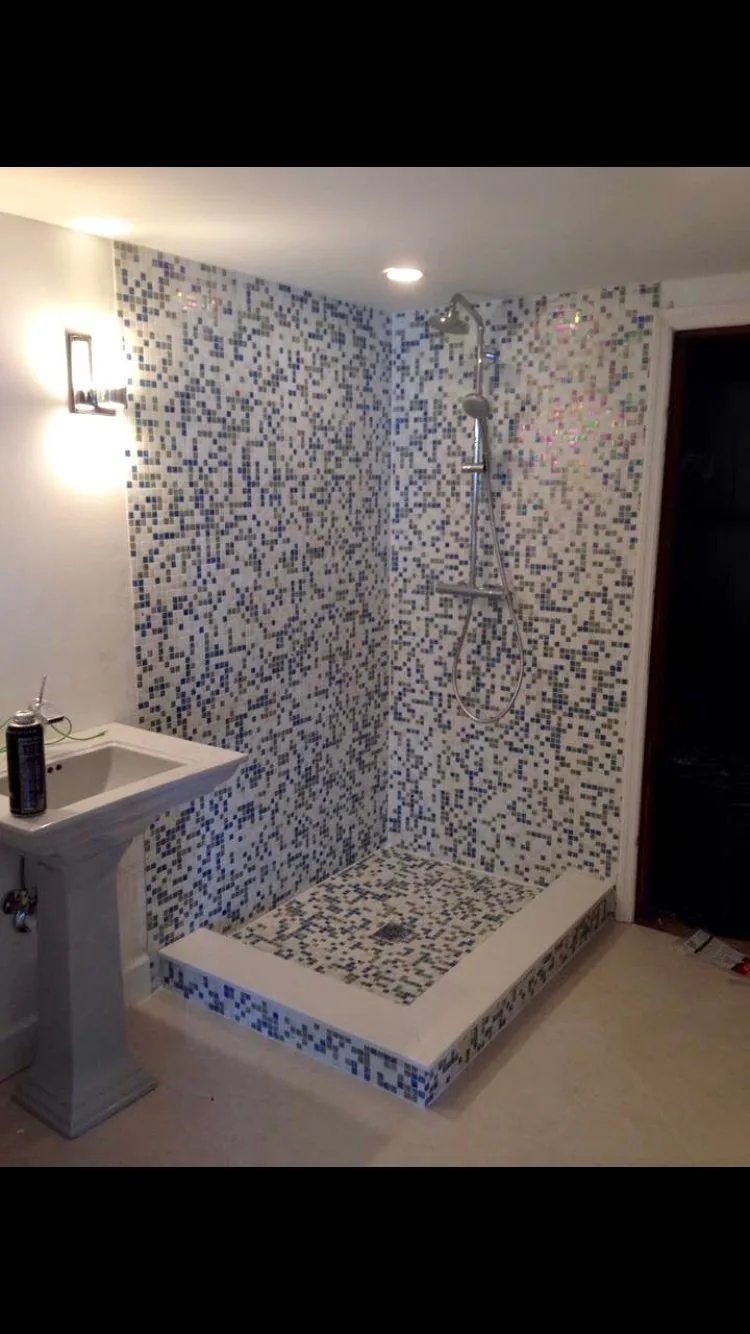
Mosaic and Grout Lines
Grout is porous and traps mineral deposits more readily than tile surfaces. The rough texture gives calcium carbonate more surface area to bond to.
Recommended approach:
- Make a paste of baking soda and water
- Apply to grout lines and spray lightly with vinegar to activate fizzing
- Scrub with a grout brush or old toothbrush
- Rinse and repeat if needed
For persistent grout staining, a hydrogen peroxide solution can help lift discoloration after the mineral deposits are removed. Avoid chlorine bleach on colored grout as it can cause fading.
Prevention Strategies for McGregor Homeowners
Removing deposits is only half the battle. The real goal is preventing buildup from reaching the point where heavy cleaning is needed. These habits reduce mineral accumulation significantly:
- Squeegee after every shower: Takes thirty seconds and removes water before it can evaporate and leave minerals behind
- Install a water softener: Whole-house softeners exchange calcium and magnesium ions for sodium, preventing deposits at the source
- Use a daily shower spray: Commercial products or a diluted vinegar mist applied after showering keep minerals from bonding
- Fix leaky fixtures: Constant dripping creates concentrated deposit zones that are harder to clean
- Improve ventilation: Run bathroom fans during and after showers to reduce humidity and speed drying
- Weekly maintenance cleaning: Light weekly cleaning prevents the need for aggressive monthly scrubbing
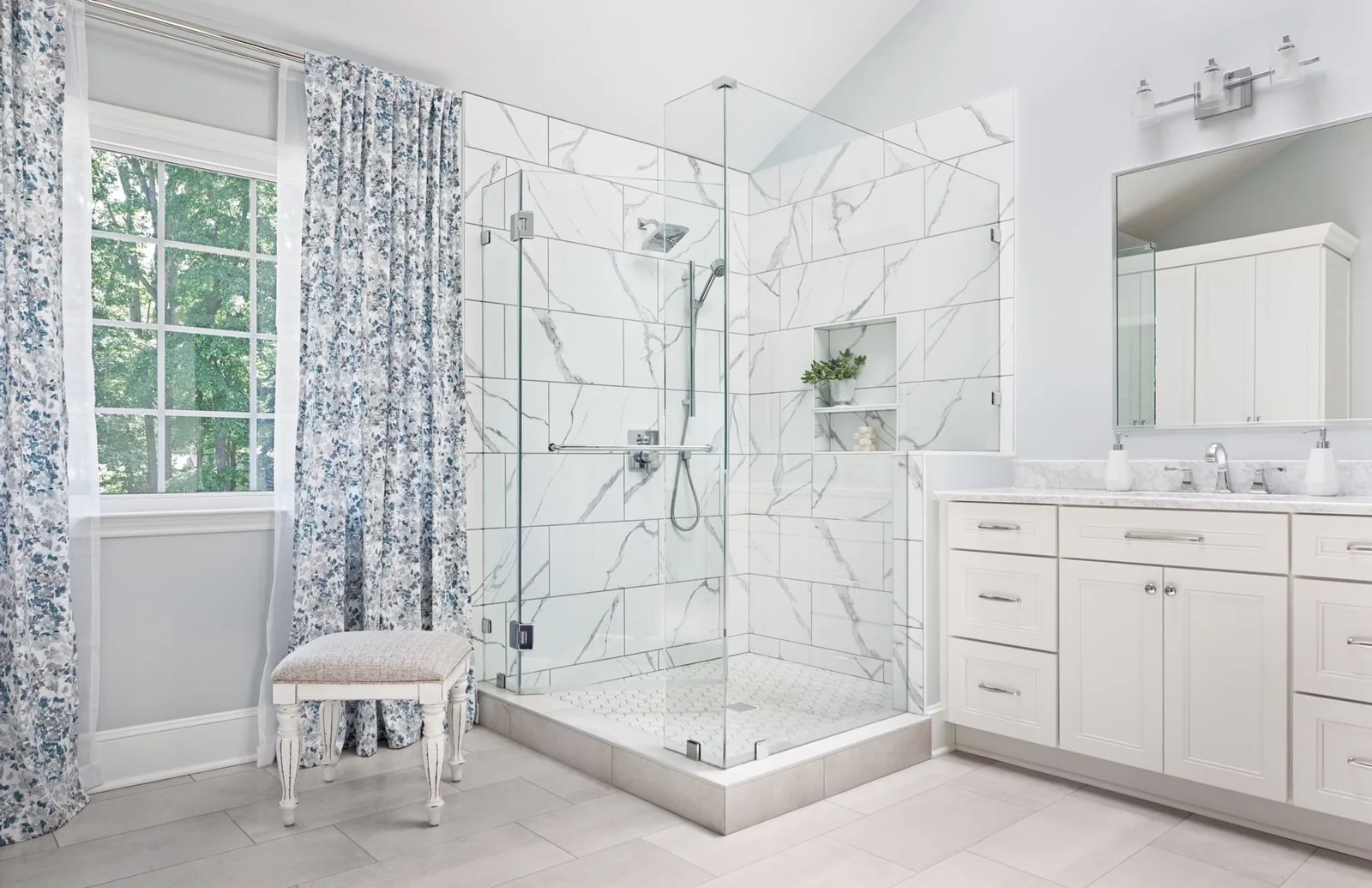
For homeowners planning a bathroom remodeling project in McGregor, consider tile choices that show water spots less. Matte finishes and textured surfaces hide mineral haze better than high-gloss tile. Larger format tile also means less grout, which reduces the surface area where deposits accumulate.
When to Call a Professional
Some situations require more than DIY cleaning. Contact a licensed tile contractor if you encounter:
- Etching on natural stone that cleaning does not improve
- Grout that remains discolored after thorough cleaning, which may indicate mold infiltration or grout failure
- Tile that feels loose or hollow, suggesting water damage beneath the surface
- Heavy buildup in hard-to-reach areas like steam shower ceilings or complex mosaic patterns
We also recommend professional assessment before starting any bathroom remodeling in Fort Myers or surrounding areas if existing tile shows signs of water damage. Mineral deposits themselves are cosmetic, but they can mask underlying waterproofing issues that are common in older Southwest Florida homes.
For outdoor spaces like lanais and pool decks, hard water is less of a concern since rain and hose rinsing naturally wash away deposits. However, if you have an outdoor shower or sink area, the same cleaning principles apply. Learn more about outdoor tile maintenance in McGregor for salt air and pool chemical considerations.
The Bottom Line
Hard water deposits are a fact of life for McGregor homeowners and across Southwest Florida. The mineral-rich aquifer that supplies our water creates ongoing maintenance needs for shower tile, but the problem is manageable with the right approach.
Match your cleaner to your tile type, establish a consistent maintenance routine, and address buildup before it bonds permanently. Porcelain and ceramic tile tolerate acid-based cleaners well, while natural stone requires pH-neutral products and extra caution. Prevention through squeegeeing, ventilation, and possibly a water softener reduces the frequency of deep cleaning.
If you are unsure about your tile type or cleaning method, or if deposits have progressed to etching or grout damage, consult a licensed tile contractor. We provide free, no-obligation estimates for homeowners in McGregor and throughout Southwest Florida. Call (239) 265-2814 to discuss your specific situation.