Coastal Bathroom Style Guide for Fort Myers Beach Homes
Walk through enough bathrooms in Fort Myers Beach and you see two interpretations of coastal design. One leans hard into the theme: seashell soap dishes, turquoise grout, anchor motifs on every surface. The other is quieter and harder to pull off. It borrows from the actual landscape and feels like it belongs here rather than like a souvenir shop. This guide covers the palettes, textures and materials that consistently work in SWFL homes without tipping into kitsch.
The Gulf Coast environment plays a real role in material and color decisions. Salt air, high humidity and intense sun affect how finishes age and how colors read over time. What looks sharp in a showroom up north can feel jarring once it is living in a Fort Myers Beach bathroom year-round.
Start With the Palette: Nature Does the Work
The most enduring coastal bathrooms in Southwest Florida draw their palette directly from the natural environment rather than from a mood board. Think about the actual colors you see at the beach: bleached shell white, warm sand, shallow-water aqua, sun-faded driftwood gray, the soft clay of low-tide flats. These are the colors that read as coastal without announcing it.
Warm whites and off-whites are the workhorses. A large-format porcelain in a warm white or pale linen tone on the floor makes a small bathroom feel open and light, which matters in the interior bathrooms that many Fort Myers Beach homes have. Pair it with a slightly deeper sand or warm greige on the walls and you get depth without heaviness. Cool grays can work but be careful: in flat interior light, they can read institutional rather than relaxed.
For accent color, blue-greens earn their place here because they actually exist outside your window. A watercolor-quality blue-green mosaic or a honed subway tile in sea glass tones adds a hit of color that feels genuinely local. The key is restraint: one surface, one accent zone, rather than color on every plane.
Texture Over Pattern
Heavy pattern tends to age quickly, and in a vacation or seasonal home that gets rented or sits empty part of the year, dated pattern is the first thing guests notice. Texture holds up for decades. In a Fort Myers Beach bathroom remodel, we consistently see homeowners move away from busy decorative tile toward materials that have tactile interest rather than visual noise.
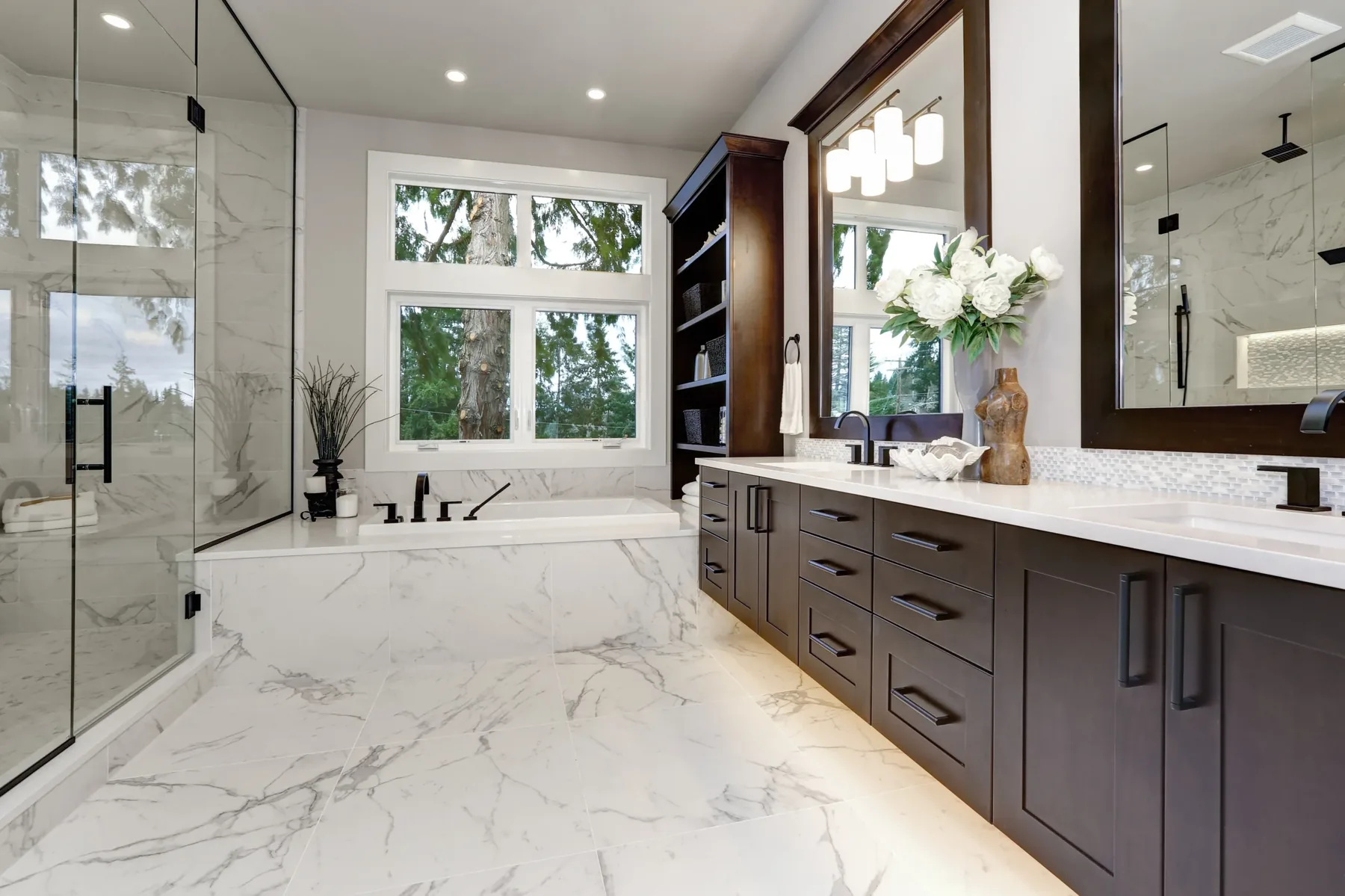
Honed finishes on marble-look porcelain are popular for good reason. They scatter light differently than polished surfaces, softening the whole room, and they show less water spotting in a humid coastal climate. Sand-textured porcelain on shower floors adds grip while still looking refined. Handmade-edge subway tile with slight surface variation gives a wall character without a loud pattern commitment.
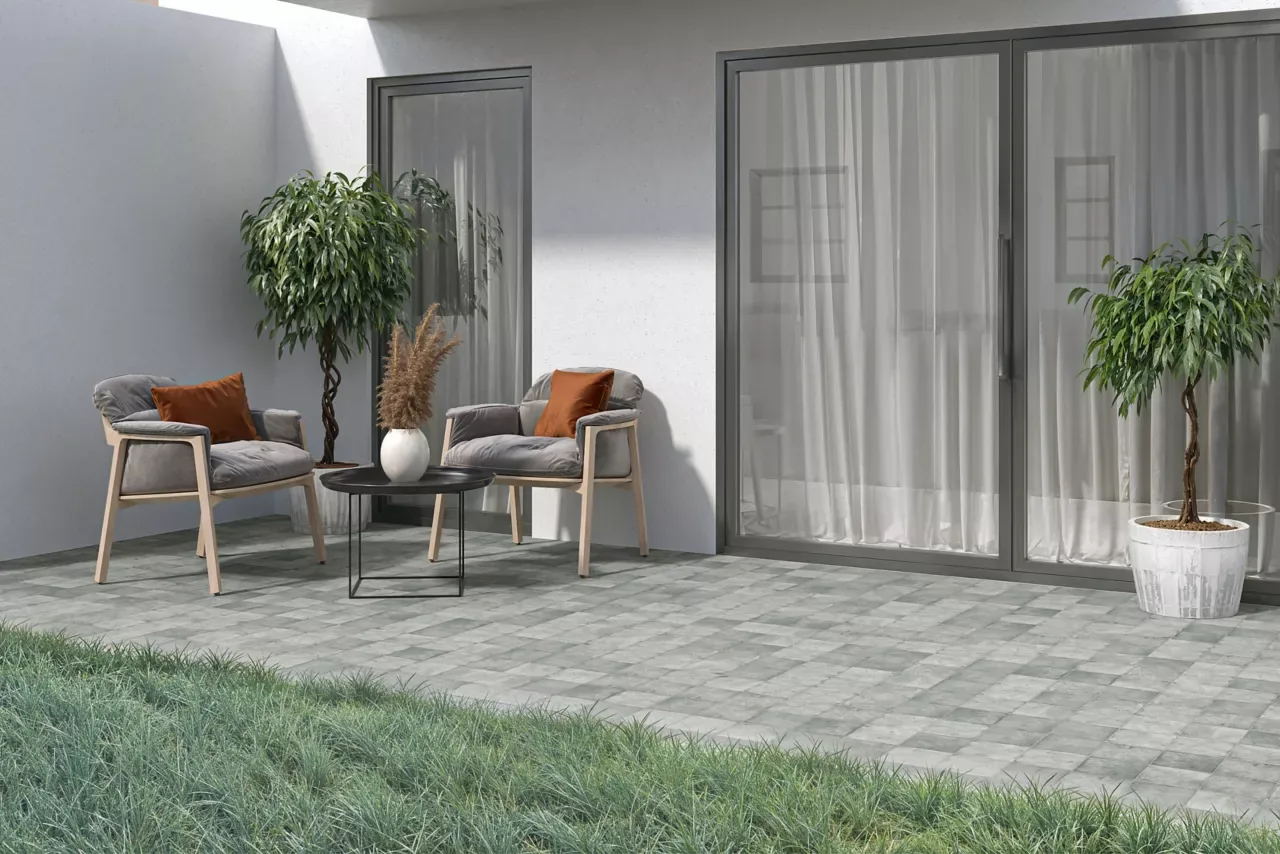
Limewash-effect and concrete-look tiles fit coastal interiors well because they read as organic and sun-bleached. Match the undertone to your palette: a warm greige concrete look pairs with driftwood wood-plank tile; a cool blue-gray concrete look pairs with crisp white fixtures and brushed nickel hardware.
Materials That Hold Up to the Gulf Coast Climate
Salt air accelerates oxidation on metal fixtures, humidity drives mold in grout joints if they are not sealed, and temperature swings between an air-conditioned interior and a hot lanai mean materials need to handle expansion and contraction well. Fort Myers Beach is a genuinely demanding environment for building materials.
Porcelain is the dominant material in coastal bathrooms for good reason: low absorption rate, resistance to salt air, and a surface that does not support mold growth the way natural stone can. For homeowners who want the look of marble or limestone, a high-quality porcelain with realistic surface variation is almost always a better long-term choice in a humid Gulf Coast bathroom.
If you do choose natural stone, honed finishes are more forgiving than polished ones in high-humidity environments, and consistent sealing is a maintenance commitment, not an option. We see beautiful natural marble installations in Fort Myers Beach homes that hold up well, but owners need to understand what that upkeep involves.
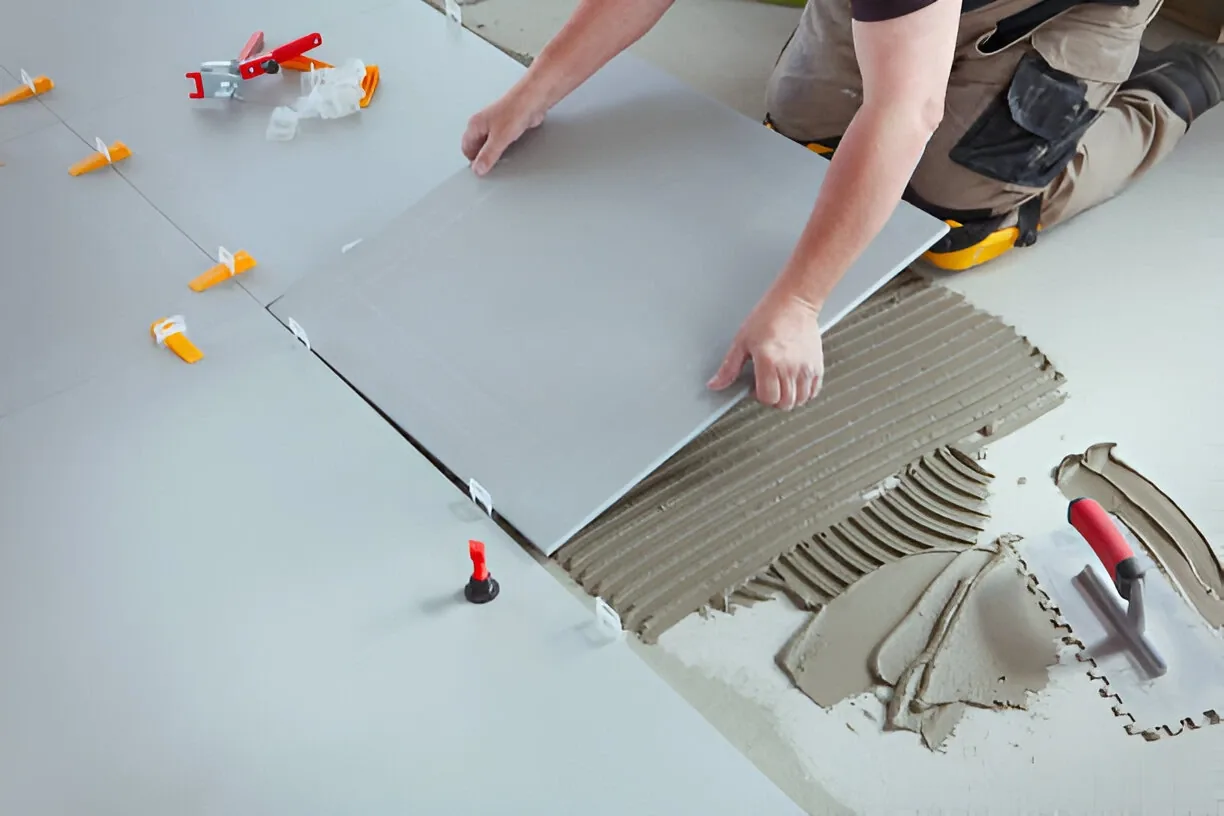
For grout, epoxy grout in wet areas like shower floors is the current best practice. It is harder to install than cement grout but nearly impervious to the moisture and salt air that degrade standard grout over time.
The Shower as the Design Anchor
In most Gulf Coast homes, the master bath shower is the room's visual centerpiece and the logical place to concentrate your tile budget and your design statement. A well-designed Fort Myers Beach bathroom often has a large-format porcelain on three shower walls, a complementary mosaic on the floor for slip resistance, and one accent wall, typically the back wall behind the showerhead, where the more expressive tile or a subtle pattern comes in.
Floor-to-ceiling tile in the shower eliminates the transition to painted drywall, which is a moisture vulnerability in humid coastal climates and also just looks cleaner and more finished. Curbless shower designs are popular here because they read as open and resort-like, but they require careful waterproofing and slope work; that is not a place to cut corners or for inexperienced installation.
Niches, bench seating and linear drains all contribute to the spa-like quality that coastal homeowners in Fort Myers Beach tend to want. These details are also places where tile cuts and setting work really show quality, so the installation matters as much as the material choice.
Extending the Coastal Feel to Floors and Vanity Walls
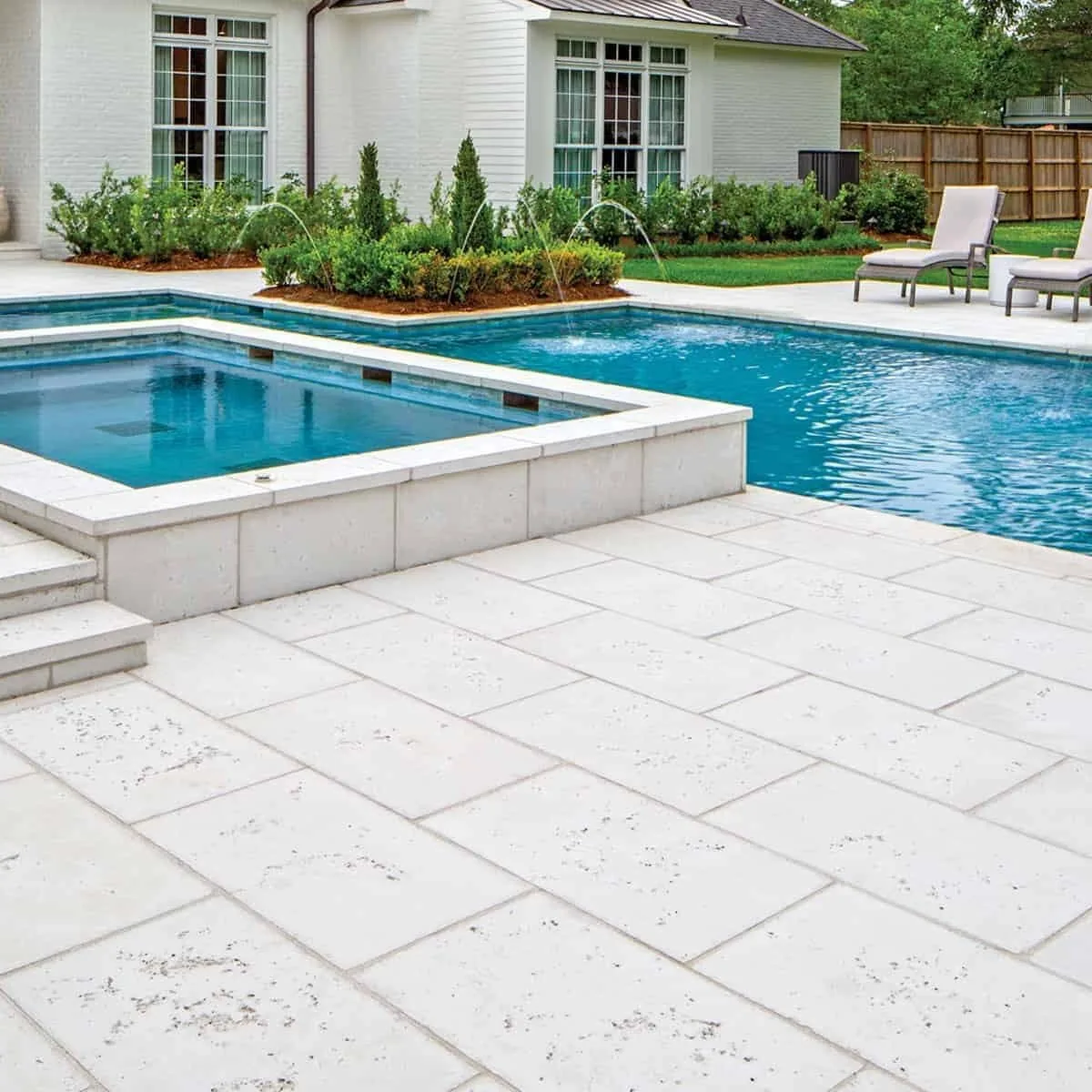
Bathroom floors in Fort Myers Beach homes often connect to outdoor spaces through a lanai or screened enclosure. Using a consistent tile family from the interior floor out to an outdoor shower or lanai creates a flow that feels intentional and makes the indoor space read as larger.
Vanity walls are a good place to add texture or a subtle pattern. A vertical stacked stone-look tile or a textured handmade subway in a soft aqua or sandy tone makes the vanity area feel designed without overwhelming a small space. Keep hardware finish consistent, brushed brass and brushed nickel both read well against coastal palettes, and avoid mixing more than two metal tones.
What to Avoid
A few patterns we see that tend to produce results homeowners regret:
- Contrast grout on light tile: Dark grout lines look bold at install and show every soap film and mineral deposit in a salt-air environment within months. Match grout closely to the tile tone unless you are committed to frequent cleaning.
- Glossy large-format tile on shower floors: Polished porcelain is beautiful on walls but hazardous underfoot when wet. Specify a textured or matte finish on any wet walking surface.
- Overdoing the accent tile: One statement surface, either the shower accent wall or the floor mosaic, is enough. Running busy decorative tile on every border and niche in a small bathroom produces visual chaos rather than personality.
- Skipping waterproofing: In a Fort Myers Beach home, water intrusion behind tile is a serious problem that becomes expensive quickly. Proper waterproofing membrane installation should never be treated as optional.
The Bottom Line
Coastal bathroom design done well is about editing down to the elements that genuinely evoke the Gulf Coast environment, quality materials that hold up to salt air and humidity, a palette drawn from the actual landscape, and texture that rewards a close look. It is not about themed decoration. Fort Myers Beach homeowners who commit to this approach end up with bathrooms that feel genuinely local, age gracefully, and work as hard as the climate demands.
If you are planning a bathroom renovation and want a licensed tile contractor familiar with what works in Southwest Florida homes, reach out for a free estimate or browse our client reviews to see recent project work from the area. Dynasty Tile has been serving Southwest Florida since 2016 and can be reached at (239) 265-2814.