Condo Tile Renovations in Marco Island: What You Need to Know Before You Start
Tile renovation in a high-rise or mid-rise condo is a different project from a house job. If you own or manage a unit on Marco Island, you already know the drill: the condo association has rules, the neighbors below you have ears, and getting materials up to the sixth floor on a shared elevator is not as simple as pulling a truck up to the garage. We work in Southwest Florida condos regularly, and the same friction points come up every time. This post walks through the practical side so you can plan ahead and avoid the common surprises.
None of this substitutes for reading your association's actual governing documents. Every building on Marco Island operates under its own declaration, and requirements vary significantly from one property to the next. What we can offer is an explanation of the concepts and logistics that apply broadly, so you go into the approval process knowing the right questions to ask.
Why Condo Associations Care About Tile
In a stacked building, the floor of your unit is the ceiling of the unit below. Tile and stone transmit impact sound efficiently, especially footfall and chair scraping. Carpet absorbs that noise; hard floors amplify it. When condo associations started seeing a wave of owners ripping out carpet and installing porcelain or stone, the noise complaints followed. The association response was to require sound-rated underlayment systems before any hard flooring could go in.
This is not a Florida-specific rule or a Marco Island-specific ordinance. It is a policy written into individual condo documents, and the specific requirement varies by building. Some associations reference a minimum Impact Insulation Class (IIC) rating. Others cite a Sound Transmission Class (STC) number. Some buildings require both. The ratings are a measure of how well the floor assembly blocks airborne and impact noise from reaching the unit below. Higher numbers mean better performance.
Understanding IIC and STC Ratings
IIC measures impact noise, the kind created by footsteps, dropped objects, or furniture being dragged. STC covers airborne sound transmission, things like voices and music. For tile floors in condos, IIC is typically the number your association will focus on because the hard surface of tile transmits impact so directly.
A bare concrete slab with tile bonded directly to it has essentially no impact noise protection. Adding a sound underlayment, a resilient mat or membrane between the slab and the tile setting bed, raises the IIC number significantly. The actual gain depends on the product, its thickness, and how the installation is carried out. Products are tested and certified by independent labs, and those reports are what you bring to the board or property manager when submitting for approval.
One thing to keep in mind: the IIC rating printed on a product label is measured under controlled lab conditions. Real-world performance in your unit will be influenced by the specific slab, the tile assembly thickness, transitions to adjacent flooring, and whether perimeter gaps are correctly handled. An experienced tile contractor on Marco Island who has done condo work before will know which underlayment systems perform reliably and how to install them so the real-world result matches the spec.
The Board Approval Process in General Terms
Most condo associations on Marco Island and throughout SWFL require written approval before any renovation work begins inside a unit. The process usually involves submitting a description of the work, specifying the materials and underlayment system you plan to use, and sometimes providing proof that your contractor is licensed. Some buildings also require a deposit held during the renovation to cover any damage to common areas.
Allow more time than you expect for approval. Boards often meet monthly, and missing the cutoff means waiting another cycle. Some buildings have an architectural review committee that evaluates proposals before the full board sees them, which adds another step. Starting this process before you finalize your tile selection makes sense because you may need to adjust your underlayment spec to meet the building's minimum rating, which can affect your setting bed thickness and finished floor height.
Height changes matter more in condos than in houses. If the new floor assembly raises your finished floor by a noticeable amount, you may need to address transitions at doorways, bathroom thresholds, and closets. Your contractor should take an elevation reading before anything is ordered so there are no surprises when installation begins. For a detailed look at what a bathroom remodel on Marco Island involves in a condo setting, the process considerations we describe there apply here as well.
Elevator and Building Logistics
Getting tile into a high-floor condo unit is a logistical job in itself. Marco Island condos typically have service elevators or designated freight hours, and you need to reserve that time in advance with building management. Porcelain and stone are heavy. A pallet that moves easily off a truck onto a house slab becomes a series of careful hand-truck loads when you are navigating parking garages, lobby floors, and elevator cabs.
Good condo contractors pre-stage materials thoughtfully. Large-format tiles are particularly heavy per box and awkward to maneuver in tight elevator lobbies. Your contractor should count elevator trips into the project schedule and confirm building rules on protective padding. Some buildings require elevator cab padding and floor protection before any materials move through, and violating that policy can mean losing building access for the day.
Noise curfews are another scheduling factor. Most residential buildings on Marco Island restrict construction noise to specific weekday hours and prohibit loud work on weekends. Tile cutting generates significant noise, and demo is louder still. Ask specifically how your contractor handles curfews and whether the project schedule reflects building rules rather than the hours they would prefer to work.
Dust and Neighbor Coordination
Tile demolition in a condo creates dust that travels. Even with plastic sheeting over doorways, fine dust from grinding and cutting gets into hallways if the crew is not careful. Negative pressure setups, careful door management, and high-filtration vacuums on grinders are standard practice in buildings where hallway air quality matters.
Notifying adjacent unit owners before demo starts is courteous and in some buildings required. The neighbor sharing your wall may not be affected much, but the unit below will feel every impact. A quick note under the door goes a long way toward avoiding complaints to management that can complicate your project mid-stream.
Choosing Tile That Works in a Condo Setting
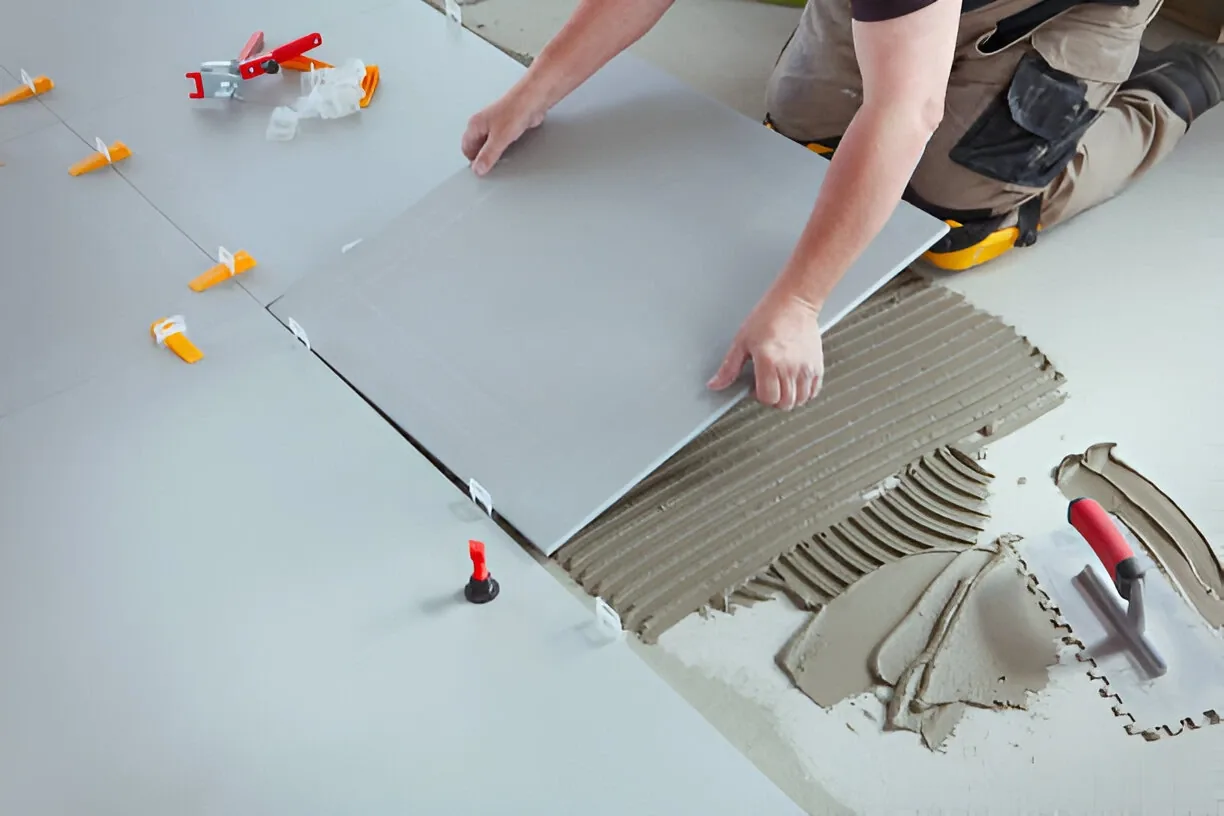
The tile itself does not change because you are in a condo rather than a house. Porcelain remains the go-to choice for durability and moisture resistance, which matters especially in bathrooms and kitchens where Southwest Florida humidity is always a factor. Large-format tiles are popular in Marco Island condos right now for the cleaner, more open look they create, and they work well with sound-rated assemblies as long as the installer uses full-coverage mortar and handles lippage carefully.
If you are updating a kitchen or bathroom in the same project, coordinating tile selection while you already have board approval can save you a second approval cycle. Our team handles kitchen tile remodeling on Marco Island as well, and combining scopes often makes the logistics easier on everyone involved.
The Bottom Line
Condo tile renovation on Marco Island is absolutely doable, but it rewards planning. Get your association documents early, understand the IIC or STC requirement your building sets, and choose a contractor who has done condo work before and knows how to handle approvals, elevator logistics, and noise curfews without turning the project into a problem for you or your neighbors. Dynasty Tile is a licensed tile contractor based in Fort Myers, serving Southwest Florida since 2016. Reach out for a free estimate and we can help you think through what the job will actually involve.