Wood Look Tile in a Marco Island Great Room: Making the Transition Work
Marco Island homeowners love the warmth of wood flooring, but Southwest Florida humidity and salt air make real hardwood a risky choice for great rooms that open to lanais. Wood look porcelain tile gives you the same visual appeal without warping, cupping or mold concerns. The catch is that running the same plank tile across multiple spaces demands careful planning up front.
We have installed continuous wood look tile floors in dozens of Marco Island homes, from single-story canal-front properties to two-story Gulf Access residences. The installations that age best share one trait: the homeowner and installer agreed on layout details before the first plank was laid. Here is what to consider before your great room remodel begins.
Start With Grout Line Planning
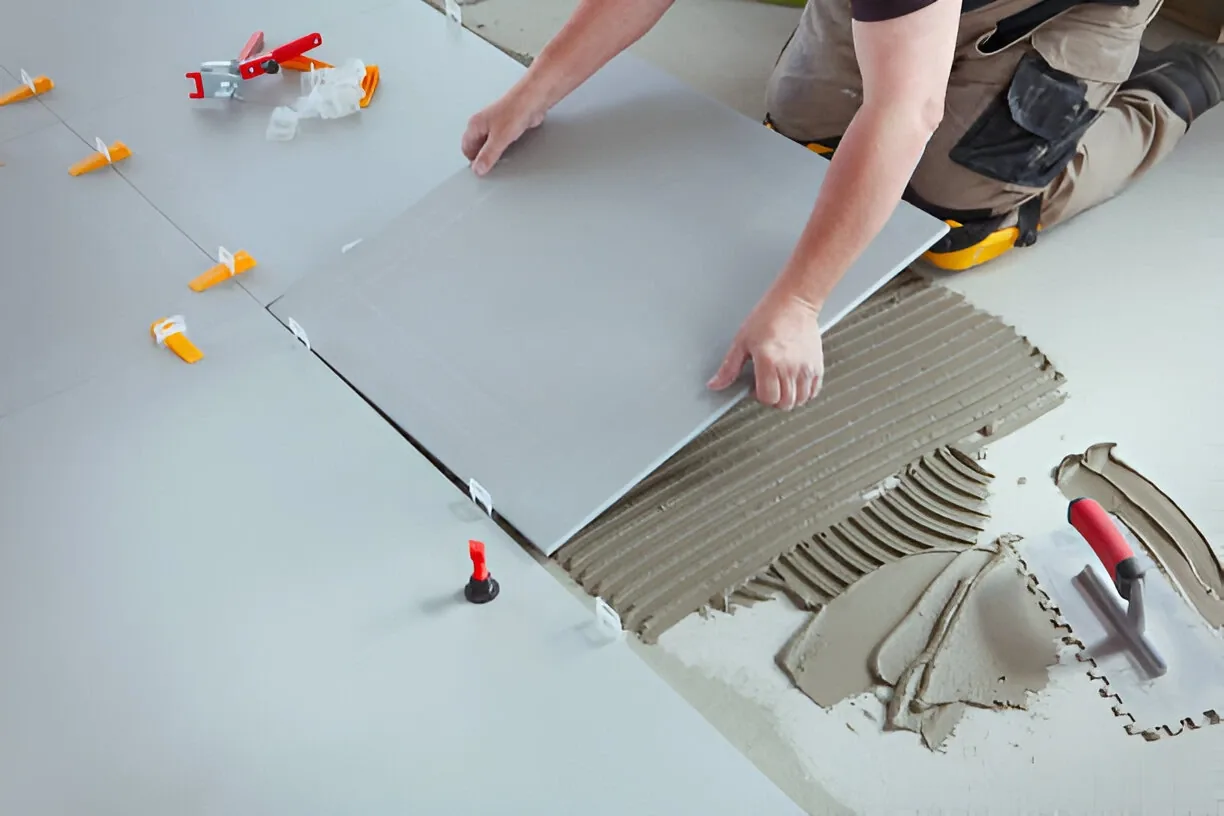
Grout lines are where most wood look tile installations lose the illusion. Too wide and the floor reads as obvious tile. Too narrow and you risk lippage on long planks. For wood look plank tile in a Marco Island great room, we recommend 1/16 inch to 1/8 inch grout lines depending on the specific product and substrate flatness.
The bigger question is grout color. Many homeowners default to bright white or stark gray, but both choices fight the wood aesthetic. Match your grout to the mid-tone of the plank rather than the lightest or darkest shade. This keeps the grout line visible enough to show the plank edges without creating a grid that breaks up the wood grain flow. In rooms with heavy natural light from sliding lanai doors, test grout samples at different times of day before committing.
For continuous runs across a great room and into a kitchen, plan your starting line so cut tiles at walls are balanced on both sides. A layout that leaves a 2-inch sliver on one wall and a 10-inch piece on the other looks unintentional. Measure the room width, add one plank width, then divide by the plank width to find your optimal starting position.
Plank Direction Sets the Visual Flow
Plank direction does more than follow the subfloor. It guides the eye through the space and can make a great room feel longer, wider or more connected to adjacent areas. In Marco Island homes with great rooms that open to kitchens and lanais, we typically run planks parallel to the longest wall or perpendicular to the main light source from windows and sliding doors.
Running planks lengthwise down a great room toward the lanai creates a visual path that pulls you outside. This works well when your indoor and outdoor tile are the same product or closely matched. If your lanai slopes for drainage, which is common in Southwest Florida, the plank direction may need to adjust to accommodate the pitch without creating lippage at transition points.
Avoid changing plank direction between the great room and kitchen unless there is a clear architectural break like a step down or a wide cased opening. Continuous plank direction makes the space feel larger and more cohesive. If you must change direction, use a transition strip or border rather than butting planks at a 90-degree angle.
Tone Consistency Across Indoor and Outdoor Spaces
Wood look tile comes in a wide range of tones from bleached white oak to dark walnut. For Marco Island homes where the great room flows to a lanai, medium tones tend to work best. Light tones show sand and dirt tracked in from pool areas, while very dark tones show water spots and dust more readily.
Indoor and outdoor tile do not need to be identical, but they should be from the same color family. A slightly darker outdoor plank can help hide dirt from pool access while still reading as continuous flooring. The grain pattern should also be compatible. Some wood look tiles have heavy distressing or hand-scraped texture that reads differently in direct sun versus interior lighting.
Bring samples home and view them in your actual space. What looks cohesive in a showroom may clash under your specific lighting conditions. Check the tile at morning, midday and evening light. Marco Island west-facing lanais get intense afternoon sun that can make certain tones look warmer or cooler than expected.
Account for Southwest Florida Conditions
Marco Island homes face specific environmental challenges that affect tile installation. High humidity means your substrate must be fully dry before installation begins. Salt air does not damage porcelain tile itself, but it can affect the mortar and grout if the wrong products are used. Ask your installer about polymer-modified thinset and grout rated for exterior use in coastal environments.
Concrete slabs in Southwest Florida can develop moisture vapor transmission issues, especially in homes built close to the water table. A moisture test before installation prevents adhesive failure down the road. This is critical when running tile continuously from interior to exterior spaces where the slab may have different moisture conditions.
Thermal expansion is another factor. Outdoor tile expands and contracts with temperature swings more than interior tile. Your installer should include expansion joints at appropriate intervals and at any point where the tile meets a fixed object like a column or wall. Skipping expansion joints on a lanai can lead to tenting or cracked grout within a few years.
Transition Details That Matter
The point where your great room tile meets the lanai is the most visible transition in the installation. If you are using the same tile inside and out, a flush transition with matching grout lines creates the most seamless look. This requires careful planning of elevations during the substrate prep phase.
For sliding door thresholds, coordinate with your door installer early. Some threshold profiles work better with plank tile than others. A low-profile threshold that follows the plank direction looks cleaner than one that cuts across multiple planks.
Where wood look tile meets other flooring types in your home, use a transition strip that complements the wood aesthetic. T-moldings in matching wood tones or metal strips in brushed nickel or bronze work better than obvious tile transitions. The goal is to maintain the wood illusion throughout the sight lines of your great room.
Working With a Licensed Tile Contractor
Continuous wood look tile installations across great rooms, kitchens and lanais require more skill than a simple bathroom floor. Substrate flatness, layout planning and expansion joint placement all affect the final result. This is not a project where the lowest bid pays off.
Look for a licensed tile contractor with specific experience in large-format plank tile and indoor-outdoor transitions. Ask to see photos of completed projects where tile runs continuously across multiple spaces. Check reviews from other Marco Island homeowners who had similar work done.
During the estimate visit, a good installer will discuss layout options, show you where expansion joints will go, and explain how they will handle transitions at doors and other flooring types. They should also talk through the grout color selection process and when final decisions need to be made.
The Bottom Line
Wood look tile in a Marco Island great room gives you the warmth of hardwood without the moisture risk. The key is planning grout lines, plank direction and tone consistency before installation begins. Work with a licensed tile contractor who understands the demands of continuous indoor-outdoor runs in Southwest Florida. When done right, your great room, kitchen and lanai will feel like one cohesive living space that stands up to island life.
Ready to plan your wood look tile installation? Dynasty Tile LLC is a licensed tile contractor based in Fort Myers, serving Southwest Florida since 2016. We offer free, no-obligation estimates for great room and lanai tile projects across Marco Island and the surrounding area. Call (239) 265-2814 or reach out online to discuss your project.