Grout Haze, Efflorescence and White Residue on Tile: What You Are Actually Looking At
If you have noticed a white, chalky or filmy residue on your tile floors, shower walls, or lanai pavers, you are not alone. We get calls about this regularly from Port Charlotte homeowners who are not sure whether what they are seeing is a cosmetic nuisance or an early warning sign of a bigger problem. The answer depends entirely on which type of residue you are dealing with, and they are not all the same.
This article breaks down the three most common causes of white residue on tile, how to identify each one, and what action, if any, is actually warranted.
Grout Haze: The Most Common Culprit After New Tile Work
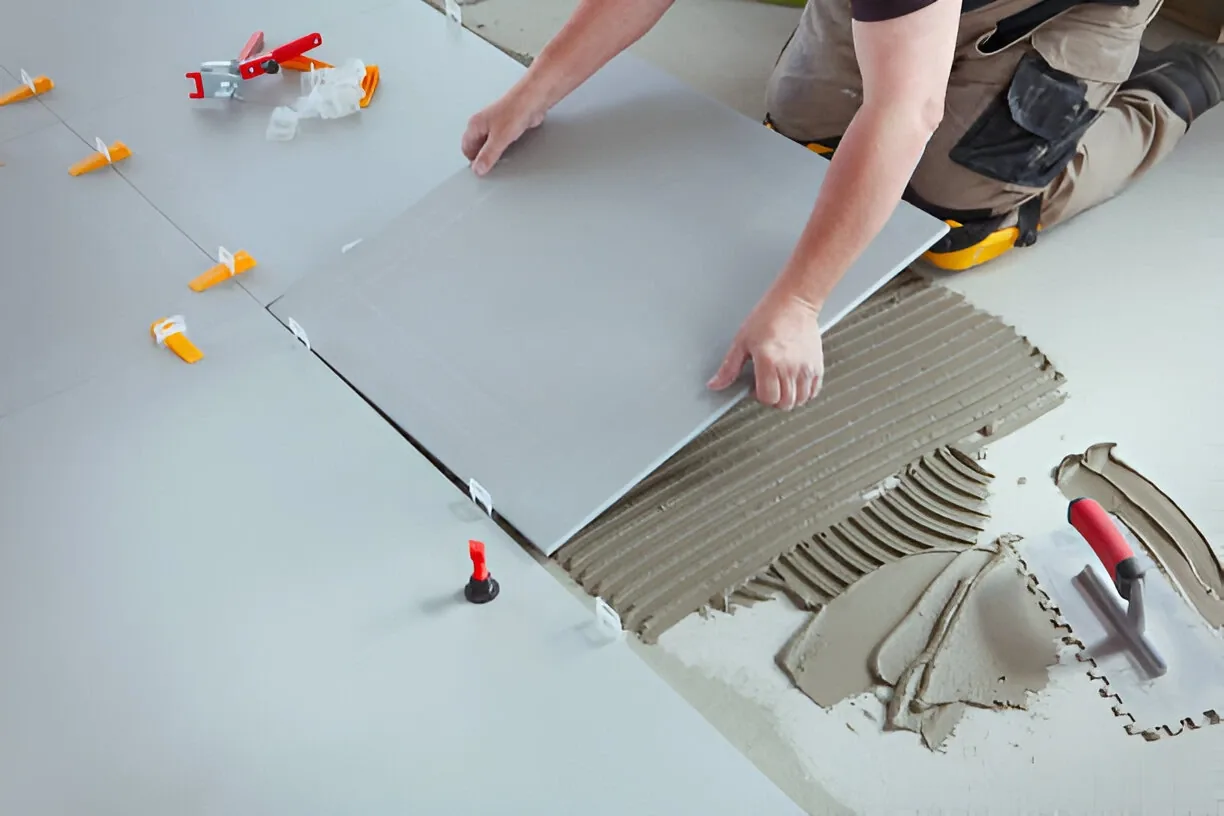
Grout haze is a thin, uniform film left on the face of tile after grouting. It happens when grout residue is not fully removed from the tile surface before it cures. On polished porcelain or glazed ceramic, it shows up as a dull, cloudy sheen rather than a solid white deposit. On matte or textured surfaces, it tends to look more like a faint powder sitting in the texture.
This one is almost always purely cosmetic, and it is entirely the installer's responsibility to address it during the finishing stage. If you had tile recently installed and you are seeing a uniform dull film across the field of the tile, grout haze is the likely explanation. A trained tile contractor in Port Charlotte will use the appropriate haze remover for your specific tile type. Using the wrong product, especially an acid-based cleaner on natural stone or certain porcelains, can permanently etch the surface, so this is not a job for a generic grocery store cleaner.
If the haze has been sitting for months, it becomes significantly harder to remove. The earlier it is addressed, the better the outcome.
Efflorescence: When Salt Migrates Through Your Tile
Efflorescence is different in both origin and implication. It occurs when water moves through a porous substrate, like a concrete slab, mortar bed, or grout, carrying dissolved salts with it. When the water evaporates at the surface, those salts are left behind as a white, sometimes fluffy or crystalline deposit.
In Southwest Florida, this is especially common on outdoor surfaces. Pool decks, lanai pavers, and any tile installed over a concrete slab that is exposed to moisture from below are all susceptible. Port Charlotte's sandy soil, the heavy rainfall Southwest Florida gets, and the humidity we deal with year-round create conditions where moisture migration through slabs is more common than in drier climates.
Unlike grout haze, efflorescence is not just cosmetic. It is telling you that water is moving through the assembly. Mild efflorescence on a well-sealed outdoor paver right after heavy rain is fairly normal and usually resolves on its own once conditions dry out. Persistent, recurring or heavy efflorescence indoors or in a shower can signal inadequate waterproofing, a drainage problem, or water intrusion from below. At that point, cleaning the surface is only treating the symptom.
If you are seeing white deposits returning repeatedly on your outdoor tile in Port Charlotte despite cleaning, it is worth having a professional evaluate whether there is a moisture source that needs to be addressed at the substrate level.
Hard Water Staining: Florida's Other White Film
Hard water staining is extremely common in Port Charlotte and throughout Southwest Florida. The region's water supply tends to be high in calcium and magnesium. When that water evaporates on tile, glass, or fixtures, it leaves a white or off-white mineral deposit behind. In showers, you will often see it at grout lines, around the shower head, and on glass enclosures. On pool tile, it tends to appear as a white band at the waterline.
Hard water deposits are cosmetic and carry no structural implication for your tile installation. However, they do build up over time and become harder to remove the longer they are ignored. Regular cleaning with a product formulated for mineral deposits will manage it. Avoid using anything abrasive on polished surfaces. For bathroom tile in Port Charlotte specifically, a simple squeegee routine after showering goes a long way toward preventing buildup.
One way to distinguish hard water staining from efflorescence: hard water deposits almost always appear where water sits and evaporates repeatedly, such as at grout joints at the base of a shower, around faucets, and along pool waterlines. Efflorescence tends to appear more broadly across a surface, sometimes in patterns that follow where moisture is migrating upward from below.
Soap Scum and Residue: Often Mistaken for the Above
Soap scum is a combination of soap, body oils, and mineral deposits. It tends to have a slightly gray or yellowish cast rather than a pure white, and it typically has a tacky or waxy feel if you run a finger over it. It is purely cosmetic and is removed with standard bathroom cleaners designed for soap scum. Like hard water staining, the key is regularity. Letting it accumulate over months makes it much harder to remove without risking scratching the tile or grout surface.
When White Residue Is a Warning Sign Worth Acting On
Most white residue on tile is cosmetic. But there are situations where it deserves closer attention:
- Efflorescence inside a shower or wet area that returns after cleaning suggests that moisture is moving through the tile assembly, which can indicate waterproofing has failed or was never properly installed. This is worth a professional evaluation. A shower that is leaking into the wall or subfloor will eventually cause far more damage than the tile itself.
- White deposits along grout lines that are accompanied by soft or crumbling grout can mean water has been getting into the grout and breaking it down. Regrouting or sealing alone may not solve the underlying issue.
- White staining on outdoor concrete or pavers that is expanding or flaking can indicate serious moisture intrusion. On a pool deck, this can sometimes point to a crack in the shell or deck coating that is allowing water to saturate the substrate below.
If any of these apply, surface cleaning is not the right first step. Getting a licensed contractor on site to look at what is actually happening below the tile is the right move.
The Bottom Line
Not every white film on your tile is a crisis, but not every white film is harmless either. Grout haze and hard water staining are cosmetic. Efflorescence deserves a second look, especially when it keeps coming back. The Florida climate, including the humidity, the rainfall patterns, and the soil conditions in areas like Port Charlotte, means moisture-related issues are genuinely more common here than in many other parts of the country.
If you are unsure what you are looking at or the residue keeps returning after cleaning, we are happy to take a look. Dynasty Tile has been serving Southwest Florida since 2016 as a licensed tile contractor, and we offer free, no-obligation estimates. Reach out at our contact page or call (239) 265-2814 to schedule a visit.