Tile Layout Patterns That Make Small Bathrooms Feel Larger
Walk into a compact bathroom in a newer North Naples development and the space can feel tight before you even turn on the light. Many homeowners assume they need to knock down walls or expand the footprint to gain that open, airy feel. But the truth is, the tile layout pattern you choose can do a lot of the heavy lifting when it comes to visual expansion.
We have installed tile in hundreds of small bathrooms across Southwest Florida, from condos near Vanderbilt Beach to single-family homes in the northern corridors. The patterns that work best here take into account not just square footage, but also our humid climate, the way light bounces off surfaces in high-moisture rooms, and the practical realities of living in a coastal environment.
Why Layout Direction Matters More Than You Think
Most homeowners pick a tile they love and hand the decision about layout over to the installer. That is a missed opportunity. The direction and pattern of your tile installation can either fight against your space or work with it to create an illusion of depth and width.
In a narrow bathroom, running large-format tile lengthwise draws the eye toward the back wall, making the room feel longer. In a square powder room, a diagonal layout breaks up the boxy feeling and adds visual interest without eating up floor space. These are not tricks, they are optical effects that trained installers use intentionally.
Here in North Naples, we also think about how natural light enters the room. Many smaller bathrooms have limited window space. A layout that reflects light toward the center of the room rather than absorbing it into grout lines will make the space feel brighter and more open.
Diagonal Layout: The Classic Space Expander
Diagonal tile installation, sometimes called a diamond pattern, is one of the most effective ways to make a small bathroom feel larger. Instead of laying tile parallel to the walls, you rotate it 45 degrees. This breaks up the rigid grid that can make a compact room feel like a cell.
The diagonal lines draw the eye outward toward the corners, which visually pushes the walls away. It works especially well in square or nearly-square bathrooms where a straight grid reinforces the boxy shape.
There are trade-offs to consider. Diagonal layouts require more cuts, which means more labor time and slightly more waste. In a small bathroom, the extra material cost is usually minimal, but it is worth discussing with your contractor upfront. The pattern also demands more precision during installation because any misalignment becomes obvious where the diagonal meets the walls.
For North Naples bathrooms, we recommend using a rectified porcelain tile with tight grout joints. The clean lines enhance the diagonal effect without visual clutter from thick grout lines. Light-colored grout helps maintain the open feel, though it does require more frequent cleaning in a high-moisture environment.
Herringbone Pattern: Movement and Elegance in Tight Spaces
Herringbone has become one of the most requested patterns we install in Southwest Florida bathrooms. The zigzag layout creates a sense of movement and flow that makes static spaces feel more dynamic. When done correctly, herringbone draws the eye along the length of the V-shape, which can elongate a short bathroom or widen a narrow one depending on your orientation.
There are two common approaches. Running herringbone lengthwise down the room emphasizes depth, which works well in galley-style bathrooms. Running it widthwise makes the room feel broader, which is ideal for small square layouts where you want to avoid a tunnel effect.
Herringbone does require more skill to install than a basic straight lay. The pattern must start from a carefully established center line, and any deviation compounds as you move across the floor. This is not a DIY-friendly pattern for most homeowners, especially in a wet area where proper slope and waterproofing are critical. We see a lot of herringbone jobs that started as weekend projects and ended with a call to our team to fix water intrusion issues.
For small bathrooms in North Naples, we often recommend a smaller tile size for herringbone, such as 3x12 or 4x16 inches. Larger formats can overwhelm a compact space and make the pattern feel busy rather than elegant. A porcelain tile with a subtle texture provides slip resistance without sacrificing the clean look that makes herringbone so appealing.
Large-Format Tile in a Straight Lay: Less Grout, More Space
It may seem counterintuitive, but using larger tile in a small bathroom can actually make the space feel bigger. The reason is simple: fewer grout lines. Every grout joint creates a visual break in the surface. Reduce the number of joints and your eye reads the floor as one continuous plane rather than a grid of individual pieces.
Large-format porcelain tile, such as 24x24 inches or even 24x48 inches, works exceptionally well in small bathrooms when installed in a straight lay pattern. Running the long dimension toward the far wall creates a strong directional line that pulls the eye through the space. This is particularly effective in master bathrooms where you want a clean, spa-like aesthetic.
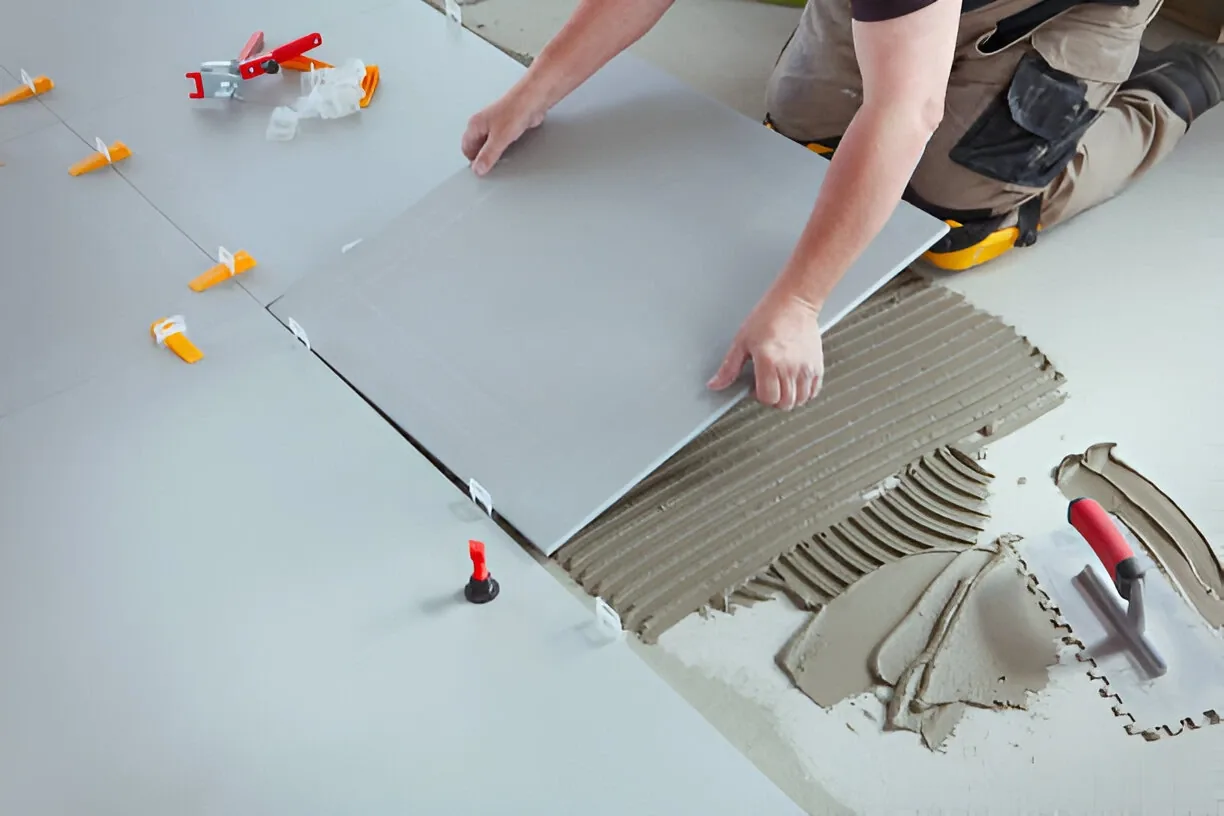
One consideration with large-format tile is subfloor flatness. Bigger tile does not bend to accommodate uneven surfaces. If your slab has dips or humps, the tile will telegraph those imperfections or, worse, crack under pressure. A licensed tile contractor will check floor flatness before installation and use self-leveling compound if needed. This step is not optional with large formats.
In our humid Southwest Florida climate, large-format tile also means fewer grout lines where moisture can penetrate. This reduces the surface area where mildew and mold can take hold, which is a practical benefit beyond just aesthetics. Many North Naples homeowners choose large-format porcelain for this reason alone, then discover the visual bonus of a more open-looking bathroom.
Combining Patterns for Visual Interest Without Clutter
You do not have to commit to one pattern for the entire bathroom. Strategic use of different layouts in different zones can add visual interest while still maintaining that sense of spaciousness. The key is restraint and intentionality.
One approach we use often is large-format straight lay on the main floor, then a contrasting pattern in the shower. A herringbone layout on the shower floor, for example, creates a focal point without overwhelming the room. The rest of the bathroom stays clean and simple, which keeps the space feeling open.
Another option is to use the same tile but change the layout direction between zones. Floor tile running lengthwise, then the same tile on a vanity wall running horizontally. This creates subtle definition without introducing new materials or colors that can make a small room feel chopped up.
What we do not recommend is mixing too many patterns in a compact space. A diagonal floor, herringbone shower walls, mosaic accent band, and checkerboard vanity top all in one small bathroom will feel chaotic rather than curated. Pick one primary pattern and use a second sparingly as an accent.
Practical Considerations for North Naples Bathrooms
Pattern selection is only one piece of the puzzle. In Southwest Florida, you also need to think about how your tile and layout will perform in our climate. High humidity means grout stays damp longer, which accelerates mildew growth on porous materials. Salt air from the coast can affect certain natural stone tiles over time. And our afternoon thunderstorms during hurricane season mean water management is always a priority.
Porcelain tile is our default recommendation for bathroom floors in North Naples. It is dense, non-porous, and resistant to moisture penetration. Pair it with an epoxy or urethane grout for maximum water resistance, especially in a small bathroom where every square foot of surface area matters.
If you are planning a bathroom remodel, now is the time to think about layout patterns. Once the tile goes down, changing your mind is expensive and disruptive. A bathroom remodeling project is the ideal opportunity to get the pattern right from the start.
We also see many homeowners in North Naples updating their bathrooms while preparing their homes for seasonal residents or guests. A well-chosen tile pattern can make a dated 1990s bathroom feel current and spacious without requiring a full gut renovation. Sometimes the right layout, combined with fresh grout and updated fixtures, is enough to transform the space.
The Bottom Line
Small bathrooms do not have to feel cramped. Diagonal layouts break up boxy shapes, herringbone adds elegant movement, and large-format tile in a straight lay minimizes visual clutter. The best choice depends on your specific room dimensions, lighting, and how you plan to use the space.
If you are unsure which pattern will work best in your North Naples home, we offer free, no-obligation estimates where we can look at your space and discuss options. As a licensed tile contractor serving Southwest Florida since 2016, we have seen what works and what does not in bathrooms of all sizes. You can reach us at (239) 265-2814 or explore our service areas to confirm we cover your neighborhood.