Best Backsplash Tile Styles for Coastal Kitchens in Sanibel
Sanibel kitchens live in a different world from most. Between the salt air rolling off the Gulf, the near-constant humidity, and the bold natural light that floods through those wide island windows, a backsplash that looks fine in a landlocked showroom can disappoint fast once it is installed. We have done enough kitchen tile work along this stretch of Southwest Florida to know which materials and styles perform, and which ones cause headaches six months later.
Whether you are renovating a primary residence, refreshing a seasonal home before winter guests arrive, or replacing dated tile that came with the house, this guide covers the materials and styles that hold up here.
Why Coastal Conditions Change the Conversation
Salt air is subtle but relentless. It accelerates corrosion on metal fixtures and can work into grout joints that were not sealed properly, slowly degrading the bond between tile and substrate. High humidity means morning condensation on cool surfaces, and kitchens near water see more daily moisture cycling than inland homes. Add in the fact that many Sanibel properties sit vacant for months at a time, which means fluctuating temperatures and no one around to catch a small problem before it becomes a big one.
The practical upshot: for a coastal kitchen backsplash, prioritize low-porosity tile, quality grout sealed consistently, and an installation done with the right waterproof setting materials behind the tile, not just on top of it. The tile you pick matters, but so does what is underneath it.
Coastal Palettes That Actually Fit the Light
Sanibel light is intense. On a clear afternoon, direct sun can wash out pale finishes and make busy patterns look chaotic. A few palettes work consistently well in this environment.
- Soft whites and off-whites: Classic white subway tile or a large-format white porcelain slab backsplash reads clean and airy without competing with the view outside. Warm whites with a slight cream undertone tend to feel less clinical than stark bright whites under Gulf light.
- Sea glass and seafoam greens: Muted blue-greens reference the water without going literal. A soft sage or dusty teal glaze on handmade-style ceramic tile adds texture and warmth. These hold their look longer than trendy saturated blues that can feel dated within a few years.
- Sand and greige tones: Warm neutrals in the taupe-to-greige range complement the natural materials common in coastal homes, including wood cabinetry, rattan accents, and quartz countertops with soft veining. A 3x12 or 4x12 tile in this palette is versatile and easy to live with.
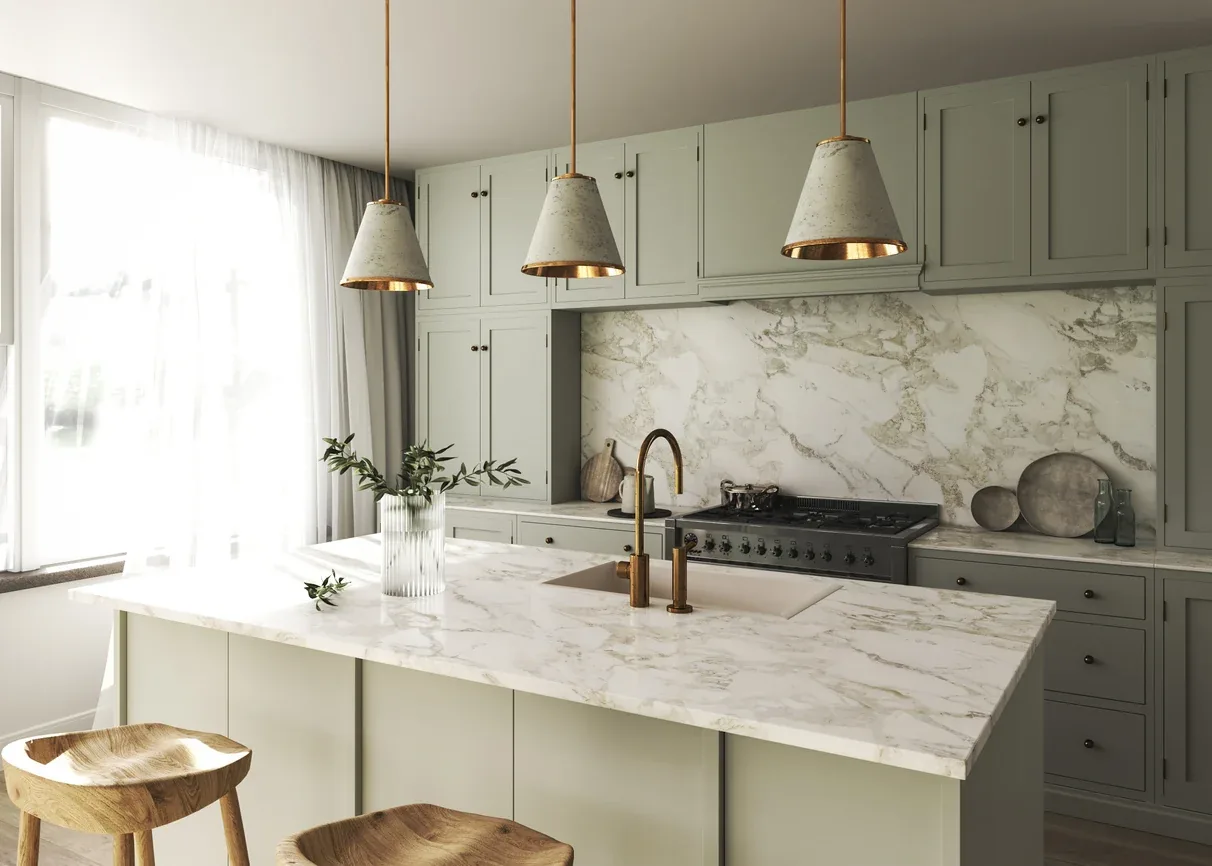
- Stone-look whites with subtle veining: A porcelain tile that mimics Calacatta or Statuario marble gives the kitchen an elevated, timeless look that photographs well and appeals to buyers if you ever sell. The porcelain version also performs better than real marble in a humid coastal environment.
Bold navy, deep charcoal, or heavily veined stone can work, but they show water spots more readily and may feel heavy where the design goal is light and openness. Use them as accents rather than full-field backsplashes if you want flexibility to update the kitchen later.
Material Choices: What Holds Up to Salt Air and Humidity
Not every tile handles a coastal environment equally. Here is what we reach for most often on Sanibel kitchen projects.
- Glazed ceramic and porcelain: The glazed surface is essentially impervious to moisture. Porcelain, which is fired at higher temperatures and has lower water absorption than standard ceramic, is the strongest everyday choice for a coastal kitchen. Large-format porcelain slabs for backsplashes are increasingly popular and reduce grout lines, which means less maintenance.
- Glass tile: Zero porosity, resistant to staining, and it reflects light beautifully in a kitchen that gets afternoon sun. The trade-off is that glass shows fingerprints and water spots more readily, so it suits homeowners who do not mind wiping down regularly. Glass mosaics work well as accents or as a full backsplash where the reflective quality is a feature.
- Natural stone with sealing: Marble and travertine have real appeal in coastal homes, but they require diligent sealing, especially near a range where grease splatter and steam are constant. If you love the look of natural stone, consider a honed rather than polished finish, it shows less wear and etching over time. We generally recommend discussing the maintenance commitment with your household before specifying natural stone in a heavily used kitchen.
- Cement and terracotta: These have a warm, handmade look that suits a relaxed coastal aesthetic. Both are porous, though, and in a Sanibel kitchen with humidity swings, they demand a proper sealing routine. If that is not your preference, a porcelain tile that mimics the look of cement or terracotta gives you the aesthetic with much lower upkeep.
Timeless vs. Trendy: Thinking in Decades, Not Years
Tile is not like paint. A backsplash is a multi-year commitment, so it pays to think about how a tile will look in ten years, not just how it photographs today. Large-format slabs, handmade-edge subway tile in soft neutrals, and micro-bevel finishes that add depth without loud pattern are all trends that draw on durable design principles. Trends that date faster include very strong geometric patterns in bold contrasting colors and heavily distressed or crackle-glaze finishes. None are wrong if you genuinely love them, but going in with eyes open about their lifespan is worthwhile.
For vacation rentals or investment properties on the island, staying closer to classic neutrals tends to serve resale and rental appeal better than a bold statement tile.
Getting the Installation Right in a Coastal Kitchen
A backsplash lives behind the range and above countertops, seeing daily heat, steam, and cooking grease. Proper installation here means more than pressing tile into mastic. In a Sanibel home where humidity is already a background factor, substrate prep and setting material selection matter as much as the tile itself.
Use a cement-based thinset rated for high-moisture areas near the range or sink. Confirm the substrate is flat and clean before tile goes up. Seal grout joints after installation and re-seal on a consistent schedule. If you are replacing an old backsplash, the removal phase is a good chance to inspect the wall behind for hidden moisture damage before new tile goes in.
Our team handles kitchen remodeling in Sanibel and Captiva with full attention to the prep work behind the tile, not just what shows on the surface. That is where the long-term performance lives.
Choosing a Tile Contractor for Sanibel Work
Island logistics add some complexity. Material deliveries, parking, and scheduling around seasonal residents or rental calendars all need to be coordinated in advance. Working with a licensed tile contractor familiar with Sanibel means you are not managing those details yourself.
Dynasty Tile is a licensed tile contractor based in Fort Myers, serving Southwest Florida since 2016. We offer free, no-obligation estimates and can walk through your kitchen in person to match tile style to the specific conditions of your home. Our client reviews give a good sense of the work and the process, and you can also explore the full scope of our kitchen tile installation services if you are thinking beyond the backsplash.
The Bottom Line
For a Sanibel coastal kitchen, the best backsplash tile is one that pairs a low-porosity material with a palette that works with the Gulf light rather than against it, and that is installed with the kind of substrate prep that actually handles long-term humidity. Glazed porcelain in soft white, warm neutral, or muted coastal tones covers most situations well. If you want stone, go with a sealed, honed finish and maintain it consistently. And whatever you choose, have it installed by someone who knows how SWFL conditions behave over time. The tile itself is the visible part; the workmanship underneath it is what makes it last.