Choosing Tile for a Sanibel Island Bathroom: Salt Air Comes First
If you live on Sanibel Island, you already know that salt air touches everything. It settles on your car, clouds your windows, and slowly works its way into every surface of your home. In your bathroom, where humidity is already high, salt-laden air accelerates wear on tile and grout in ways that inland homeowners never experience.
We have been installing tile in bathrooms across Southwest Florida since 2016, and Sanibel presents some of the toughest conditions we see. The combination of constant humidity, salt deposition, and the occasional storm surge means your tile choices matter more here than they would in Fort Myers or Cape Coral. This guide walks through what actually works for island bathrooms and what fails within a few years.
Why Salt Air Damages Bathroom Tile Faster on Sanibel
Salt does not just sit on surfaces. It is hygroscopic, meaning it pulls moisture from the air and holds it against whatever it touches. In a bathroom that already sees high humidity from showers, salt crystals create a constant wet environment that breaks down materials from the inside out.
Grout is the first thing to show damage. Cement-based grout is porous by nature. Salt water seeps in, evaporates, and leaves crystals behind. Those crystals expand and contract with temperature and humidity changes, creating micro-cracks that grow over time. Within two or three years on Sanibel, you will see grout that looks dark, crumbly, or stained no matter how often you clean it.
Tile itself can also suffer. Natural stone like marble, travertine, and limestone are especially vulnerable. Salt penetrates the stone, causing etching, discoloration, and surface degradation. We have pulled up marble shower floors on Sanibel that looked like they were ten years old when they were only three.
Tile Materials That Resist Salt Air
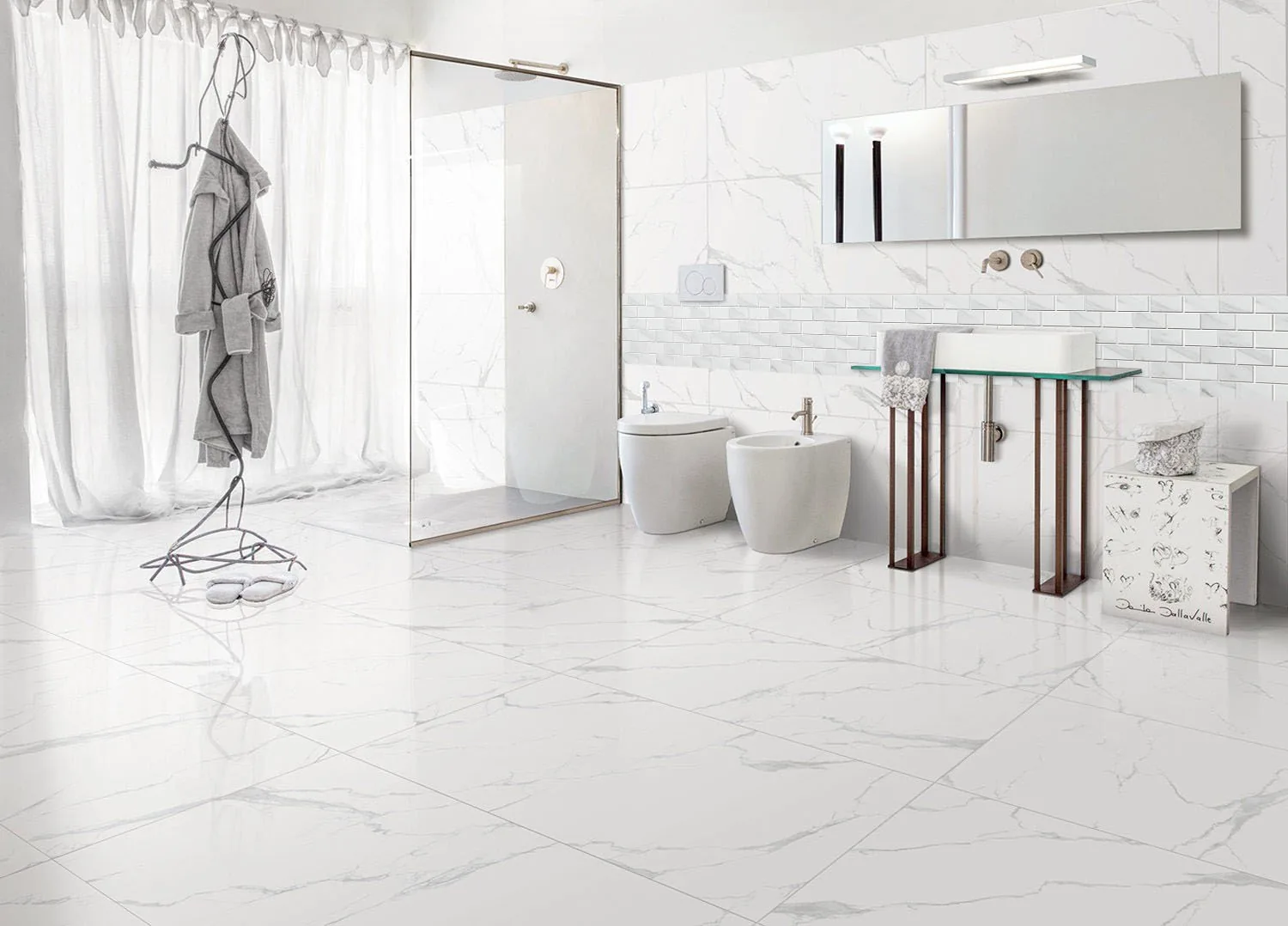
For Sanibel bathrooms, porcelain tile is the clear winner. Porcelain is fired at higher temperatures than ceramic tile, creating a denser, less porous surface. Salt and moisture cannot penetrate it easily. Look for porcelain with a PEI rating of 3 or higher for bathroom floors, and make sure it is rated for floor use, not just walls.
Large format porcelain tiles work particularly well in coastal bathrooms. Fewer grout lines mean fewer places for salt and moisture to collect. A 12x24 or 24x24 porcelain tile in a shower or on a bathroom floor will hold up much better than small mosaic tiles, which have exponentially more grout.
Ceramic tile can work in low-moisture areas like powder rooms, but we do not recommend it for full bathrooms on Sanibel. The glaze on ceramic tile can resist salt for a while, but once that glaze chips or wears, the porous clay body underneath absorbs moisture quickly.
Natural stone should be avoided in Sanibel bathrooms unless you are prepared for aggressive maintenance. Marble, travertine, and slate all require sealing every six months in coastal conditions, and even then, salt damage is almost inevitable. If you love the look of stone, choose a porcelain tile that mimics stone instead.
Grout Selection for Coastal Bathrooms
Grout matters as much as tile in a salt air environment. You have three main options, and the differences are significant.
Cement-based grout is the traditional choice and the least expensive. It requires sealing after installation and re-sealing every year in coastal areas. Even with perfect maintenance, cement grout on Sanibel will show wear within a few years. It is acceptable for low-budget projects, but understand what you are signing up for.
Urethane grout is a step up. It is more flexible than cement grout, resists staining better, and does not require sealing. Urethane grout handles the expansion and contraction caused by salt and humidity better than cement. It is a solid mid-range option for Sanibel bathrooms.
Epoxy grout is the best choice for salt air conditions. It is completely impervious to water and salt, will not stain, and never needs sealing. The downside is cost and installation difficulty. Epoxy grout is harder to work with and requires an experienced installer. But for a shower on Sanibel, the extra cost pays for itself in longevity. We install epoxy grout in almost every coastal bathroom remodel we do.
Waterproofing Behind the Tile
Tile and grout are only the visible layer. What happens behind them matters just as much, especially in a salt air environment where moisture is constant.
Every shower on Sanibel needs a proper waterproofing membrane behind the tile. This is not optional. Cement board alone is not waterproof. It will absorb moisture that gets through the grout, and that moisture will sit there, accelerated by salt, causing mold and structural damage over time.
Liquid waterproofing membranes like RedGard or sheet membranes like Kerdi create a continuous barrier that keeps water from reaching the substrate. These systems also help prevent salt from migrating into the wall cavity. For island bathrooms, we recommend a full waterproofing system from the shower pan to the ceiling.
If you are considering a DIY bathroom remodel on Sanibel, waterproofing is one area where we strongly recommend professional installation. Getting the details wrong around drains, corners, and penetrations can lead to expensive damage down the road. A licensed tile contractor will know how to integrate the waterproofing with your plumbing and ensure everything is properly sealed.
Design Choices That Help on Sanibel
Beyond material selection, certain design choices can reduce salt-related wear in your bathroom.
Lighter grout colors show salt staining less than dark grout. White, light gray, or beige grout will look cleaner longer than charcoal or black. This is purely cosmetic, but it matters for how your bathroom ages.
Slip resistance is critical for bathroom floors, especially in homes with older residents or seasonal visitors who may not be familiar with your space. Look for porcelain tile with a textured surface or a DCOF rating of 0.42 or higher for wet areas.
Ventilation is often overlooked. A high-quality bathroom fan that runs during and after showers reduces overall humidity, which in turn reduces the amount of moisture salt can latch onto. On Sanibel, run your fan for at least 30 minutes after every shower.
Maintenance for Longevity
Even with the right materials, maintenance matters. Rinse your shower walls and floors with fresh water after use to wash away salt residue. Wipe down tile surfaces weekly with a pH-neutral cleaner. Avoid acidic cleaners like vinegar on natural stone or unglazed tile, as they can damage the surface.
Inspect grout lines every few months. If you see cracking or discoloration, address it early. Small grout repairs are inexpensive. Waiting until water has penetrated behind the tile leads to much larger problems.
The Bottom Line
Sanibel Island bathrooms face tougher conditions than most. Salt air and humidity work together to degrade tile and grout faster than inland. Porcelain tile with epoxy grout and proper waterproofing gives you the best chance at a bathroom that looks good for years instead of just a few.
If you are planning a bathroom remodel on Sanibel or need advice on tile selection for coastal conditions, we offer free, no-obligation estimates. As a licensed tile contractor based in Fort Myers and serving Southwest Florida since 2016, we understand what works on the islands. You can reach us at (239) 265-2814 or explore our bathroom remodeling services for Sanibel and Captiva.