Choosing the Right Grout Width for Large Format Tile Floors
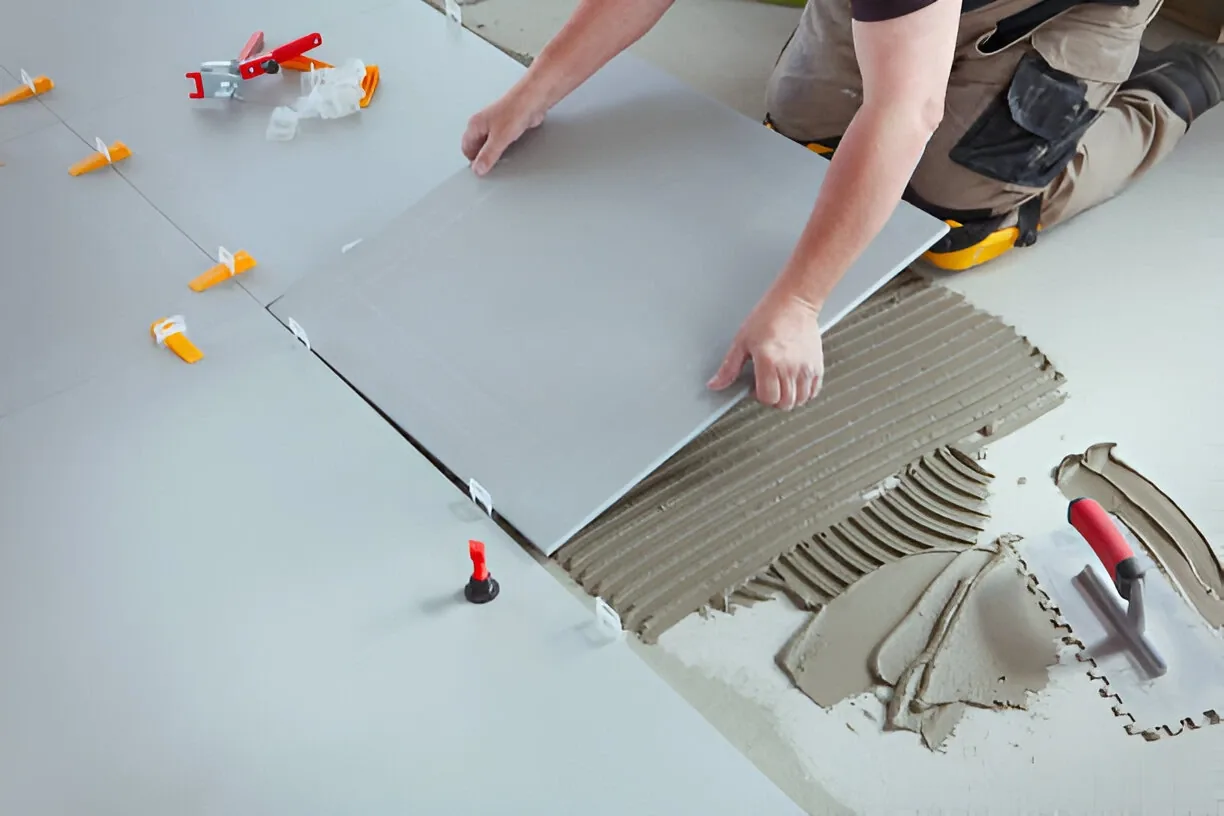
You have picked out beautiful large format porcelain tile for your home. The 24x24 or 32x32 size looks stunning in the showroom. Now your installer asks about grout joint width, and suddenly you are not sure what makes sense. This decision matters more than most homeowners realize, especially here in Southwest Florida where slab movement and humidity create unique challenges.
Getting grout joint width right affects both how your floor looks and how long it lasts. Too narrow and you risk lippage or cracked grout from slab movement. Too wide and you lose the sleek modern appeal that drew you to large format tile in the first place. This guide walks through what actually drives the decision so you can make an informed choice for your Port Charlotte home.
Understanding Rectified vs Non-Rectified Tile
The first factor is whether your tile is rectified. Rectified porcelain has been mechanically finished after firing to achieve nearly perfect straight edges with minimal size variation. Non-rectified tile, sometimes called pressed edge, has slightly rounded edges and more natural size variation from the kiln process.
Rectified tile allows for narrower grout joints because the edges are so precise. You will often see 1/16 inch or 1/8 inch joints recommended. Non-rectified tile needs more space to accommodate the natural variation, typically 1/8 inch to 3/16 inch minimum. Your tile supplier should specify whether your selection is rectified. If you are unsure, ask before installation begins.
Many homeowners in Port Charlotte choose rectified porcelain for the clean contemporary look. The tight grout lines create a nearly seamless appearance that works well in modern and transitional interiors. Just understand that rectified does not mean you can go arbitrarily narrow. Other factors still apply.
Warpage Tolerance and Lippage Prevention
Large format tile has a known characteristic called warpage. This is slight curvature across the face of the tile, measured as a percentage of the diagonal length. Even high-quality porcelain has some warpage tolerance built into manufacturing standards. The larger the tile, the more noticeable this becomes if joints are too tight.
When you lay a 32x32 tile with only a 1/16 inch joint, any warpage shows up as lippage. That is when one edge sits higher than its neighbor. You can feel it underfoot and see it in raking light. Lippage is not an installation defect if it falls within industry standards for the tile size and joint width chosen. But it looks poor and can create wear points.
The general rule we follow: wider joints help mask warpage. A 3/16 inch or 1/4 inch joint gives the installer room to adjust each tile and keep the surface plane consistent. For 24x24 tile with moderate warpage, 1/8 inch often works. For 32x32 or larger, consider 3/16 inch minimum unless the tile has exceptional flatness ratings.
Checking Tile Flatness Before Installation
Ask your installer to check flatness from multiple boxes before starting. Lay out several tiles edge to edge on a flat surface. Look for gaps or rocking. This preview tells you what joint width will actually work. If you see significant warpage, do not insist on narrow joints. The tile itself is dictating the answer.
Florida Slab Movement and Expansion Joints
Southwest Florida homes sit on concrete slab foundations. These slabs expand and contract with temperature and moisture changes. During our humid summer months, slabs absorb moisture and swell slightly. In drier winter periods, they contract. This movement is normal but it affects tile installations.
Grout joints serve a functional purpose beyond aesthetics. They accommodate minor slab movement without cracking the tile. If joints are too narrow and rigid, the tile has nowhere to go when the slab shifts. You may see random cracks through the tile itself, not just in the grout. This is more common in older Port Charlotte homes where the slab has already experienced years of seasonal movement.
Industry standards require expansion joints at specific intervals for large tile installations. These are wider joints filled with flexible sealant rather than grout. They typically run door to door or at 20 to 25 foot intervals. Your installer should plan these into the layout. Do not skip them to maintain a continuous look. That false continuity leads to failures.
Recommended Grout Widths by Tile Size
Here are practical recommendations based on what we see work well in Southwest Florida conditions:
- 24x24 rectified porcelain: 1/8 inch minimum, 3/16 inch for added safety against warpage
- 24x24 non-rectified: 3/16 inch minimum
- 32x32 rectified porcelain: 3/16 inch minimum, 1/4 inch if warpage is noticeable
- 32x32 non-rectified: 1/4 inch recommended
These widths balance the desire for a modern tight-joint look with the reality of tile manufacturing tolerance and Florida slab behavior. Going narrower than these minimums increases your risk of lippage complaints and grout cracking over time.
Grout color also plays a role in perception. Matching grout to the tile color makes joints appear narrower. Contrasting grout emphasizes the grid pattern. For large format tile, most homeowners prefer tone-on-tone grout to maintain the clean aesthetic. This is a personal choice but worth testing with samples in your actual lighting.
When to Consult Your Installer
Every installation has unique conditions. Your installer should evaluate the specific tile you selected, the slab condition in your home, and the room layout before committing to a joint width. Do not finalize your grout width decision before this conversation happens.
Ask these questions during your estimate:
- Is my tile rectified or non-rectified?
- What warpage tolerance does the manufacturer specify?
- What joint width do you recommend for this specific tile?
- Where will expansion joints be placed in my layout?
- What grout type do you recommend for my application?
A qualified installer welcomes these questions. They should explain their reasoning clearly. If someone promises perfect results with 1/16 inch joints on 32x32 tile without checking flatness first, that is a warning sign. Proper installation respects the material limitations.
For bathroom projects where waterproofing is involved, joint width decisions become even more important. The shower floor and walls have different requirements than dry floor areas. We handle bathroom remodeling in Port Charlotte with careful attention to these details because wet areas demand precision.
The Bottom Line
Grout joint width for large format tile is not just an aesthetic choice. It is a technical decision that affects installation quality and long-term performance. Rectified tile allows narrower joints than non-rectified. Larger tiles need more space to accommodate warpage. Florida slab movement means joints should not be minimized beyond what the tile can tolerate.
For most Port Charlotte homeowners installing 24x24 or 32x32 porcelain, plan on 1/8 to 3/16 inch joints for rectified tile and 3/16 to 1/4 inch for non-rectified. Let your installer verify flatness before finalizing. Use expansion joints where required. Choose grout color that supports your design goals.
These guidelines help you achieve the sleek large format look while building an installation that handles Southwest Florida conditions. When done correctly, your tile floor performs well for decades without lippage issues or random cracking from slab movement.
Dynasty Tile is a licensed tile contractor based in Fort Myers, serving Southwest Florida since 2016. We provide free, no-obligation estimates for tile projects throughout Port Charlotte and the surrounding area. Call (239) 265-2814 to discuss your installation.