Lanai Tile Ideas That Hold Up to Fort Myers Summers
The lanai is one of the most used spaces in any Fort Myers home, and one of the most punishing environments for flooring. Summer here means weeks of 95-degree heat baking the slab, afternoon storms that drop heavy rain fast, and salt air drifting in from the Gulf on most afternoons. We see a lot of lanais where the original tile held up fine for a decade, and just as many where the wrong choice turned chalky, cracked, or dangerously slick within two or three seasons.
If you are planning a new lanai floor or updating an existing one, the decisions you make upfront about material, finish, and format will determine whether the tile still looks good ten years from now. Below is a practical breakdown of what works, what fails, and why.
Why Florida Summers Are Uniquely Hard on Lanai Tile
Most tile specs are written for interior or temperate climates. Southwest Florida is a different category. UV exposure here is intense enough to fade and degrade certain glazes over time, especially anything with a bright pigment or a glossy surface that was not rated for full sun. Thermal cycling is the other culprit: tile heats up dramatically during the day and cools fast when afternoon storms roll through. Materials that expand and contract at different rates from the mortar bed underneath will work loose or crack at the joints given enough cycles.
Add persistent humidity, the occasional hurricane-force wind driving rain horizontally under a screen enclosure, and sandy soil that gets tracked in constantly, and you have a surface that needs to be genuinely tough, not just water-resistant.
Porcelain Pavers: The Most Reliable Choice for Lanais
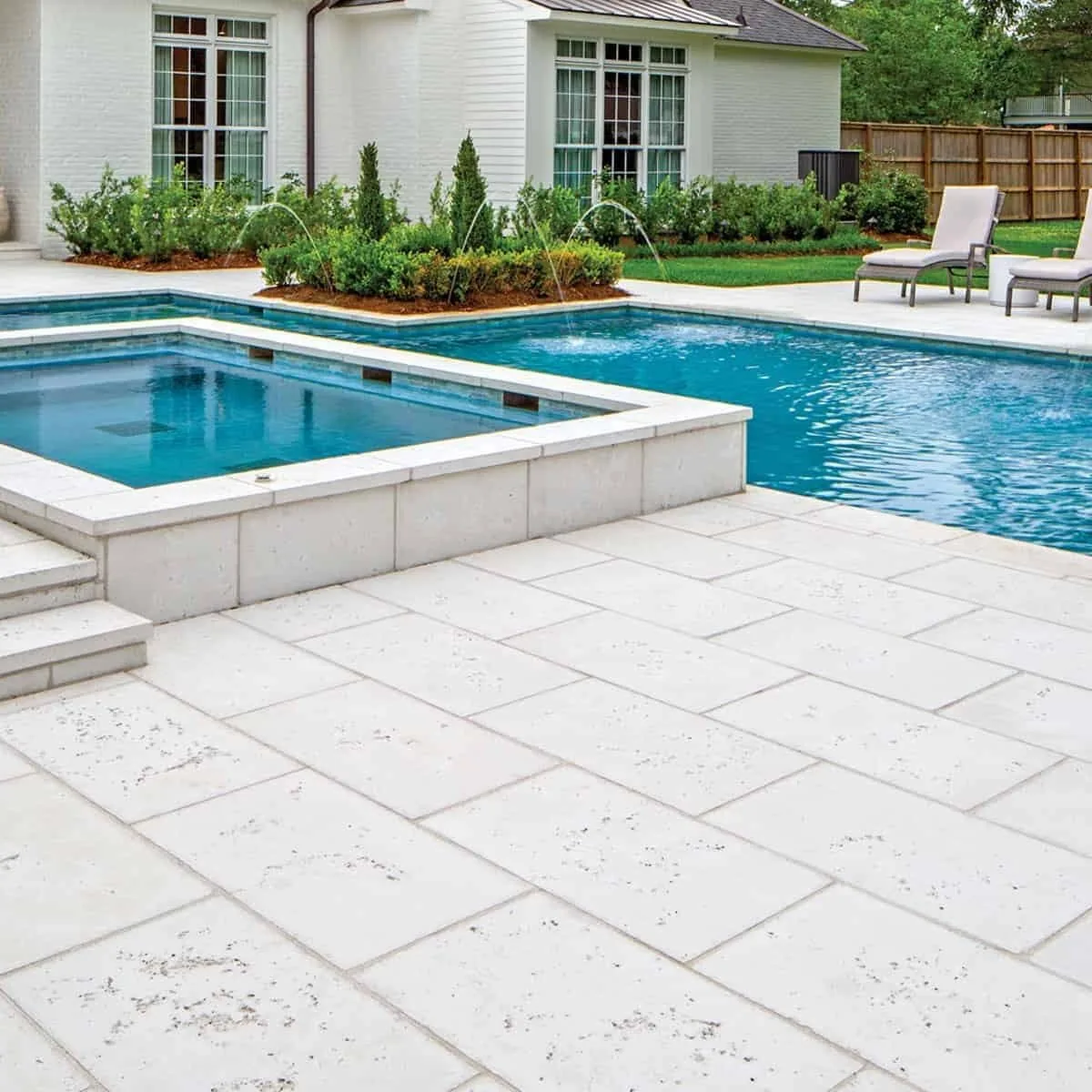
Thick-body porcelain pavers, typically 20mm in outdoor applications, have become the go-to for good reason. Their density makes them nearly impervious to water absorption, which matters a lot in a climate where standing water is a weekly reality from June through September. They do not require sealing the way natural stone does, and a quality through-body porcelain holds its color even after years of direct sun because the pigment runs all the way through the material rather than sitting on a glazed surface.
For finish, a brushed or matte texture is the right call on a lanai. Honed and polished surfaces look beautiful inside but become a liability outdoors when wet. Look for tile rated at least DCOF 0.42 for wet areas; a licensed tile contractor in Fort Myers can show you the spec sheets and point you to products that meet the threshold for your specific layout.
Large Format vs. Standard Size
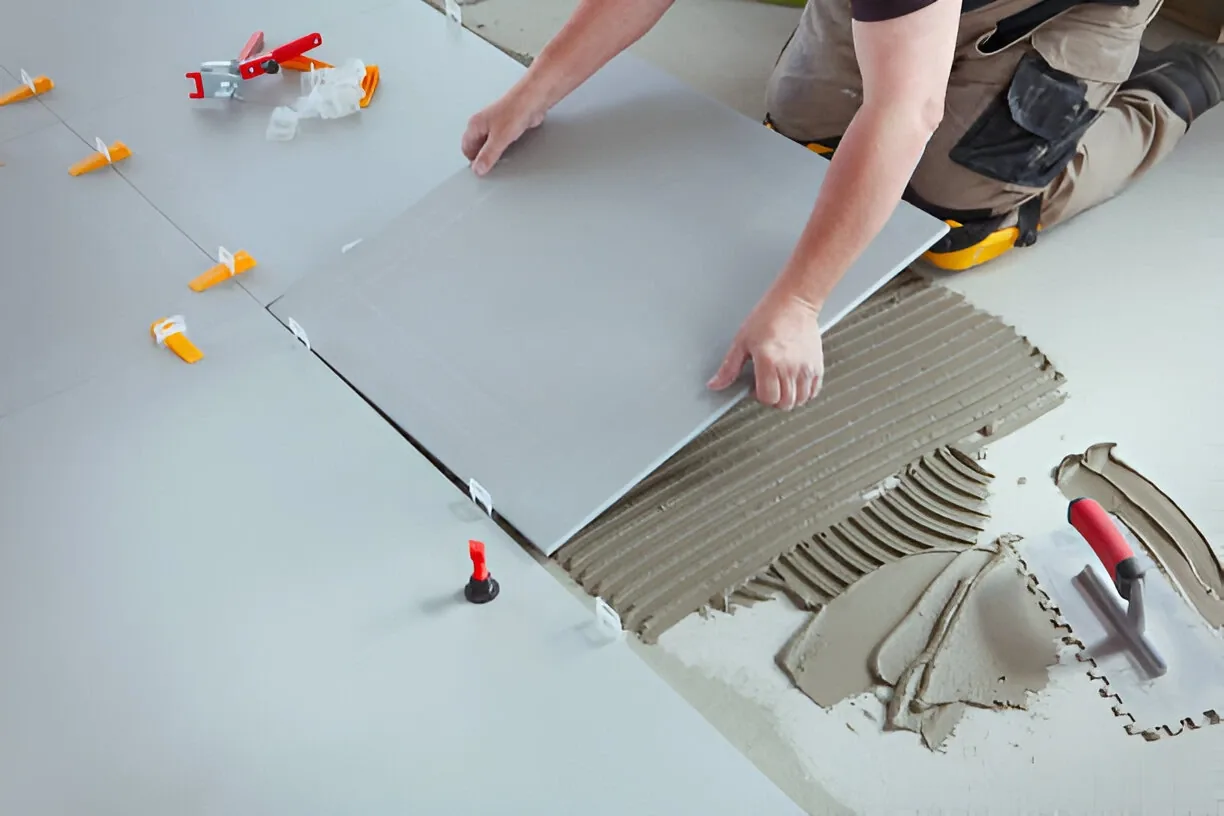
Large-format pavers (24x24 or bigger) are popular right now, and they work well on lanais that have a properly leveled slab. Fewer grout joints means less opportunity for water to infiltrate, and the look reads as cleaner and more contemporary. The trade-off is that installation requires more precision. Any unevenness in the substrate telegraphs through larger tiles faster than it does through smaller ones. We spend a lot of time on prep when laying large-format outdoors because the slab condition in older Fort Myers homes varies considerably.
Concrete-Look and Wood-Look Porcelain: What Holds Up
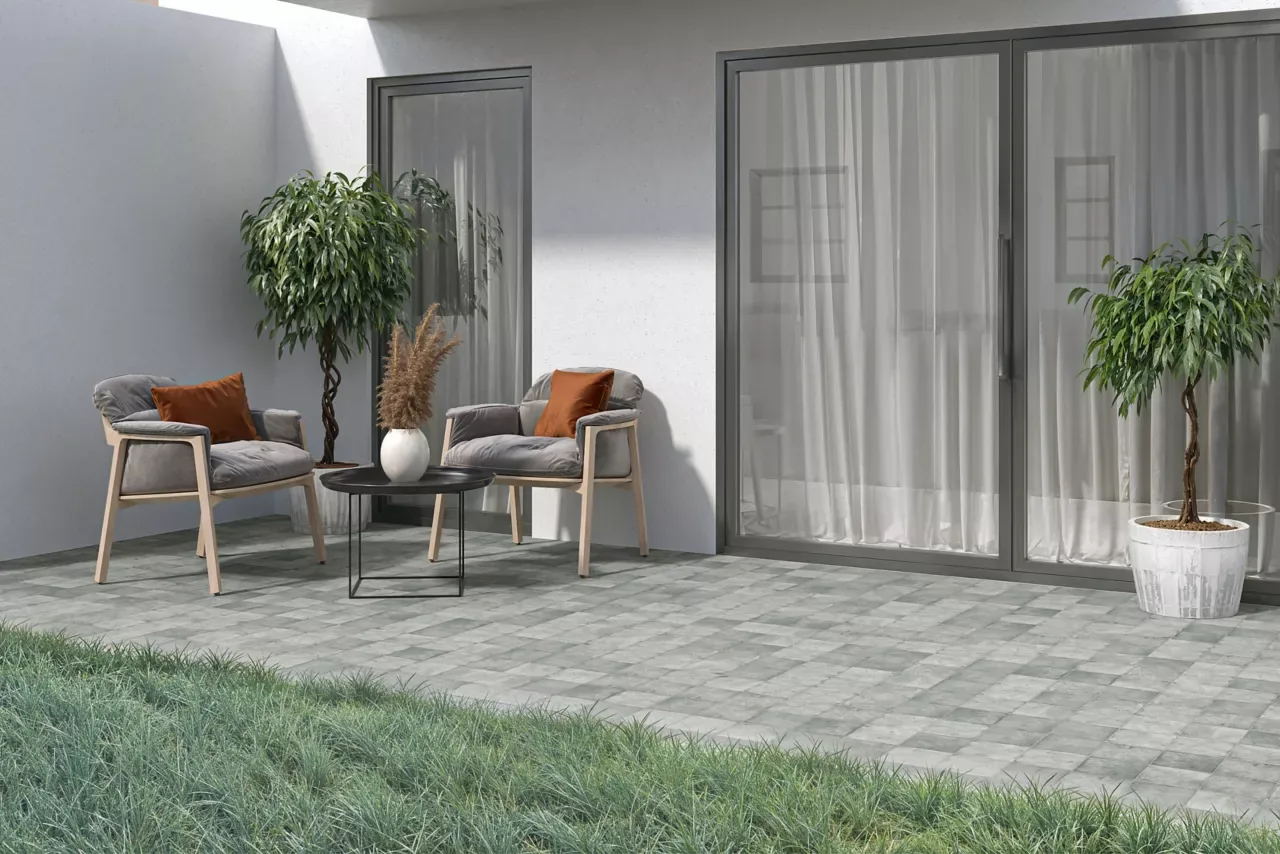
Concrete-look porcelain is one of the most popular lanai requests we handle right now, and for good reason in Florida. The neutral gray tones stay cool-looking visually, pair well with the outdoor furniture most Southwest Florida homeowners gravitate toward, and the matte finishes available in this category tend to score well on slip resistance out of the box.
Wood-look porcelain works on covered lanais where direct rain exposure is limited. A fully exposed lanai in Fort Myers, where afternoon storms can sweep in sideways, is a tougher environment for plank-format tile because the long, narrow shape creates more linear grout lines that need to handle movement cleanly. It is not a disqualifier, but it puts more weight on having the right setting materials and joint widths. Consult with a professional before committing to a plank layout on a slab that has any history of cracking or settling.
Colors and Finishes: The Heat and Glare Problem
Dark tile on a fully exposed Fort Myers lanai absorbs heat at a rate that makes the surface genuinely uncomfortable to walk on barefoot by midday in July. Lighter neutrals, warm whites, soft greiges, and medium-tone grays all perform better underfoot in full-sun conditions. On a screened or partially covered lanai you have more latitude, since the exposure is intermittent.
Glare is the flip side of the same problem. Very light and glossy surfaces can reflect enough light to be uncomfortable on a bright afternoon. A matte or slightly textured light-toned tile hits the sweet spot: it stays cooler, reduces glare, and the texture provides traction when wet.
Handling Furniture Scuffs and Heavy Traffic
Lanais take abuse that interior floors do not. Patio chairs get dragged. Potted plants move. Grills get wheeled in and out. Over time, certain tile surfaces show scratching and surface wear from repeated abrasion in ways that are hard to reverse without replacement.
For a busy family lanai, a brushed or textured porcelain surface is more forgiving than a smooth polished one because minor scuffs disappear into the texture. Grout color matters here too. A mid-tone grout that is close in value to the tile itself disguises wear and staining far better than bright white grout, which shows every scrape and discoloration. Wide grout joints also tend to absorb less foot traffic stress than very narrow ones when the tile is large-format; your installer can advise on what spacing works with the specific tile you choose.
Screen Enclosures, Open Lanais, and In-Between Situations
Fully screened lanais and fully open ones require slightly different thinking. On a screened enclosure in Fort Myers, the tile is sheltered from direct rain most of the time, which means the immediate slip-resistance priority is lower, though it never disappears entirely. You have a bit more freedom with lighter textures and smaller-format tiles without worrying as much about standing water.
An open lanai, or a partially covered one where wind-driven rain is a regular reality, needs to prioritize drainage and grip above all else. Tile with a pronounced surface texture, set with a slight slope toward a drain or the yard edge, handles water safely. If you are connecting your lanai tile to your pool deck area, think about the full flow of traffic: from the house, across the lanai, around the pool, and back. Consistent material and texture across those zones makes the whole space feel cohesive and keeps traction consistent throughout.
If your lanai sits adjacent to a covered outdoor kitchen or entertainment space, the same principles apply with regard to outdoor tile selection in Fort Myers. Grease and food spills on a textured matte tile clean up just as well as on a smooth surface, and you avoid the slip risk that comes with a polished floor when it gets wet.
The Bottom Line
Fort Myers lanais need tile that can take heat, UV, hard summer rain, salt air, and daily foot traffic without looking worn inside of five years. Thick-body matte porcelain pavers in light to medium tones, rated for outdoor wet areas, cover the vast majority of situations here. The details, which include substrate prep, setting materials, joint spacing, slope for drainage, and grout selection, matter just as much as the tile itself.
Dynasty Tile is a licensed tile contractor serving Fort Myers and Southwest Florida since 2016. We offer free, no-obligation estimates and can walk you through material options suited to your specific lanai layout. Reach out to schedule your estimate, or browse what our customers say about how the work holds up over time.