Saltwater Pool Tile: Protecting Your Waterline and Deck From Salt Damage
Saltwater pools have grown increasingly popular across Southwest Florida, and for good reason. The softer water feel, reduced chemical handling, and lower maintenance make salt chlorinator systems attractive to pool owners in Lehigh Acres and throughout the region. But there is a catch that many homeowners discover too late. The same salt that keeps your pool sanitized can quietly damage the wrong tile and grout over time.
If you are planning a new pool installation, replacing waterline tile, or resurfacing your pool deck, understanding saltwater pool tile compatibility before you start can save you from costly repairs down the road. This guide covers what salt does to different tile materials, which specifications hold up, and how to protect your pool surfaces from salt system tile damage.
How Salt Chlorinators Affect Pool Tile and Grout
Salt chlorinator systems work by converting dissolved salt into chlorine through electrolysis. The salt concentration in these pools typically ranges from 2,500 to 4,000 parts per million, which is about one tenth the salinity of ocean water. While that sounds low, the constant circulation of salt laden water against your pool surfaces creates ongoing exposure that adds up over months and years.
The chemistry matters. Salt water is slightly more corrosive than fresh chlorinated water, especially when pH drifts outside the ideal 7.2 to 7.6 range. Over time, this can etch certain glazed surfaces, degrade porous grout, and accelerate wear on materials that were not designed for saltwater environments. We see this a lot in lanais and pool areas here in Southwest Florida, where humidity and heat already stress outdoor materials.
Which Tile Materials Survive Saltwater Exposure
Not all tile is created equal when it comes to salt pool waterline tile in Florida. Here is what holds up and what does not.
Porcelain Tile: The Top Choice
Porcelain is the most reliable option for saltwater pools. It is fired at higher temperatures than standard ceramic, creating a denser, less porous body. Look for porcelain tile rated for pool use or freeze thaw resistance, even though Florida does not freeze. These ratings indicate low water absorption, typically below 0.5 percent, which means salt water cannot penetrate and cause internal damage.
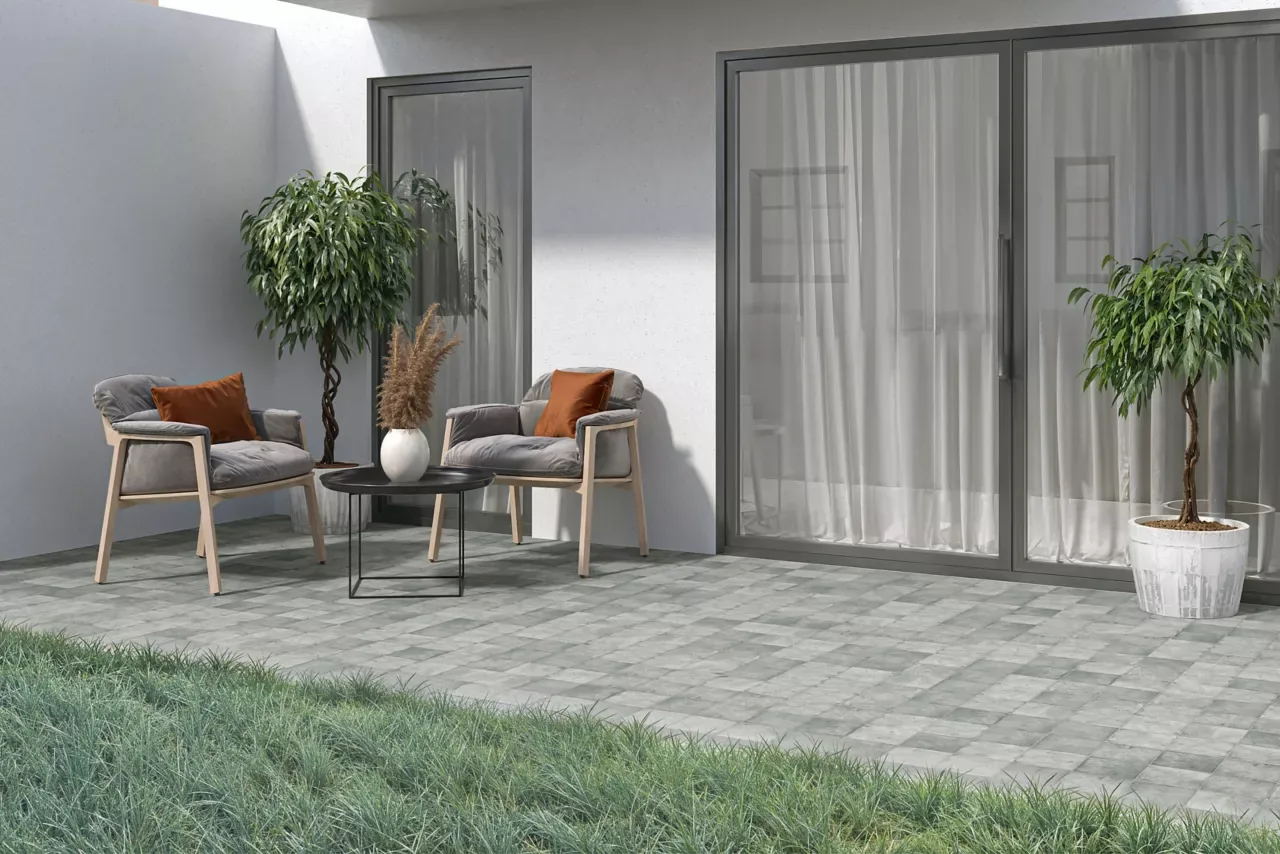
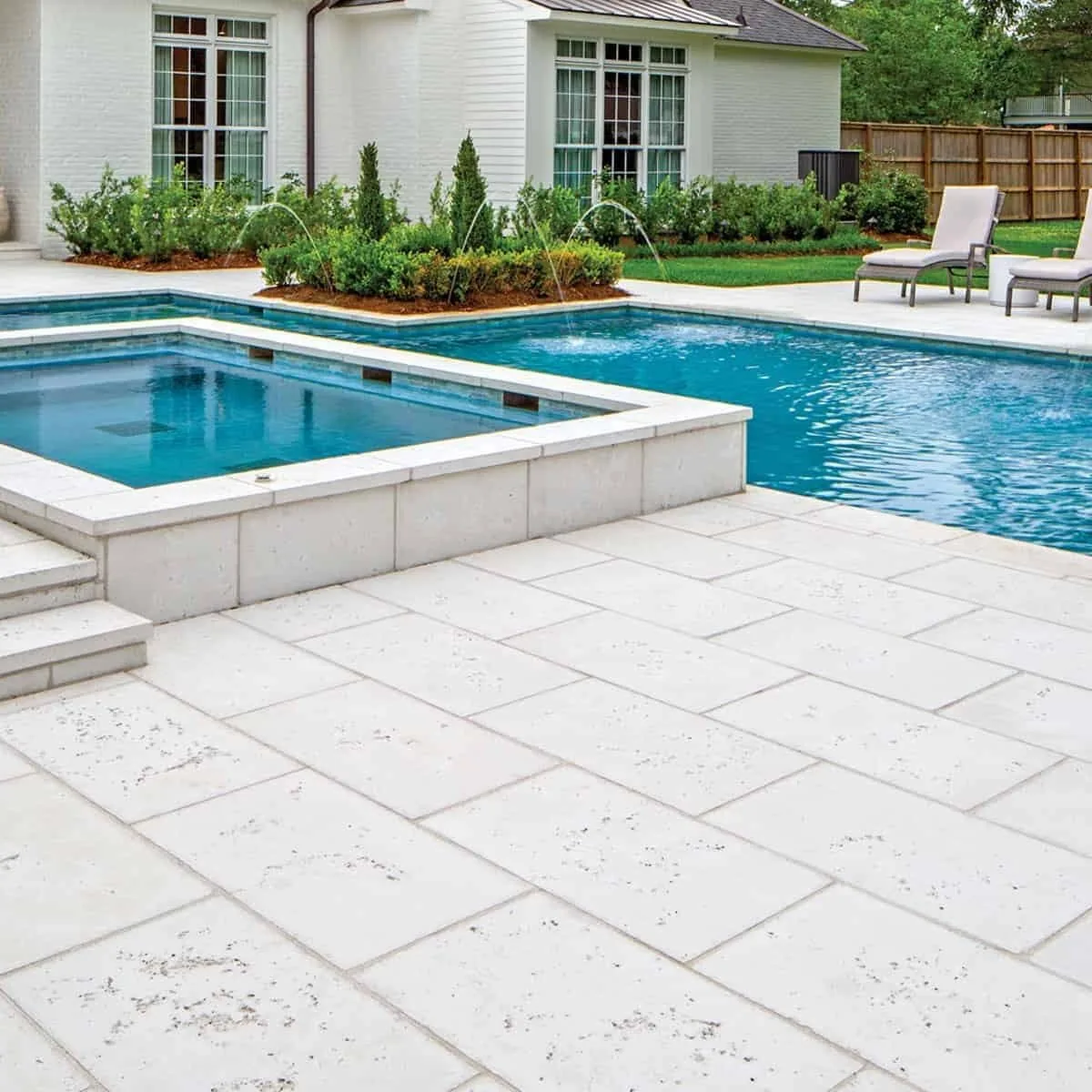
For waterline applications, choose glazed porcelain with a smooth, non porous surface that resists salt buildup and is easy to brush clean. For pool decks, select textured or matte finish porcelain pavers with slip resistance. The outdoor tile options designed for wet areas provide traction even when the deck is soaked.
Glazed Ceramic: Proceed With Caution
Standard glazed ceramic tile can work in saltwater pools, but only if the glaze is high quality and fully intact. The glaze acts as a barrier protecting the porous clay body underneath. Once that glaze begins to etch or craze from salt exposure, water penetrates and damage accelerates. We generally recommend porcelain over ceramic for saltwater applications to avoid this risk.
Natural Stone: High Maintenance in Saltwater
Travertine, marble, and limestone are beautiful but problematic around saltwater pools. These stones are naturally porous and react poorly to salt and chlorine. They require frequent sealing and still show wear faster than porcelain. Granite is denser and more resistant, but it still needs proper sealing and ongoing maintenance. For Lehigh Acres pool owners who want stone aesthetics without the upkeep, porcelain tile that mimics natural stone offers a practical alternative.
Grout Selection for Saltwater Pools
Grout is often the weak point in saltwater pool installations. Cement based grout is porous by nature and absorbs salt water, which leads to softening, crumbling, and eventual failure. Here are your options.
Epoxy grout is the gold standard for saltwater pools. It is completely non porous, resistant to salt, chlorine, and staining, and does not require sealing. Epoxy grout costs more and requires skilled installation, but it lasts significantly longer in saltwater environments. For homeowners investing in pool deck remodeling, epoxy grout pays for itself in reduced maintenance and replacement costs.
Cement grout with sealers can work if you commit to maintenance. High quality polymer modified cement grout, sealed with a penetrating sealer designed for pools, provides reasonable protection. Expect to reseal every one to two years depending on pool use and chemical balance. This is a budget friendly option but requires vigilance.
Signs Your Pool Tile Is Suffering From Salt Damage
Early detection helps you address problems before they spread. Watch for these warning signs around your Lehigh Acres pool.
- White, crusty salt deposits along the waterline that do not brush off easily
- Grout that feels soft, powdery, or crumbles when you run your finger across it
- Glazed tile that has lost its shine or developed rough, etched patches
- Discoloration or staining in grout lines that returns quickly after cleaning
- Loose or hollow sounding tile when you tap along the waterline
- Deck tile that shows surface scaling or edge deterioration
If you notice these issues, have a licensed tile contractor assess the damage. Small problems can often be repaired by replacing affected tiles and regrouting with epoxy. Widespread damage may require more extensive work.
Protecting Your Pool Tile in Southwest Florida Conditions
Southwest Florida adds extra challenges beyond salt chemistry. Intense UV exposure, high humidity, heavy summer rains, and the occasional hurricane all stress pool surfaces. Pool owners here deal with seasonal residents who close their pools for months, then reopen to find issues that developed during inactivity.
Follow these practices to extend the life of your pool tile and grout.
- Maintain proper water chemistry year round. Keep pH between 7.2 and 7.6 and salt levels within manufacturer specifications.
- Brush your waterline tile weekly to prevent salt and mineral buildup.
- Rinse pool decks regularly, especially after heavy rain or storms that dilute salt concentration and leave deposits.
- Seal grout lines on schedule if using cement grout. Do not skip this maintenance step.
- Inspect tile and grout during routine pool maintenance. Catch problems early while repairs are still simple.
- Work with a licensed tile contractor who understands saltwater pool requirements when installing or replacing tile.
Replacing Damaged Tile in Existing Saltwater Pools
If your pool already has salt damage, you have options. For isolated waterline tile failure, a skilled installer can remove and replace individual tiles without draining the entire pool. This is cost effective for small areas but requires matching the existing tile, which may be discontinued.
For widespread grout failure, consider removing all grout and regrouting with epoxy. This is labor intensive but extends the life of your existing tile if it is still sound. When tile itself is failing across large areas, full replacement becomes the better long term investment.
Before starting any work, drain the pool only if necessary and follow proper procedures to avoid structural issues. Saltwater pool tile replacement requires attention to waterproofing details, especially at the waterline where hydrostatic pressure and constant wetting create the highest risk.
The Bottom Line
Saltwater pools are wonderful when built with the right materials from the start. Porcelain tile with low absorption, epoxy grout, and proper installation techniques create pool surfaces that withstand salt chlorinator systems for years. Cutting corners on tile selection or grout choice leads to premature failure and expensive repairs.
For Lehigh Acres homeowners planning new pool construction or tile replacement, investing in salt compatible materials upfront protects your investment. Dynasty Tile LLC has served Southwest Florida since 2016 as a licensed tile contractor specializing in pool and outdoor installations. We offer free, no-obligation estimates for pool tile projects and can help you select materials that hold up to saltwater conditions.
Call (239) 265-2814 to discuss your saltwater pool tile needs or visit our service areas page to confirm we cover your location.