Mosaic Tile in Showers: Where It Shines and Where to Skip It
Mosaic tile is one of those materials that stops people mid-scroll. A sheet of glass penny rounds on a shower floor, a hand-cut stone blend in a built-in niche, a narrow accent band breaking up a wall of large-format porcelain: when it works, it really works. But we see a fair number of Venice homeowners come to us after living with a mosaic choice that looked great at the tile showroom and turned into a weekend cleaning chore in real life.
The honest answer is not that mosaic is good or bad. It is that placement drives everything. Get it right and you get texture, color and detail that no single large tile can match. Get it wrong and you are fighting grout haze, mildew lines and a floor that never quite looks clean. Here is how to think through the decision before anything goes on the wall.
Why Niches Are the Best Home for Mosaic Tile
A recessed shower niche is probably the single best place in a bathroom to use mosaic. The surface area is small, so the grout volume is manageable, and the niche is naturally a focal point, so the visual detail pays off. Glass mosaics catch the light coming from the main shower area. Stone blends add warmth and contrast against large-format surrounding tile.
From an installation standpoint, mosaic sheets conform to the niche walls and the back panel without the precise cuts you need when fitting full-size tile into a confined box. That matters because niches have inside corners on all four sides, and sheet-backed mosaic handles those transitions more cleanly than a tile saw can on a 24-by-48 slab.
One thing to know: a niche still needs proper waterproofing beneath the tile, including the back wall. Mosaic does not change that requirement. If you are planning a niche in a bathroom remodel in Venice, make sure your contractor waterproofs the niche cavity before any tile goes in.
Shower Floors: Where Mosaic Has a Real Functional Advantage
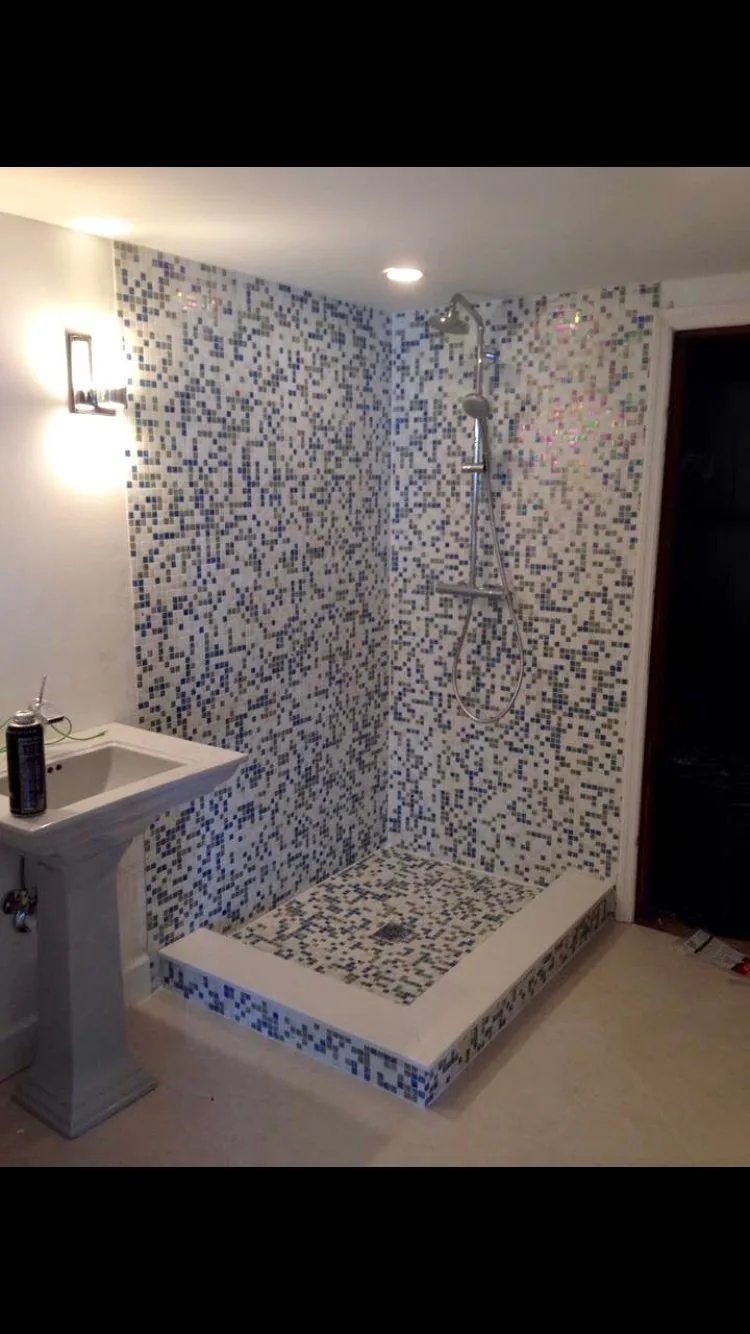
Small-format mosaic, typically one-inch or two-inch pieces, is widely used on shower floors because the high grout joint count creates natural slip resistance. More grout lines mean more texture underfoot, and that matters in a wet area. A large-format tile on a shower floor needs a precision slope and a strategically placed linear drain to shed water properly; mosaic is more forgiving of the gentle pitch typical in older Venice homes.
The trade-off is cleaning. More grout lines on a floor mean more surface area for soap scum, hard water deposits and, in Southwest Florida's humid climate, mildew. Venice and the surrounding Gulf Coast area have warm, moist air that never really goes away, and a shower that gets used daily in that environment will show grout discoloration faster than one in a dry northern climate. This is not a reason to avoid mosaic floors, but it is a reason to choose a grout color intentionally: mid-tone grays and warm tans hide the inevitable buildup better than bright white or near-black.
Epoxy grout is worth considering on shower floors specifically. It is denser, less porous and easier to wipe clean than standard sanded grout. The installation is more demanding, so not every installer uses it, but it is a legitimate option for mosaic floors if long-term maintenance is a concern.
Accent Bands: Maximum Impact, Minimum Grout Headache
A horizontal band of mosaic running across a shower wall at eye level or at the seat height is one of the most cost-effective ways to add visual interest to an otherwise simple tile layout. Because it is on a vertical surface, water runs off rather than pooling, and the grout exposure to standing moisture is much lower than on the floor.
In practice, a four-to-six inch mosaic band in a contrasting material or color does a lot of design work. It can define a zone, break up a tall wall, and give the eye somewhere to land. We use this approach regularly in Venice bathrooms where the homeowner wants personality without committing to full mosaic walls.
Keep the band to one location per shower. Two accent bands in the same enclosure often compete rather than complement, and the visual result gets busy fast.
Where to Think Twice About Mosaic
Full mosaic walls are the most common source of regret we hear about. The look is dramatic in photos, but a floor-to-ceiling mosaic shower wall means hundreds of grout lines per square foot across a large surface. In the humidity of Southwest Florida, that becomes a real maintenance commitment. If the shower gets heavy daily use, plan on a thorough cleaning every week or two to keep white grout from going gray.
Textured natural stone mosaic on walls has the same issue amplified: the irregular surface traps soap and minerals, and standard cleaning products do not always reach into the recesses. Smooth glass or glazed ceramic mosaic is much easier to wipe down than tumbled travertine or rough slate chips.
Outdoor use is another area to think carefully. Venice homeowners with lanais and outdoor showers near pools sometimes want to carry mosaic outside. Most glass mosaic is rated for interior use only. Porcelain mosaic handles outdoor exposure better, but the grout still needs to be rated for exterior and wet conditions, and freeze-thaw is not a concern here but UV exposure and the sand and salt air from the Gulf can degrade some materials over time. Talk with a licensed tile contractor in Venice before specifying mosaic for any outdoor shower or pool-adjacent area.
Grout Selection Is Not an Afterthought
With mosaic tile, the grout is almost as visible as the tile itself because the joint-to-tile ratio is so high. A penny-round sheet has dramatically more grout surface showing than a 12-by-24 field tile does. That means your grout color choice will define how the finished installation reads from across the room.
A tight-matching grout makes the individual pieces blend and the overall surface reads as texture. A contrasting grout makes each piece pop and creates a more graphic pattern. Neither is wrong, but it is a decision worth mocking up before you commit. Laying a few sheets on a flat surface with different colored grout cards placed in the joints takes about five minutes and saves regret.
Joint width matters too. Most mesh-backed mosaic sheets are designed for a specific joint size, and changing that changes how the finished installation looks. Your installer should be able to show you what the standard joint width produces before the work starts.
The Bottom Line
Mosaic tile earns its place in shower niches, on shower floors and in narrow accent bands. Those three applications give you the visual payoff with a grout footprint you can realistically manage. Full mosaic walls and heavily textured natural stone surfaces are higher maintenance than most Venice homeowners expect, especially given the year-round humidity here.
If you are planning a bathroom remodel and want to talk through which surfaces make sense for mosaic in your specific space, reach out for a free estimate. Dynasty Tile has been working with Southwest Florida homeowners since 2016, and we are glad to walk through the options before anything is ordered. You can also see what our past customers say on our reviews page.