Outdoor Kitchen Floors and Walls: Choosing the Right Tile for Babcock Ranch
Outdoor kitchens have become a staple of Southwest Florida living, and Babcock Ranch is no different. When the weather cooperates almost year-round, it makes sense to invest in a real cooking setup outside. But tile that looks great on a showroom floor does not always survive a grease splatter at 500 degrees, a summer downpour, or the weekly hose-down that keeps an outdoor kitchen presentable. Getting the surfaces right from the start saves you from peeling, cracking, and staining you will be dealing with for years.
We work on a lot of outdoor kitchens in this area, and the questions we hear most often are about heat tolerance, slip resistance, and ease of cleaning. Those three things should drive every tile decision you make for a space like this.
Why Outdoor Kitchens Are Harder on Tile Than You Think
An indoor kitchen backsplash lives in a controlled environment. An outdoor kitchen in Babcock Ranch faces something different: direct sun heating the surfaces to temperatures an indoor tile never sees, humidity that stays high through the summer months, grease mist from the grill that settles on every nearby surface, and hard rain that can wash onto a floor that was not built to drain properly.
Salt air drifts inland from the Gulf even this far east, which matters for grout and metal hardware. Any finish that is even slightly porous will absorb grease and moisture over time and become difficult to clean. That is the main reason we steer clients away from natural stone in cooking zones unless they are fully committed to regular sealing.
Floor Tile: Prioritize Slip Resistance and Drainage
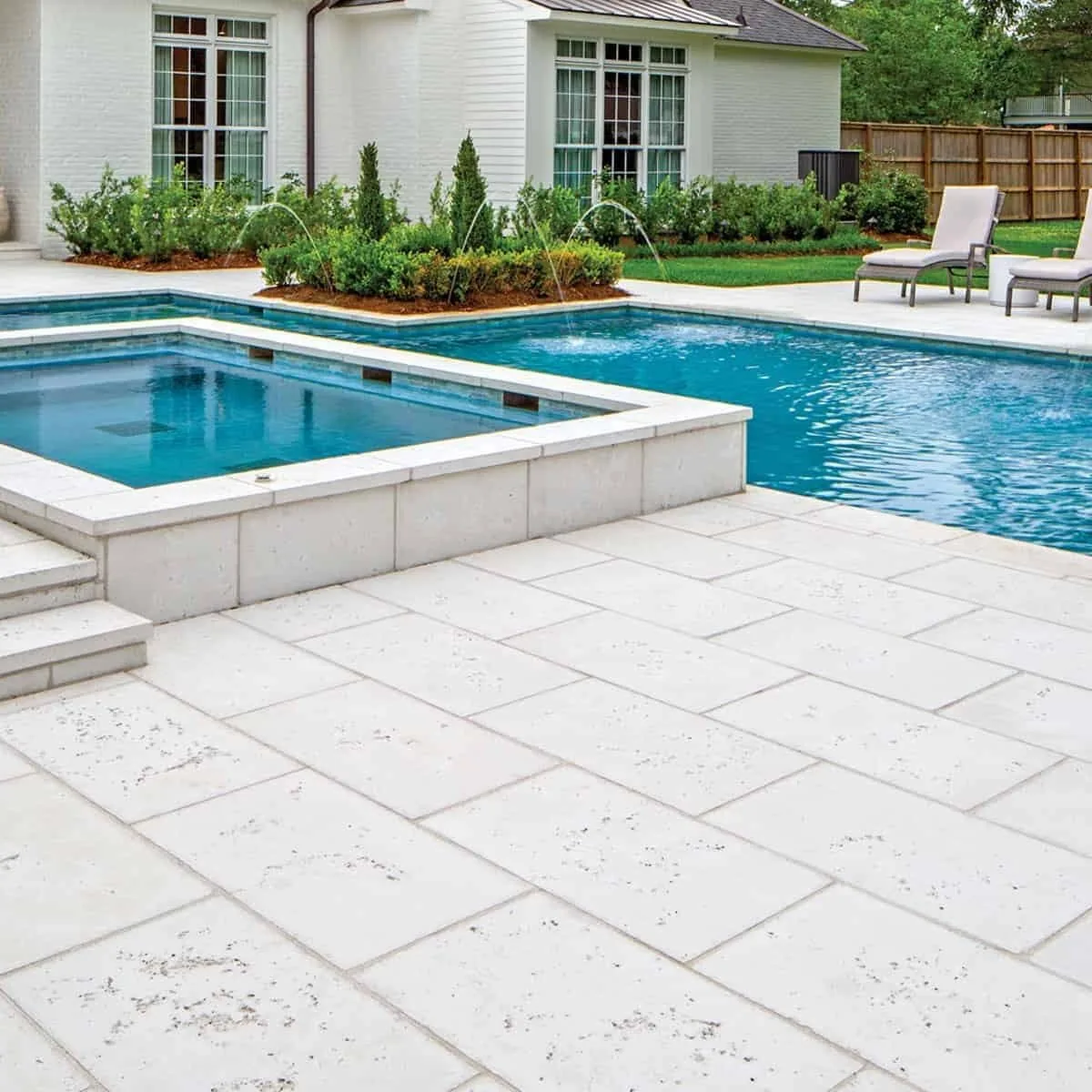
The floor under an outdoor kitchen takes the worst of it. Cooking grease drips, rain blows in, and wet feet track in from the pool or lanai. The tile you choose needs a coefficient of friction (COF) rating suitable for wet outdoor use. Unglazed porcelain pavers and textured porcelain tiles in a matte finish are the workhorses here.
Large-format smooth tiles look sharp but become dangerously slick when wet. If you are set on a sleek look, choose a tile with a surface texture that interrupts the water film, or look for porcelain specifically rated for outdoor wet use. For outdoor tile installations in Babcock Ranch, we typically recommend a tile in the 12x24 or 16x16 range with a slight texture, set with a slope toward a drain so water does not pool under the cooking area.
Grout joint width matters too. Tighter joints mean less grout to scrub when grease finds its way to the floor. Using an epoxy grout on the floor instead of cement-based grout is worth considering in a cooking zone: it resists staining, tolerates heat, and does not absorb grease the way sanded grout does.
Wall Tile: Heat Zones Require a Different Spec
The wall directly behind and beside a grill is exposed to radiant heat that can exceed what most standard tile adhesives and grouts are rated for if the grill runs at full blast for hours. This is not theoretical: we have seen improperly installed tile de-bond behind built-in grills within a season.
For the wall surface within about two feet of the grill, specify a tile rated for high heat and use a heat-resistant setting material. Porcelain is generally fine; some glazed ceramics can craze or discolor with repeated intense heat exposure. The bigger vulnerability is the adhesive and grout: standard thinset mortars have temperature limits, and so does sanded grout. Use a high-temp mortar and epoxy or heat-rated grout in the cooking zone.
Away from the direct heat, you have more flexibility. Subway tile, large-format porcelain, and even a stone-look porcelain all work well for the countertop surround walls and the sections not directly exposed to grill heat. For surfaces that are covered by an overhang but still get splattered, a smooth glazed porcelain wipes clean with almost no effort, which matters more than it sounds when you are cleaning up after a cookout.
Countertop Surrounds and Vertical Surfaces
The vertical face of a kitchen island or the knee wall framing the grill is often tiled in a contrasting material from the floor. This is purely a design choice in most cases, but the same durability rules apply. Avoid anything with a deeply textured surface in a splatter zone: grease settles into the texture and is hard to clean.
A large-format tile with a light texture or a smooth glazed surface is the most practical option. Porcelain in a concrete or stone look is popular right now, and it cleans up well with a mild degreaser and a brush. If you are designing the outdoor kitchen from scratch and want help thinking through the layout, a licensed tile contractor in Babcock Ranch can walk through the full spec with you before you order materials.
Grout: The Part People Underestimate
Grout color choice in an outdoor kitchen is more than aesthetics. Light grout looks clean when new but shows grease discoloration fast. Dark grout hides staining better but can bleach unevenly in Florida sun. Medium-tone grays and warm taupes tend to hold their appearance longest in high-sun outdoor settings in SWFL.
More important than color is the grout type. Cement-based grout is porous and will stain unless sealed regularly, and in a grease environment, even sealing does not keep it perfectly clean forever. Epoxy grout is non-porous, does not need sealing, and holds up to cleaning chemicals without degrading. The trade-off is installation: epoxy grout has a short working time and requires an experienced installer. For floor and cooking-zone joints specifically, it is usually worth the added effort. Our outdoor tile work throughout Fort Myers and the surrounding area increasingly uses epoxy grout in cooking and pool-adjacent zones for exactly this reason.
Cleaning and Ongoing Maintenance
Even the best-specified tile requires some maintenance. After heavy grilling sessions, a quick wipe-down of the wall surfaces before grease bakes on will prevent most staining issues. For the floor, a degreasing cleaner and a stiff-bristle brush used monthly keeps the surface looking right. Avoid pressure-washing grout joints repeatedly, as it can erode them over time regardless of type.
If you have a stone-look porcelain that is partially unsealed or you chose a natural stone for low-heat areas, seal it on a schedule. In the Babcock Ranch area, the humidity and rain exposure during summer mean a yearly seal is a reasonable baseline for anything porous.
The Bottom Line
Outdoor kitchens in Babcock Ranch are a real investment, and the tile work needs to match that. Focus on slip-resistant, low-porosity porcelain for the floor, heat-rated materials close to the grill, and epoxy grout in any zone that will see grease or standing water. Get the spec right before you order and the surfaces will stay clean and attractive for years without constant maintenance.
If you are planning an outdoor kitchen and want a free, no-obligation estimate, Dynasty Tile has been serving Southwest Florida since 2016. You can also browse our client reviews or reach out directly to talk through your project.