Picking Outdoor Tile That Handles Sun, Rain and Salt in Boca Grande
Boca Grande sits on Gasparilla Island, surrounded by the Gulf of Mexico on one side and Charlotte Harbor on the other. That location is spectacular, and it is also one of the harshest environments you can put a tile surface into. Salt air blows in year-round, summer rain comes in hard, and the sun is intense enough to fade and degrade materials that work fine in a less exposed setting. If you are planning an outdoor tile project here, the choices you make upfront determine how long the surface looks good and stays safe underfoot.
The right materials genuinely hold up in this climate. The challenge is knowing which properties actually matter and which ones are just marketing language. Here is what we pay attention to when advising homeowners on outdoor tile in Boca Grande.
Salt Air Attacks Surfaces You Would Not Expect
Most homeowners know salt corrodes metal, but it also degrades tile finishes, grout, and setting materials over time. Salt particles settle on outdoor surfaces, work their way into porous materials through moisture cycling, and begin breaking them down from the inside out. This process is called salt crystallization, and it is one of the main reasons outdoor tile near the water looks old before its time.
The fix is to choose low-absorption tile. Porcelain with a water absorption rate below 0.5 percent, the standard definition of impervious porcelain, gives salt almost no pathway into the tile body. Natural stone is more porous and requires diligent sealing to stay in good shape here. Travertine and limestone can work outdoors with a proper maintenance routine, but they need more ongoing attention than full-body porcelain does.
Grout selection matters as much as tile selection. Standard sanded grout absorbs salt and moisture and starts to crumble within a few years in a coastal environment. Epoxy grout or polymer-modified grout rated for exterior wet use holds up much longer and resists staining from salt and organic debris.
UV Fade Is a Real Issue Here
Southwest Florida gets more annual sunshine than most of the continental United States, and Boca Grande sits at the southern end of that range. Freeze damage, which drives outdoor tile decisions in northern climates, is essentially a non-issue here. UV fade and heat cycling are the real concerns.
Through-body porcelain carries its color all the way through the tile body, not just in a surface glaze. Surface glazes on lower-quality tiles can bleach and dull after extended sun exposure. With through-body tile, even if the surface wears slightly over the years, the color underneath is the same. When reviewing samples, ask whether the color is through-body or surface-applied. For any outdoor application in Southwest Florida, through-body is the right choice.
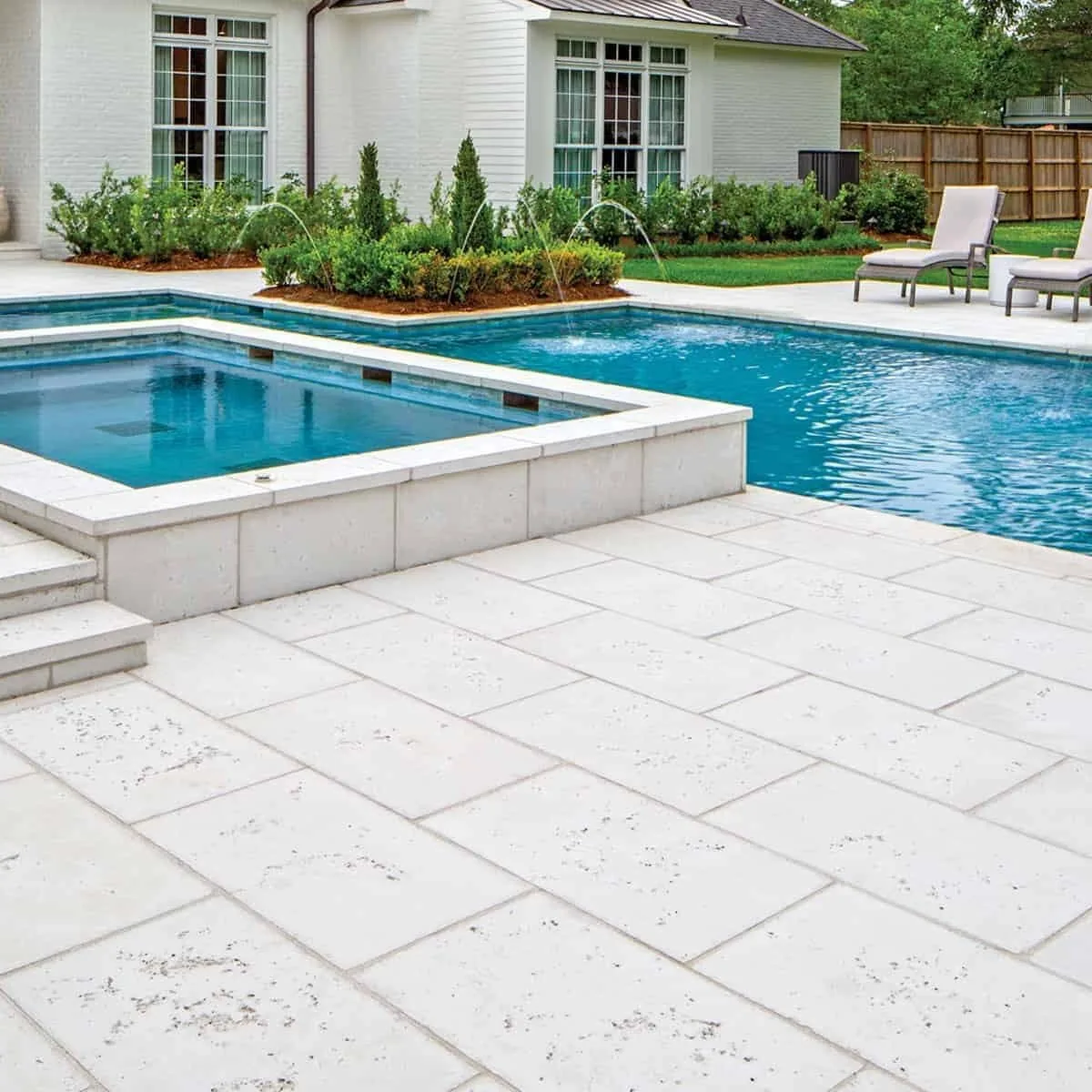
Large-format porcelain pavers in the 24-by-24 or 24-by-48 inch range have become common on lanais and pool decks throughout the region, including in Boca Grande, for exactly this reason. They come in concrete looks, wood-grain looks, and natural stone looks, all with the durability of impervious porcelain underneath.
Rain, Drainage, and Slip Resistance
Summer rain in Southwest Florida arrives fast and heavy. A lanai or pool deck that does not drain properly will pond water, and ponded water on an outdoor surface creates two problems: it accelerates algae growth and it becomes a slip hazard. Tile selection and installation work together here.
For any horizontal outdoor surface, look for a tile with a DCOF (Dynamic Coefficient of Friction) rating of at least 0.42 wet, which is the ANSI minimum for wet walking surfaces. For areas right at the pool edge or where barefoot traffic is heavy, we recommend tile rated 0.55 or higher. Matte and lightly textured surfaces generally achieve this; polished or high-gloss finishes do not, and they should stay indoors.
On the installation side, proper slope is critical. Outdoor horizontal surfaces should drain at roughly a quarter-inch drop per foot, directing water away from the home and toward drains or the lawn. If you are working on a covered lanai, even partial coverage, water still blows in during storms. The substrate and waterproofing layer beneath the tile need to be rated for exterior wet conditions regardless of how much overhead protection the space has. For a pool deck project in Boca Grande, we always confirm drainage plans before setting a single tile.
Finishes That Hold Up vs. Finishes That Do Not
A few specific finish categories to know about when shopping for outdoor tile in a coastal setting:
- Matte and satin porcelain: The most practical choice for Florida outdoor use. Good slip ratings, minimal heat absorption compared to dark glossy surfaces, easy to clean, and the finish does not show UV wear.
- Brushed or lightly textured surfaces: Slightly more grip than flat matte. Work well on pool decks and walkways. The texture does not collect debris the way deeply grooved surfaces can.
- Polished porcelain or marble: These belong indoors. Around water, in the rain, and with salt film, they become genuinely dangerous. We see this mistake regularly, usually when someone has extra tile left from an interior project and wants to extend it outside.
- Glazed ceramic: Standard glazed ceramic is not an appropriate outdoor tile in Southwest Florida. It is more porous than porcelain and the glaze can craze (develop micro-cracks) from repeated heat cycling and moisture exposure.
- Natural stone sealed properly: Can work outdoors with a penetrating sealer applied at installation and reapplied every one to two years. Requires commitment to maintenance. Not the right choice if the homeowner wants a set-it-and-forget-it surface.
Color and Heat: Keeping the Surface Walkable
Dark tile absorbs more solar energy than light tile, and on a Boca Grande lanai or pool deck in July, that difference is felt immediately underfoot. Very dark surfaces can become hot enough to be uncomfortable or even painful for bare feet during peak afternoon sun. This does not mean avoiding dark tile entirely, but it is worth factoring color into your decision alongside aesthetics.
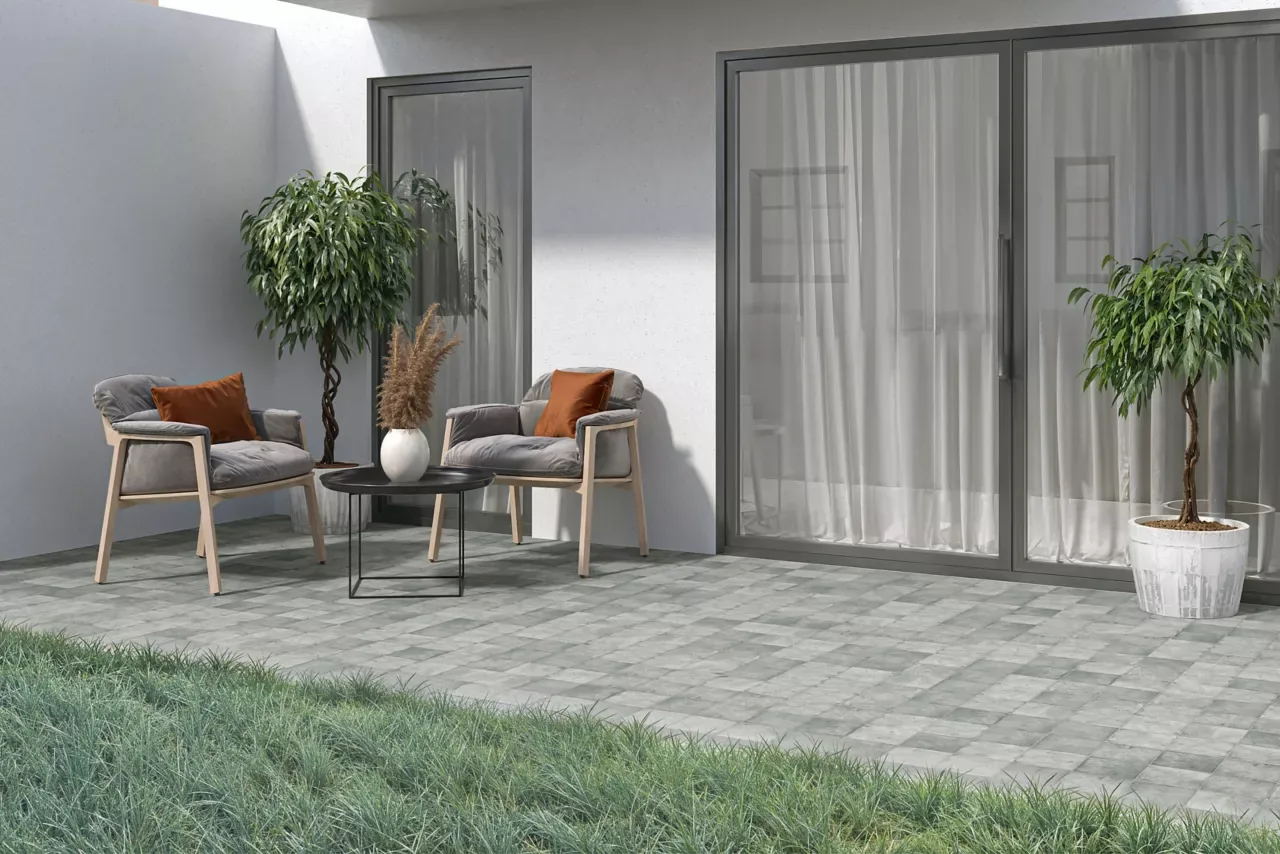
Light to mid-tone tiles in warm whites, soft grays, sandy beiges, and warm tans reflect more heat and stay more comfortable. They also show salt residue and water spots less noticeably than very dark surfaces, a practical benefit for a coastal home. Seasonal residents returning to Boca Grande homes after months away often find outdoor surfaces have baked all summer, and lighter through-body porcelain holds up through that cycle better than darker or more porous options.
Setting Materials Matter Too
The tile itself is only part of the equation. Polymer-modified thinset is the correct choice for any outdoor tile work in Southwest Florida, providing the flexibility needed for heat cycling through the year. Large-format pavers also require properly placed expansion joints. Without them, the tile has nowhere to go when it expands in summer heat, and cracking or lifting follows. Anyone planning an installation through a licensed tile contractor in Boca Grande should ask about expansion joint placement before work begins, not after a problem appears.
The Bottom Line
Outdoor tile in Boca Grande needs to handle things freeze-climate guides do not even mention: salt crystallization, sustained UV, and the kind of rain that arrives sideways. The right answer for most applications is through-body impervious porcelain with a matte or lightly textured finish, set in polymer-modified thinset with epoxy or polymer grout, and installed with proper drainage slope and expansion joints. Natural stone can work with the right sealing maintenance. Polished surfaces and standard glazed ceramic should stay indoors.
Dynasty Tile has been working in Southwest Florida since 2016. If you are planning an outdoor project and want to talk through material options for your specific layout, reach out for a free, no-obligation estimate. We are glad to look at what you have and give you a straight answer on what will hold up.