Pool Deck Resurfacing Options for Cape Coral Homeowners: Tile, Pavers and What Actually Lasts
If you have been looking at your pool deck and thinking it is time for a change, you are not alone. In Cape Coral, where outdoor living is not a seasonal hobby but a year-round routine, the deck around your pool takes a beating from UV exposure, salt-system splash, and the kind of foot traffic that comes with a Florida lifestyle. Choosing the wrong surface means resurfacing again sooner than you planned.
We work on pool decks across Southwest Florida regularly, and the questions homeowners ask most come down to the same core concerns: Will it get too hot to walk on barefoot? Will it hold up next to a salt-chlorine system? Is it going to be slippery when wet? This guide covers the most common resurfacing options and gives you a straightforward way to think about each one.
Why Existing Surfaces Fail in This Climate
The combination of intense sun, high humidity, and proximity to saltwater is hard on virtually every outdoor surface. Concrete pool decks in Cape Coral tend to develop surface cracks as the ground expands and contracts with moisture changes. Paint and coating systems fade and peel. Older coping tile spalls when moisture gets behind it and the summer heat cycles push it out. Any surface that depends on a thin coating rather than a structural material is fighting an uphill battle here.
Salt-chlorine systems are especially tough on porous surfaces. Splashed water carries salt particles that work into grout lines and under coatings, accelerating breakdown. That context matters when you are comparing materials, because a surface that performs well in a cooler or drier climate may not translate to SWFL conditions.
Brushed Concrete and Spray Coatings: The Entry Point
Many Cape Coral homes were built with a basic brushed or exposed-aggregate concrete deck, sometimes topped with a spray texture coating. These surfaces are still widely used because they go down quickly and the barrier to installation is low.
The trade-offs become obvious after a few years. Spray coatings need to be reapplied on a regular cycle or they crack, peel, and absorb algae. Brushed concrete without a sealed coating surface can get surprisingly hot underfoot in July and August. The texture that provides slip resistance when new tends to wear smooth over time with heavy use. For homeowners who want a long-term solution rather than a recurring maintenance project, these surfaces are often the starting point, not the finish line.
Porcelain Pavers: Why They Have Gained Ground
Over the past several years we have seen a real shift toward large-format porcelain pavers on pool decks throughout Southwest Florida, and it is not just a trend. The performance case is solid.
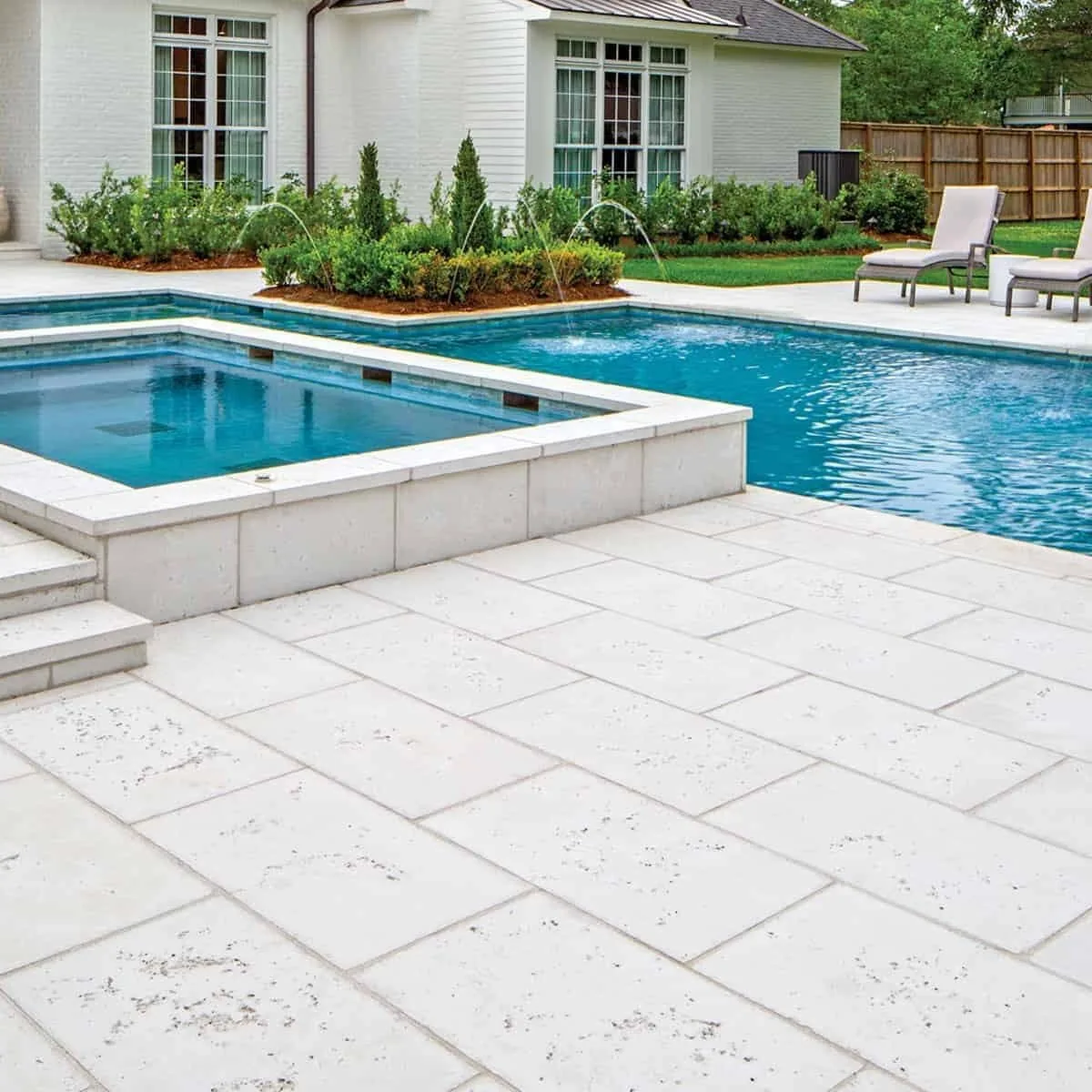
Porcelain is dense and virtually non-porous, which means salt-system splash and pool chemicals have very little to work with. A good porcelain paver will not absorb the staining that plagues lighter concrete surfaces. Rectified porcelain pavers can be installed with tight, consistent joints that leave minimal grout exposure, reducing the area where organic matter can grow.
Slip resistance in porcelain is built into the tile itself through surface texture, not a coating that wears off. Look for products rated R11 or higher on the slip resistance scale; many pool-specific porcelain lines are manufactured to that standard. On the heat side, lighter-toned porcelain in 24x24 or 24x48 formats tends to reflect rather than absorb heat, and the material does not hold surface temperature the way dark concrete does.
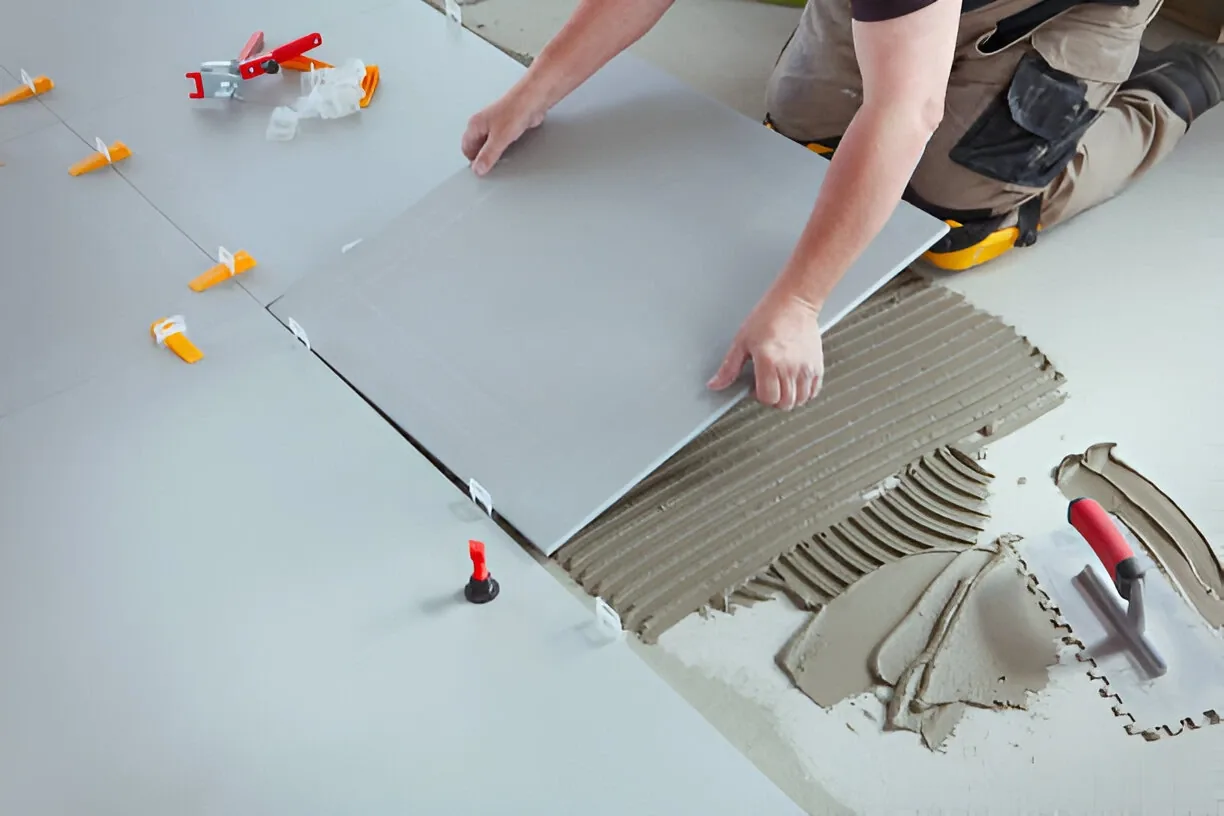
Installation requires a properly prepared substrate. On pool decks, that typically means a sand-set or mortar-set system with proper drainage slope and movement joints to handle any flex in the deck. Getting that base work right is what separates an installation that lasts from one that starts lifting at the edges. For pool deck remodeling in Cape Coral, we always assess the existing concrete condition and drainage before recommending a setting method.
Natural Stone: Beautiful but Demanding
Travertine has been popular on Florida pool decks for decades, and it still looks excellent when it is well maintained. The open pores in travertine do stay cooler underfoot than many other materials because air pockets in the surface limit heat transfer, which is a real advantage in Cape Coral summers.
The maintenance reality is harder to ignore, though. Natural travertine is porous enough to stain from pool chemicals, sunscreen, and algae if it is not sealed regularly. The fill material in tumbled travertine holes can work loose over time, especially in a wet environment with fluctuating moisture. Some homeowners find the trade-off worth it for the look; others switch to a porcelain product that mimics the travertine appearance with far less upkeep.
If natural stone appeals to you, outdoor tile options for Cape Coral include dense materials like quartzite and certain granites that perform better near pools than softer stones, but any natural stone pool deck should be assessed by a licensed tile contractor before you commit to it.
Ceramic Tile as Coping and Waterline Detail
Ceramic tile on the broad walking surface of a pool deck is less common today than it once was, primarily because many ceramic products are not dense enough to handle the sustained moisture exposure and repeated wet-dry cycling of a pool environment. Where ceramic and glazed porcelain tile still play a strong role is at the waterline and as coping detail at the pool edge.
Waterline tile serves both a functional and visual purpose: it marks the boundary between wet and dry zones, is easier to clean than plaster, and gives the pool a finished look. In salt systems, the chemistry at the waterline is aggressive, so the tile selection and the setting materials both matter. We see waterline failures most often when the tile was set with an adhesive or grout not rated for continuous wet exposure. Using the right epoxy or polymer-modified materials in these applications is not optional.
Matching the Surface to How You Live
The right choice depends on how your family uses the pool area. A household with young children running in and out all day should prioritize slip resistance and surface temperature above almost anything else. A seasonal resident who wants a low-maintenance surface that looks sharp when they arrive in November and still looks good in April cares more about stain resistance and durability under minimal upkeep. A homeowner with a salt-chlorine system needs to weight chemical resistance heavily regardless of aesthetics.
In our experience working on decks across Cape Coral and the broader SWFL area, porcelain pavers check the most boxes for the most homeowners today: durable, low-maintenance, and they perform well in this climate when installed correctly. That does not mean they are the right choice for every project, but they deserve serious consideration. If you are also thinking about outdoor tile installation in Fort Myers, the same logic applies: dense, low-absorption surfaces with built-in texture outperform coatings over time.
The Bottom Line
Pool deck resurfacing in Cape Coral is not a decision to make based on what looks good in a showroom alone. Heat, slip resistance, salt tolerance, and the quality of the installation substrate all factor into how long a surface will last and how much attention it will need over the years. Porcelain pavers have earned their place as the current go-to for good reasons, but the best surface is the one matched to your specific deck condition and how you use your outdoor space.
We offer free, no-obligation estimates and are happy to walk through the options with you at the site. You can reach us at (239) 265-2814, or request an estimate online and we will get back to you promptly.