Slip Resistance Around Pools: Keeping Your Deck Family-Safe in Naples
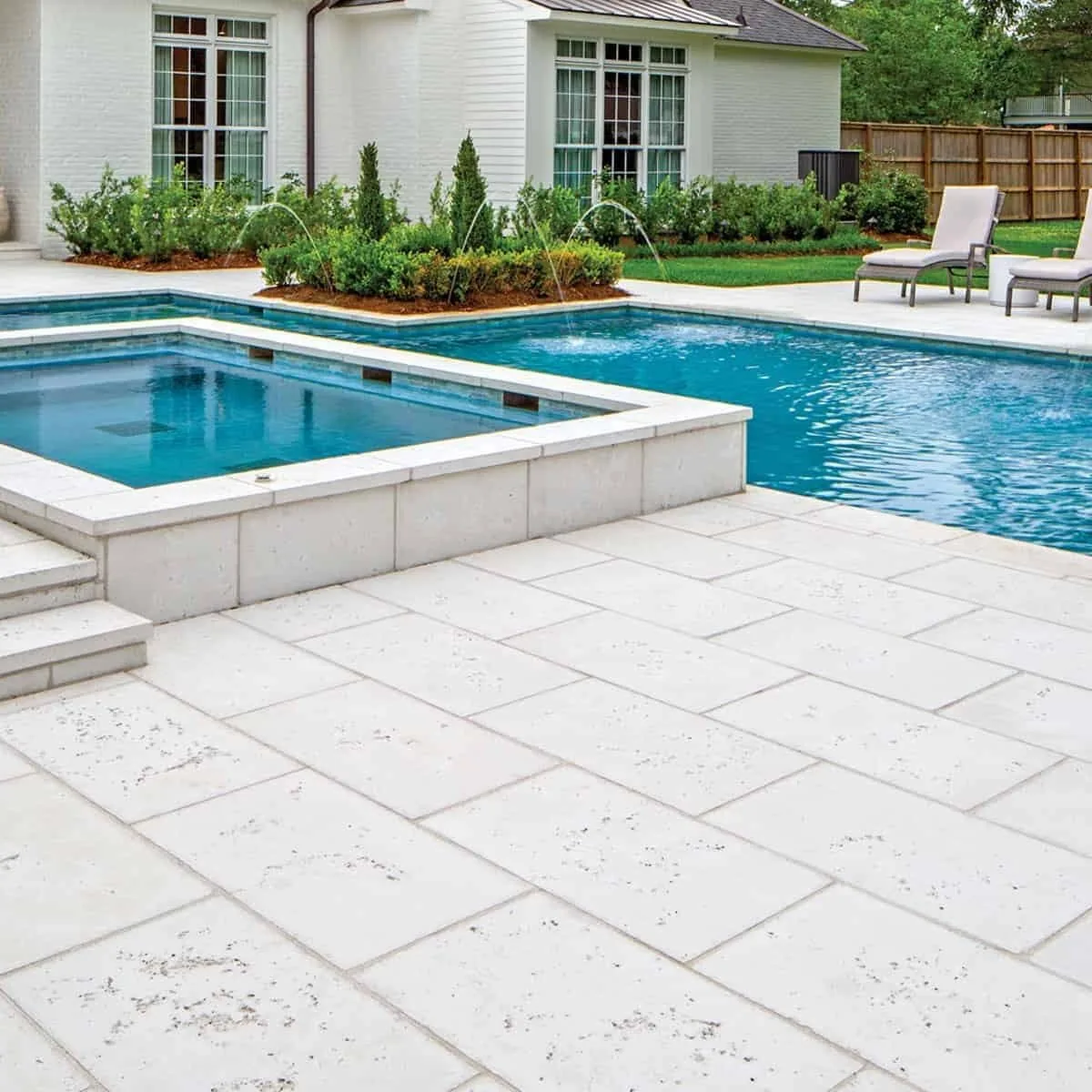
A pool deck sees more water traffic than just about any surface in a Southwest Florida home. Between the splash-out, the afternoon rain, the bare feet running from the water, and the steady humidity that keeps the surface damp well into the evening, a Naples pool deck needs to earn its slip-resistance rating every single day. We see the results of the wrong choice fairly often: smooth porcelain that looks stunning in a showroom but turns into a skating rink the moment it gets wet.
The good news is that choosing the right surface is straightforward once you understand what actually matters. It is not about piling on rubber mats and hoping for the best. It is about building the right foundation from the start.
What COF Actually Means and Why It Matters
Slip resistance is measured by the coefficient of friction, or COF. The higher the number, the more grip the surface offers. For wet outdoor areas like pool decks, the general standard used by tile manufacturers is a wet COF of at least 0.60. Anything below that is considered marginal for wet barefoot use.
When you are shopping tile or pavers for a Naples pool area, ask your supplier for the wet COF, not just the dry rating. Many gorgeous large-format porcelain tiles have excellent dry ratings but fall short when wet. That number needs to be confirmed before anything gets ordered, not after installation.
Texture Is Where the Real Work Happens
The surface texture is what creates grip. There are a few ways manufacturers achieve this:
- Through-body texture: The grit or pattern runs all the way through the tile body. This is the most durable option because it does not wear smooth over time, even with heavy foot traffic or pressure washing.
- Surface texture or relief: A raised pattern or matte finish applied to the surface. These work well but can wear down if the tile is not rated for heavy outdoor use.
- Brushed or tumbled finishes: Common on natural stone and some porcelain pavers. They offer good traction but the micro-ridges can collect calcium deposits in pool environments, so regular cleaning matters more here.
For families with young kids or grandkids running full-speed to the pool, through-body texture on a porcelain paver is the most reliable long-term choice. It stays grippy even after years of Florida sun, salt air, and pressure washing.
Material Options Worth Considering for Naples Pools
Southwest Florida's climate puts outdoor surfaces through a lot: intense UV exposure from May through October, salt air if you are near the Gulf, brief but heavy rainfall, and the alkaline chemistry common around pool water. Here is how the main options hold up:
Porcelain Pavers
These are the most popular choice we work with for pool deck remodeling in Naples, and for good reason. Porcelain has a very low absorption rate, which means it resists the staining, efflorescence, and freeze-thaw damage (rare here, but still) that plague more porous materials. A quality outdoor-rated porcelain paver in a matte or textured finish checks every box: COF, durability, color stability, and ease of maintenance.
Travertine
Travertine has been a Florida pool deck staple for decades, and there is a reason for that. Its natural texture provides decent grip, it stays relatively cool underfoot compared to darker materials, and it has a classic look that fits most Naples home styles. The tradeoff is porosity. Travertine needs to be sealed on a regular schedule, and pool chemicals can etch or discolor it over time if the pH swings or if chemical splash contacts the surface frequently. It is a solid choice with the right maintenance commitment.
Natural Slate and Quartzite
These offer excellent grip because of their cleft surface, but they vary widely in quality and absorption rates. Some perform beautifully outdoors; others absorb water and salt and begin to flake within a few years in a SWFL environment. If you are drawn to a natural stone, have the specific lot tested or consult with a licensed tile contractor in Naples before committing.
Concrete Pavers
Concrete pavers are common but tend to absorb pool chemicals and salt over time, leading to surface degradation and staining. They can be a reasonable option but require more maintenance than porcelain and may not hold up as long in a high-use family pool environment.
What About Mats and Add-On Solutions?
Rubber or foam pool mats are popular, especially around the steps and entry points where the most falls happen. They are a reasonable supplement, but they are not a substitute for a properly rated surface underneath. Mats shift, curl at the edges, trap algae and mold underneath, and need to be lifted and cleaned regularly. In Naples, where outdoor surfaces stay damp and warm much of the year, anything that traps moisture against the tile or deck surface will eventually cause problems.
If you are using mats in specific high-traffic zones, that is fine. Just do not let them become a workaround for a surface that was installed with the wrong tile to begin with. The right approach for a family pool is a deck surface that performs safely on its own, with mats as an optional extra in the areas where kids congregate most.
Layout and Installation Details That Affect Safety
Even the right tile can become a hazard if it is installed poorly. A few things to watch for:
- Proper slope for drainage: Pool decks should drain away from the pool and the home. Flat or back-pitched sections hold water and stay wet longer, increasing both slip risk and algae growth. The slope is set during installation, not after.
- Grout joint width: Wider grout joints on outdoor pavers provide additional texture underfoot. Tight, polished joints between large-format tiles reduce that texture benefit.
- Level transitions: Lips between the pool coping and the deck surface, or between the deck and the lanai floor, are a tripping hazard. These transitions should be planned during the outdoor tile installation phase, not patched afterward.
- Coping edge treatment: The edge tile where people step out of the pool needs special attention. A bullnose or rounded coping edge with a non-slip rating on the top surface is the right detail here.
Keeping the Surface Safe Over Time
Installation quality sets the baseline, but maintenance keeps it there. In a Naples pool environment, algae and biofilm buildup are the most common reasons a good tile surface becomes slippery. Regular brushing and occasional pressure washing remove the film before it becomes a hazard. Sealers on natural stone should be refreshed on the schedule your installer recommends. And any cracked or loose tiles should be addressed quickly. A tile that rocks underfoot is both a trip hazard and an entry point for water under the setting bed.
If you are not sure whether your current deck surface meets a reasonable safety standard, or if you are planning a new pool or pool deck renovation, it is worth getting a professional assessment before anyone gets hurt. Check our client reviews to see the work we have done for Southwest Florida families.
The Bottom Line
Slip resistance around a pool is not an afterthought. For families with kids, grandkids, and seasonal guests in Naples, the pool deck surface is one of the most consequential material choices in the whole project. Start with a wet COF rating above 0.60, choose a texture that holds up to Florida's climate long-term, install it with proper drainage slopes and clean transitions, and maintain it consistently. That combination is what keeps a pool deck both beautiful and safe for years. If you want to talk through options for your specific situation, Dynasty Tile has been serving Southwest Florida since 2016. Reach us at (239) 265-2814 for a free, no-obligation estimate.