Tile Around Hot Tubs and Spas: Wet Area Basics for Englewood Homeowners
A hot tub or spa is one of the more rewarding upgrades for a Southwest Florida property. But the surround is often treated as an afterthought, and that is where problems start. We see it regularly in Englewood: beautiful spas set into a tile surround chosen for looks alone, without considering what that tile has to endure every single day.
Splash zones around hot tubs combine standing water, high humidity, chemical exposure from the spa water, and foot traffic from people who are barefoot and wet. Get the tile selection and installation wrong, and you are dealing with slippery surfaces, cracked grout, and lifting tiles within a year or two. Get it right, and the surround is essentially maintenance-free for a decade or more.
Slip Resistance Is the First Decision, Not the Last
Before anything else, tile around a hot tub needs to be rated for wet barefoot use. The standard most installers reference is the DCOF AcuTest, which measures dynamic coefficient of friction on wet surfaces. For a spa surround that will be walked on wet and barefoot, you want a DCOF value of 0.42 or higher. Most standard floor tiles do not meet this without a textured or matte finish.
Porcelain pavers with a brushed or lightly textured surface are a reliable choice for this application. Large-format smooth tiles look elegant but perform poorly once the surface is wet, and in Englewood the splash zone around a spa is almost always wet. Mosaic tiles with tight grout lines also perform well for grip, because the grout joints themselves add texture underfoot. The tradeoff is more grout lines to maintain, but for a wet zone the traction benefit often outweighs that.
Avoid highly polished surfaces, glazed ceramic in a high-gloss finish, and any tile marketed primarily for interior walls. They may be rated for floor use indoors, but they are not appropriate for a wet outdoor spa surround.
Drainage: The Layout Detail That Matters More Than Aesthetics
Tile around a hot tub must be installed with a positive slope away from the spa and toward a drain or open edge. If water pools flat on the surface, you will have standing water every time someone gets out, and standing water accelerates both slip hazards and tile deterioration.
In Southwest Florida, the combination of rain, humidity, and spa splash means drainage is not optional. A competent installer sets the substrate slope during the mortar bed or mud set phase, before a single tile is placed. That slope is typically a minimum of one-quarter inch drop per foot. If the substrate is flat, adding a slope in the tile itself is not reliable and will look uneven.
Also think about where the water goes once it leaves the tile. Directing runoff toward a drain or landscaped bed rather than back toward the structure keeps moisture away from walls, footings, and wood framing. This matters in Englewood where sandy soil means poor drainage can undermine a structure over time.
Setting Materials for a Chemically Demanding Environment
Spa water chemistry is often harsher than pool water because the smaller volume means sanitizer concentrations fluctuate more. That environment affects not just the tile surface but the setting materials underneath it.
For a hot tub surround, use a polymer-modified thin-set rated for wet and chemical exposure. Standard unmodified thin-set will eventually break down in a splash zone that is repeatedly soaked and dried. Epoxy-based grout is worth the added labor cost here because it is non-porous, resists chemical staining, and does not require sealing. If you choose a cement-based grout instead, it should be a high-performance formula with a penetrating sealer applied and reapplied on schedule.
Waterproofing the substrate beneath the tile is not optional for an in-ground or partially recessed spa surround. A sheet membrane or liquid-applied waterproofing barrier over the substrate protects the structure if water migrates through grout joints or cracks over time. Consulting a licensed tile contractor in Englewood before making material choices here is the practical move, because the right products depend on the specific substrate and how the spa is constructed.
Tile Choices That Hold Up to Florida Conditions
Salt air, UV exposure, and temperature cycling between cool nights and hot Florida afternoons create a demanding environment for any outdoor tile. For Englewood spa surrounds, porcelain tiles rated for outdoor and freeze-thaw use (even though hard freezes are rare here, the rating indicates denser, less porous tile) consistently perform better over time than standard ceramic.
Through-body porcelain is especially resilient because the color and texture run through the full tile thickness, so surface chips are far less visible. This matters around a spa where furniture, equipment lids, and other hard objects regularly contact the surface.
For color, lighter neutrals stay cooler underfoot in full sun, which is a genuine quality-of-life consideration on a Southwest Florida afternoon. Very dark tiles can become uncomfortably hot on bare feet. If you want a richer color, a medium tone with a slightly textured surface usually balances aesthetics and comfort better than a deep color in a polished finish.
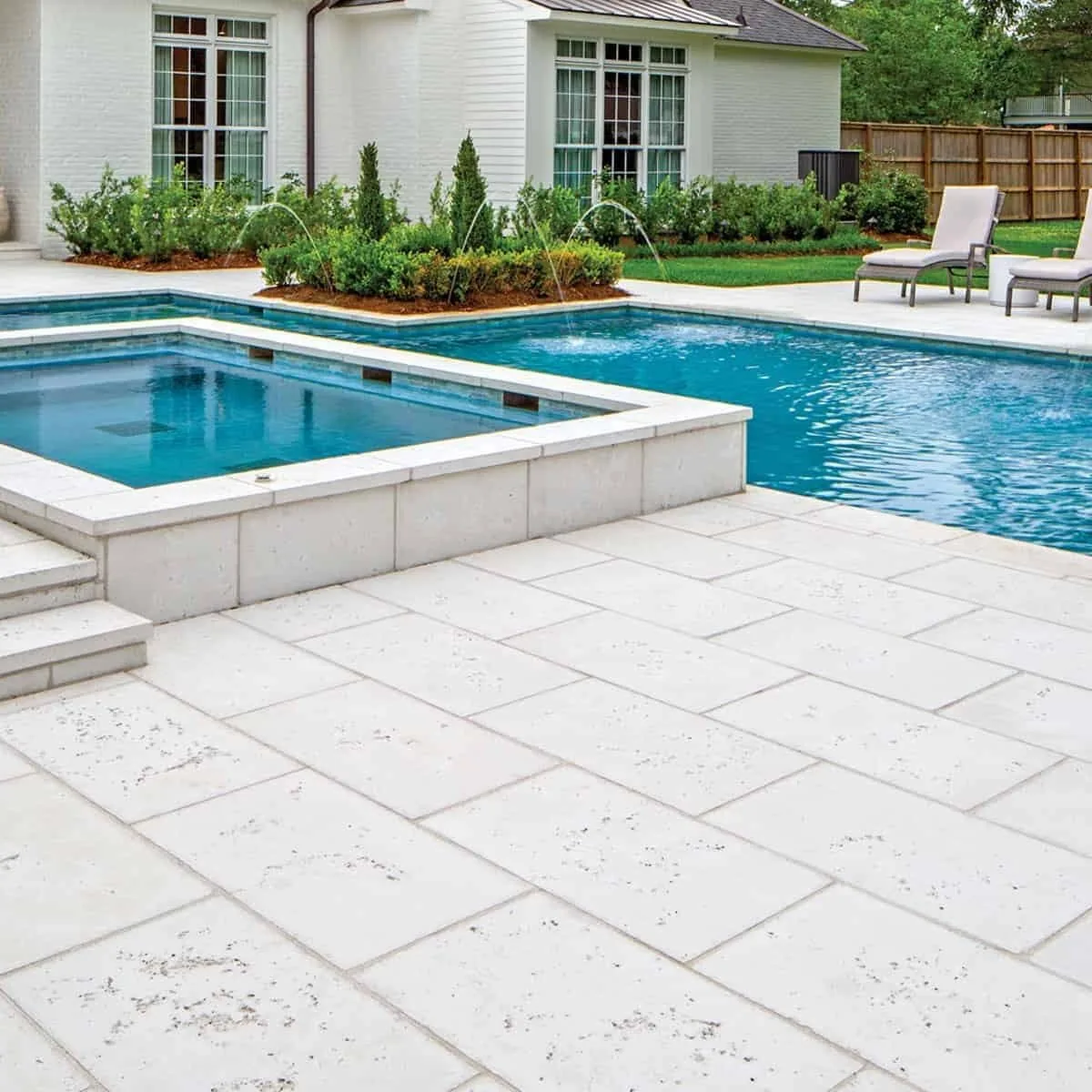
If the spa is adjacent to a pool, coordinating the tile between the two areas creates a finished look and simplifies maintenance. A pool deck remodel in Englewood that incorporates the spa surround as part of the same project usually produces a more cohesive result than treating them separately at different times.
Maintenance Around a Spa Surround
Even the best tile and grout installation around a hot tub requires some routine attention. In Englewood and across coastal Southwest Florida, algae and mildew growth on grout lines happens faster than inland due to the combination of moisture, heat, and organic matter in the air. A monthly rinse with a pH-neutral cleaner and a stiff brush keeps grout lines clean without damaging the material.
Avoid pressure washing grout lines directly unless the system is set to low pressure and a wide fan tip. High-pressure water forced directly into grout joints can erode them over time. If you start seeing cracked, crumbling, or missing grout, address it early. Water getting under the tile through failed grout joints is the most common cause of lifting tiles and substrate damage in spa surrounds.
Sealers on cement-based grout should be reapplied annually in this climate, and doing so makes a real difference in resistance to mineral deposits, tanning products, and algae staining. Our outdoor tile services in Englewood can include a maintenance walkthrough if you are unsure what your current installation needs.
The Bottom Line
Tile around a hot tub or spa is a wet-area installation that deserves the same technical attention as a shower floor or pool waterline. Slip resistance, drainage slope, chemical-resistant setting materials, and substrate waterproofing are all load-bearing decisions, not optional upgrades. The aesthetic choices matter too, but they work best when the functional fundamentals are in place first.
If you are planning a spa installation or looking to replace a failing surround in Englewood or anywhere in Southwest Florida, Dynasty Tile has been doing this work since 2016 and offers free, no-obligation estimates. You can reach us at (239) 265-2814 or through our contact page to talk through what your project needs.