Tile Color and Heat: Keeping Outdoor Floors Cooler Underfoot in Immokalee
If you have ever stepped onto a dark tile deck at noon in July, you already know the lesson. Immokalee summers are intense, and a tile surface that looked beautiful in a showroom can become genuinely painful to walk on once the Florida sun hits it for a few hours. The good news is that color, finish, and material choice all work together, and you have more control over surface temperature than most homeowners realize.
We see this question come up constantly when we are planning outdoor tile installations in Immokalee: how do I keep this surface bearable for kids and bare feet? The answer involves a few straightforward principles that are worth understanding before you commit to a tile.
Why Tile Color Matters More Outside Than Inside
Indoors, the difference between a light and dark tile in terms of temperature is barely noticeable. Outdoors, under direct Southwest Florida sun, it is dramatic. Dark surfaces absorb more solar radiation and re-emit it as heat. Under direct Florida sun, a dark charcoal tile can reach surface temperatures that are genuinely painful on bare skin, while a light beige or cream tile in the same location stays noticeably cooler.
This is not just about comfort. It affects how quickly small children, elderly guests, and pets can move across the surface without discomfort. For pool deck tile projects in Immokalee, where people routinely walk barefoot from the water to a chair, surface temperature is a real safety consideration.
Light Colors and Reflective Finishes: The Core Strategy
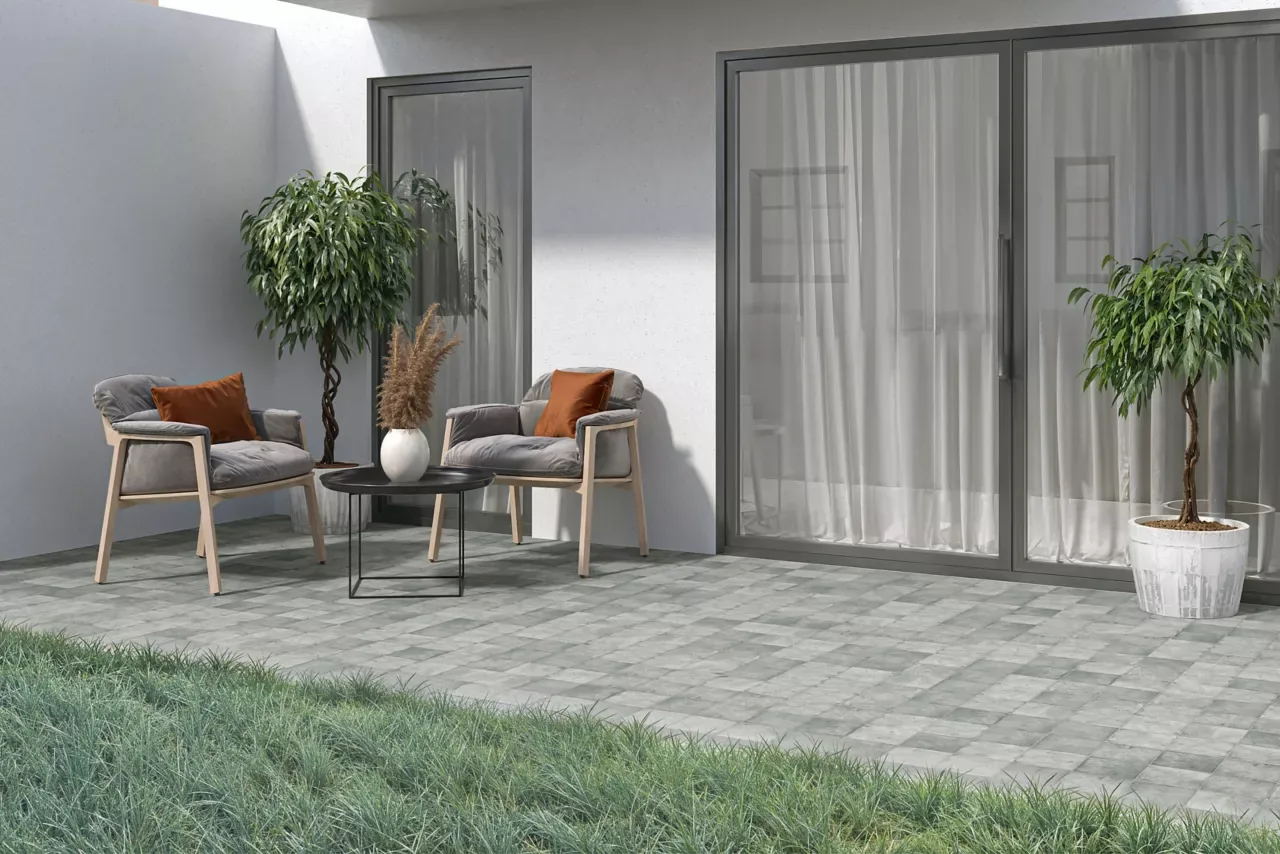
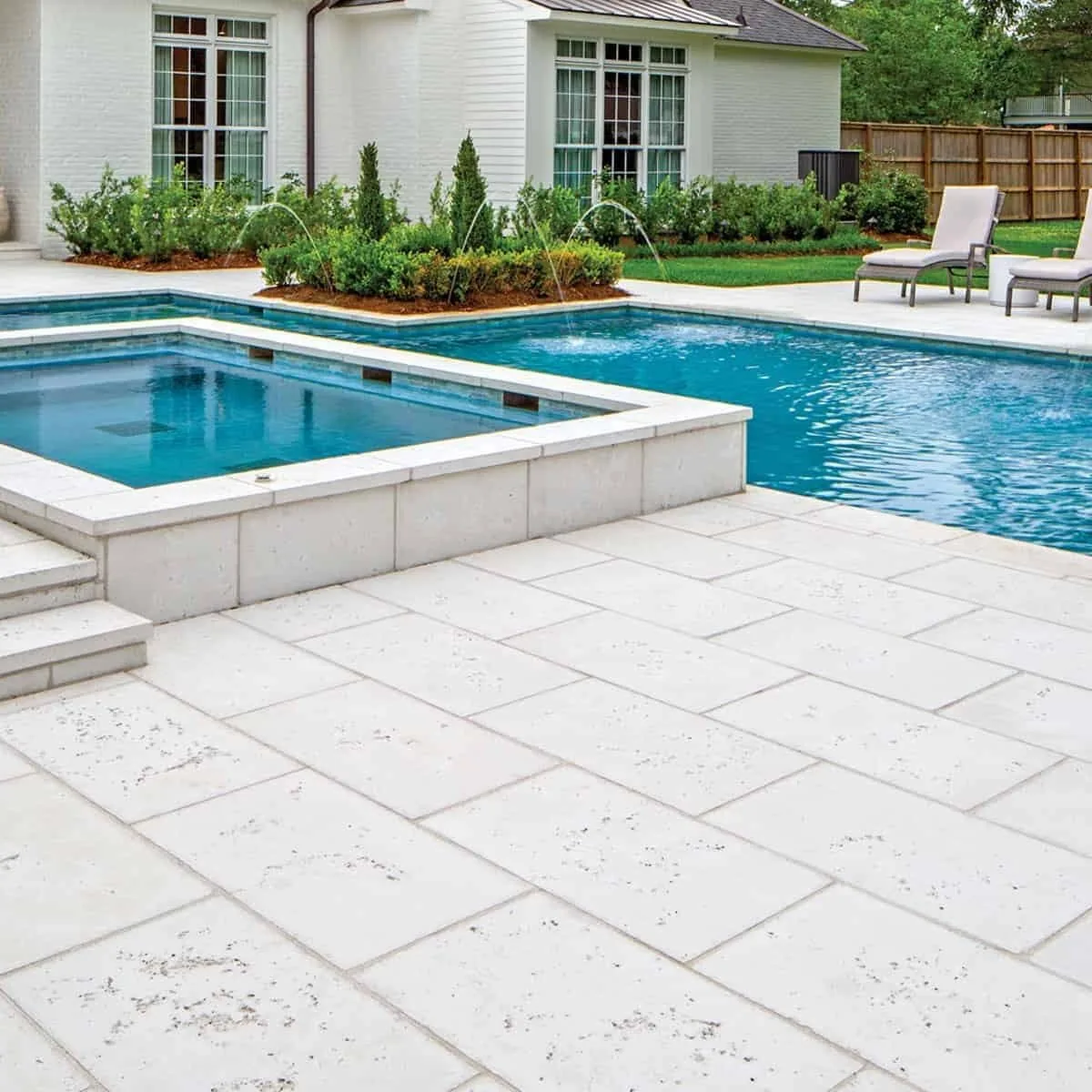
The most reliable way to reduce heat absorption is to choose lighter tile tones. Whites, creams, light grays, soft tans, and pale travertine looks all reflect more sunlight than they absorb. This does not mean you are locked into a bland palette. There is a wide range of light-toned porcelain and natural stone-look tiles that read as sophisticated rather than washed out, particularly when laid in a pattern that adds visual interest.
Finish also plays a role. Matte and textured finishes tend to stay slightly cooler than glossy surfaces because they scatter light rather than concentrate it. They also add slip resistance, which matters around pools and lanais where water is always present. A honed or brushed finish on a light porcelain paver is often the best of all worlds: moderate heat absorption, good grip underfoot, and a look that holds up visually even as Southwest Florida's humidity and sandy soil leave their mark over time.
Highly polished tiles are a poor choice for outdoor use here: they heat up fast and become dangerously slippery when wet.
Porcelain Pavers vs. Natural Stone in the Florida Sun
Porcelain pavers have become the dominant choice for outdoor decks here for good reasons. They are dense, resist moisture absorption, and do not react the way some natural stones do to the combination of intense UV exposure, humidity, and the occasional salt-air event that moves through Southwest Florida. When manufactured with light tones and a matte or textured surface, they perform very well in terms of heat.
Natural travertine has a long history in Florida outdoor applications. Its porous surface and typical light coloring do keep it relatively cool, but the porosity also means it requires sealing and maintenance to prevent staining and biological growth. In Immokalee's climate, anything left unsealed outdoors accumulates algae and mildew quickly. That maintenance obligation is something homeowners need to factor in when choosing between porcelain and natural stone.
Saltillo and terracotta appear on many older Florida patios. Their earthy tones are warm but maintenance requirements in humid conditions are significant. For new installations we typically recommend modern through-body porcelain unless the client wants that traditional look specifically.
Shade Structure and Tile Work Together
Even the lightest tile will get hot if it sits under unobstructed Florida sun from 10 a.m. to 4 p.m. The most comfortable outdoor spaces in Immokalee combine good tile choices with some form of shade, whether that is a pergola, a screen enclosure, or an extended roof overhang. Lanai living is part of Southwest Florida's home culture precisely because a covered outdoor space dramatically extends the hours when the space is actually usable.
When we are planning an outdoor tile layout, we often ask clients about their sun exposure at different times of day. A west-facing pool deck gets hammered by afternoon sun in a way that an east-facing patio does not. That should influence your tile choice. If your deck gets full afternoon exposure, leaning toward the lightest options available is worth it. If most of your deck is shaded by the house after noon, you have more flexibility with tone.
Color Patterns and Inlays: Mixing Light and Dark Thoughtfully
Many homeowners want a design that is not a single flat color. Borders, medallions, and accent bands are common requests in outdoor work. Here the practical rule is straightforward: keep the primary field tile light, and limit dark accents to areas that are unlikely to be walked on barefoot, such as a border against a wall or a decorative band at the edge of a raised planter. A dark border strip around a pool coping, for example, will get very hot, but if it sits at the waterline or along the edge where people are not standing, it is a reasonable choice.
Avoid checkerboard patterns of equal proportions of dark and light outdoors. The dark squares will absorb heat that then radiates outward, raising the temperature of the surrounding surface. A pattern that is 80 percent light with 20 percent darker accent detail behaves much more like a uniformly light surface than one that is 50-50.
Grout Color and Surface Temperature
Grout joint width and color contribute to overall heat absorption more than people expect. Wide joints filled with dark gray or charcoal grout create more dark surface area. Where heat is a priority, we recommend narrower joints and grout that matches or is only slightly darker than the tile body. This is especially relevant with large-format pavers where a wide joint is sometimes used for drainage, but a lighter grout can offset the thermal effect.
Polymer-modified grouts formulated for exterior use also tend to perform better than basic sanded grout in Florida's wet-dry cycle. If you have questions about grout selection for an outdoor project, a licensed tile contractor in Immokalee can walk you through what holds up in this specific climate.
The Bottom Line
Barefoot-friendly outdoor floors in Immokalee start with light-toned tile and a matte or textured finish. Porcelain pavers in cream, pale gray, or warm white tones reflect heat rather than absorbing it, and their low maintenance requirements make them a practical choice for Southwest Florida's climate. Shade coverage, grout color, and thoughtful placement of any dark accents round out the picture.
If you are planning an outdoor deck, pool surround, or lanai floor and want a free, no-obligation estimate, Dynasty Tile has been serving Immokalee and the wider Southwest Florida area since 2016. We are happy to look at your space and talk through the options that make the most sense for how you actually live in and use it. Reach out through our contact page or call (239) 265-2814.